Border Security Force (BSF) officials on Monday submitted a report to the Centre about the possible route taken by the attackers of the Pathankot air force base, claiming there was no breach in the fence but there were some gaping holes along the international border and malfunctioning of electronic surveillance equipment.
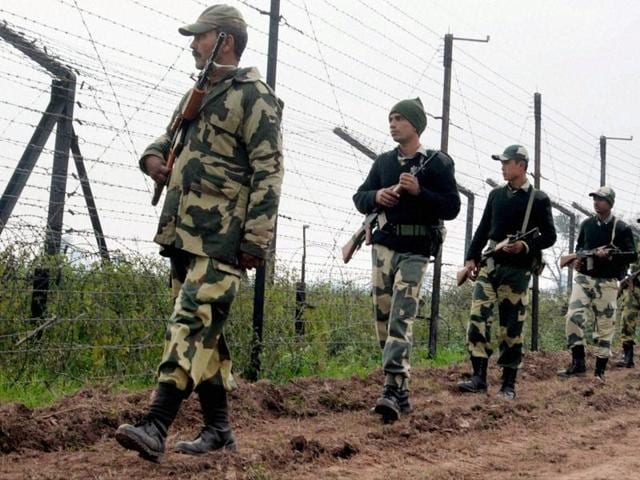
Senior BSF officials visited Bamiyal, a village located in Pathankot, and took stock of the unfenced and riverine areas along the border with Pakistan.
The home ministry had directed the BSF, which guards the international border with Pakistan, to submit a report on the breach by terrorists who sneaked into India and carried out terror strike in Pathankot.
Read| Working on leads provided by India on Pathankot attack: Pakistan
The BSF claimed in its report that there were no signs or evidence to suggest that the terrorists had breached the fence along the border in Punjab or neighbouring Jammu.
However, there are numerous pockets and ‘nullahs’ which are unfenced and growth of elephant grass can provide an easy cover to the infiltrating group, sources said.
While some of the handheld thermal imagers (HHTI) and battle field surveillance radars, placed at the places where fencing is not erected, did not pick up any signal, some of these equipment had a “technical glitch” resulting in non-registering of any activity, sources said. The BSF informed that after the Gurdaspur terror strike on July 27 last year, a battalion (1,000 personnel) had been deployed additionally along the Pathankot sector, they said.
{{/usCountry}}While some of the handheld thermal imagers (HHTI) and battle field surveillance radars, placed at the places where fencing is not erected, did not pick up any signal, some of these equipment had a “technical glitch” resulting in non-registering of any activity, sources said. The BSF informed that after the Gurdaspur terror strike on July 27 last year, a battalion (1,000 personnel) had been deployed additionally along the Pathankot sector, they said.
{{/usCountry}}Read: Chandigarh’s Air Force transport base vulnerable to breach
Sources said as per initial reports, the terrorists might have entered India through one of the rivulets, which are unfenced, in Punjab. Terrorists are believed to have taken route often used by drug smugglers to infiltrate into Punjab and unleash the deadly attack on the IAF base in Pathankot.
As the initial inputs suggest, the terrorists, who carried out the pre-dawn attack, had infiltrated through tributaries of river Beas in Pathankot in Bamiyal village, close to the international border.
They are believed to have infiltrated into India during the intervening night of December 30-31. The area from where the terrorists crossed over has a thick foliage of elephant grass which provides an automatic cover for them, they said.
A tributary of river Beas enters into Pakistan from this village and this route is popular with drug smugglers to enter India.
Read| Pathankot: Search ops to continue as 5th terrorist killed