The “gai” in nilgai is the final hurdle for the Haryana government before it gives locals a free hand to kill them.
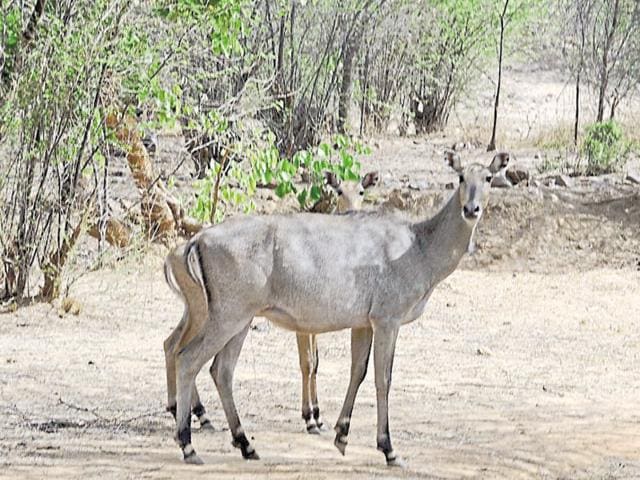
Native to the Aravalli Range, nilgai are a menace to farmers, frequently ravaging their crop. Though the government is keen on letting villagers kill them, the animal’s indirect association to cows makes it a risky decision, especially in a state that was first to ban cow slaughter.
“We are planning to propose to change the name of the animal to Roze,” forest minister Rao Narbir Singh said on Thursday. “By changing the name, people will realise that it is not a cow but from the deer family and killing of deer is fine in this part of the country.”
When Shakespeare asked, “what’s in a name”, surely he didn’t think about nilgai. While killing a “gai” would put you in jail for 3-10 years with a fine up to Rs 1 lakh, culling “nilgai” would keep your crop safe, and possibly get you a pat on the back.
The government is also planning to give the animal ‘vermin’ status, which means that it can be hunted without restriction — an interesting turn of events for the indigenous deer, which currently is protected under Schedule III of the Wildlife Protection Act 1972.
“We have provisions to declare wild animals as problem animals in the WPA,” said VB Mathur, director of Wildlife Institute of India, Dehradun. “Nelgai’s status can be changed...to resolve man-animal conflict... The population of the species has drastically increased in North India.”
{{/usCountry}}“We have provisions to declare wild animals as problem animals in the WPA,” said VB Mathur, director of Wildlife Institute of India, Dehradun. “Nelgai’s status can be changed...to resolve man-animal conflict... The population of the species has drastically increased in North India.”
{{/usCountry}}“Culling is the only solution as of now,” the forest minister said.
Animal rights activists disagree.
“Culling animals may not reduce conflict in absence of a thorough understanding of the situation that is leading to conflict in the first place. In most situations, non-invasive methods work better in reducing human wildlife conflict,” said Koustubh Sharma, a wildlife ecologist.