For a long time, 12- year-old Rohan, an HIV positive child, was in pain but could not comprehend why. For months, he passed blood with his stools. Finally, a counsellor drew a sketch after Rohan pointed to his mouth and back and the truth emerged: He was regularly being forced into oral and anal sex.
Rohan then drew a picture of Ashish, one of his co-inmates at the Alipur Boys Home, an after- care home in north Delhi run by the Delhi government. Ashish regularly beat the younger boys if they did not run errands for him. "Nobody would stop him,'' Rohan said, recalling that a staff member at the home and a security guard - meant to shelter the young from child abuse - were regularly ill-treating the residents. One day, Rohan shared the information with a caretaker, thinking he would put an end to the ordeal. That was not to happen. Child care homes - institutional options for juveniles in distress across the country - continue to operate years after serious complaints of abuse. The Juvenile Justice Act (JJA) classifies children in distress in two categories - those in need of care and protection and those in conflict with the law. The Act mandates the establishment of child care institutes for such minors in every district. However, several such homes run by the union and state governments and NGOs have come to symbolise rampant abuse. In the last four years, enquiries have been initiated in 36 cases of sexual abuse in child care facilities across 13 states. A survey sponsored by the union ministry of women and child development revealed that more than 53 per cent of children across the country have faced one or more forms of sexual abuse. In 50 per cent of child abuse cases, the perpetrators were known to the child or were in a position of trust and responsibility. The gaps in the law have not helped. Anyone can operate a home for marginalised children, who constitute around 40 per cent of the total child population in India. This often means kids can be abused for as long as it goes unnoticed. To make matters worse, there is no centralised data on the number of children in such institutes. "For every reported case of sexual abuse in child shelters, there are 10 that have gone unreported," says Atiya Bose, director of Aangan, a Mumbai-based NGO which works with vulnerable children. "It is baffling how sexual abuse of male residents is internalised and becomes an accepted norm in care homes," she adds. An analysis of inquiry reports filed by government appointed committees and independent investigators found that children,both male and female, have been raped inside homes, made to live in inhuman conditions and even sold. At Apna Ghar, a child care institution in Rohtak, which grabbed headlines in early 2012, more than 100 female residents said they were raped by caretakers and outsiders for more than a year. At least 10 girls had to undergo abortions. The report of the committee appointed by the Punjab and Haryana High Court, immediately after the rampant sexual abuse in the institute was highlighted, observed that children were filmed for pornographic purposes and more than a dozen minor inmates were sold. According to the report, "Every inmate, irrespective of age, was forced to consume liquor at night, especially on the occasion of Holi" and was subjected to abuse by the shelter home staff and outsiders. "It was like a crime ring. I have never seen anything like this inside or outside a shelter home," says Utsav Bains, lawyer and one of the co-drafters of the report.
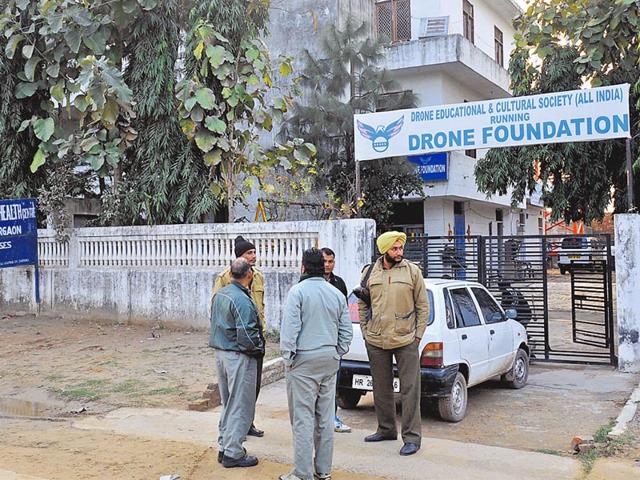
NO MONITORING Last May, the Railway Protection Force took 466 children in custody in Kerala's Palakkad district. They were on their way to orphanages in Kozhikode and Malappuram districts in the state. During investigation, eight persons confessed that they brought these children from Jharkhand, West Bengal and Bihar to enroll them at the orphanages. These were just two of the dozens of orphanages in Kerala and among thousands across the country that are not registered under the JJA. As a result, they did not maintain the minimum standards of care and could not be regularly inspected by the authorities either. Hundreds of child care institutes in which severe sexual abuse cases have been reported are registered under different laws such as the Societies Registration Act, the Women and Children Institutions Act, the Charitable and Religious trusts Act but not under the JJA. Many such facilities are not registered at all. In effect, this means that there is no government record of the number of children there. These facilities escape inspection, and there is no monitoring of the conditions in which the children live. Needless to add, they are extremely vulnerable to abuse. As things stand now, there is no provision to penalise organisations that are not registered under the JJA. However, appropriate action can be taken by the authorities after an inspection. "In case of unregistered homes, police can punish the culprits but cannot fix accountability on persons managing the institute or the licensing authority because the various acts under which these facilities are registered do not contain provisions about the same," says Nina Nayak, former member of the National Commission for Protection of Child Rights (NCPCR). UNICEF estimates that at least 2.2 million children in the world live in orphanages including all types of residential care, from small (15 or fewer children) to large-scale institutions. "This number is considered by many to be a significant underestimate, given that many orphanages around the world are unregistered and the children living within them are not officially counted," noted the United Nation's World Report on Violence Against Children. More than 700 juvenile justice homes in India receive grants from the Union government. However, this does not include homes run by state governments and NGOs. In an affidavit filed before the Delhi High Court in October 2012, the Ministry of Women and Child Development (MWCD) declared that all children homes in India would have to be registered under the Juvenile Justice (JJ) Act even if they had a license under any other Indian law. In a survey conducted in January 2014, the Tamil Nadu government found that 40 per cent homes managed by non-governmental organisations, housing more than 31,000 children, were unregistered. According to a Kerala State Human Rights Commission report, 87 illegal orphanages are functioning in the state. The state crime records bureau has registered 66 criminal cases of sexual abuse in orphanages and charitable homes in the last 10 years, as per KHRC. MWCD has raised the issue of non-registration of children's home with at least 12 state ministries, in the last two years, notes a report by the NGO Asian Centre for Human Rights. NO REDRESS MECHANISM A primary reason why sexual abuse continues for years in child care institutions is the absence of mechanisms through which residents can bring cases to the notice of a neutral individual, authority or agency. Take the case of Pooja, one of the 14 inmates at the children shelter home run by Drone foundation, an NGO in Gurgaon, around an hour's drive from Delhi. There was none Pooja could have gone to when 'bhaiyya' sexually abused her. He was the son of the manager at the shelter. It had become a routine affair at the now-defunct facility run in a residential building. "Bhaiyya used to take one of us to the other room to do it," Pooja told the counsellor, sharing her experience of living in the two-room facility which housed 14 children. In January 2012, a staff member alerted the police about the rampant abuse in the home. Following the complaint, the police and a team of from the National Commission for Protection of Child Rights raided the house and rescued the children. "The sexual abuse would have continued unabated had the staff member not blown the whistle. There was nobody inside the home who would have heard the kids' narrative," said Dr Bharti Sharma, who was part of the rescue team. "We got a tip- off and rescue was done. But we don't know how many kids have been abused since the home started operating," she adds. The JJ Rules mandate that inspection committees should visit and oversee the conditions in the institutions and look out for, among other things, any incidence of violation of child rights at least once every three months. According to the law, child care institutes are also required to set up children's committees in all institutions. One child from the committee is also required to be on another the committee that manages the home. "Even the homes run by the government do not have these committees in place, and where they exist, it is only on paper," says Bharti Ali, co-director of the NGO, Haq Centre for Child Rights. "Children committees are particularly important because this is the only forum where children can raise their concerns and bring it on record to demand action." More than 400 child welfare committees (CWCs), that are quasi-judicial bodies mandated to monitor child care institutes, are of no particular use. Often, citing work pressure, the CWCs do not conduct regular visits and when they do visit, they do not maintain records of the inspections. "The absence of such regular inspections have resulted in the conditions prevailing in the children homes as was found in Apna Ghar," said the report. Currently, authorities take note of sexual abuse in juvenile justice homes when an insider blows the whistle or the victims somehow escape. It is important to have a process to ensure that complainants have access to a person outside as, in a majority of the cases, the perpetrator is someone from within the institute. "Chances are that the person with whom the victim shares it, is never going to tell the top management. And even if he does, the management will sit on the complaint. No one will approach the police to lodge a complaint of sexual abuse in an institute that he or she is running," says Sharma. A review by the Asian Centre for Human Rights of around 40 cases of severe sexual abuse in juvenile justice homes found that in the case of privately-run juvenie justice homes and those run by NGOs, perpetrators include managers, directors, owners, founders and their relatives, friends and staff members. "Out of the 27 cases in these homes, inmates were responsible for the offences in five cases and out of these, in one case, offence was committed in collusion with the staff," noted the report. (Some names have been changed to protect identities). JUVENILES IN DISTRESS434 MILLION children in India175 MILLION of children population in India is marginalised144 MILLION of all children can be deemed to be destitute.25 MILLION orphan children in India40,000 JUVENILES in conflict with law, living in institutes Source: UNICEF, CHILDLINE
{{/usCountry}}NO MONITORING Last May, the Railway Protection Force took 466 children in custody in Kerala's Palakkad district. They were on their way to orphanages in Kozhikode and Malappuram districts in the state. During investigation, eight persons confessed that they brought these children from Jharkhand, West Bengal and Bihar to enroll them at the orphanages. These were just two of the dozens of orphanages in Kerala and among thousands across the country that are not registered under the JJA. As a result, they did not maintain the minimum standards of care and could not be regularly inspected by the authorities either. Hundreds of child care institutes in which severe sexual abuse cases have been reported are registered under different laws such as the Societies Registration Act, the Women and Children Institutions Act, the Charitable and Religious trusts Act but not under the JJA. Many such facilities are not registered at all. In effect, this means that there is no government record of the number of children there. These facilities escape inspection, and there is no monitoring of the conditions in which the children live. Needless to add, they are extremely vulnerable to abuse. As things stand now, there is no provision to penalise organisations that are not registered under the JJA. However, appropriate action can be taken by the authorities after an inspection. "In case of unregistered homes, police can punish the culprits but cannot fix accountability on persons managing the institute or the licensing authority because the various acts under which these facilities are registered do not contain provisions about the same," says Nina Nayak, former member of the National Commission for Protection of Child Rights (NCPCR). UNICEF estimates that at least 2.2 million children in the world live in orphanages including all types of residential care, from small (15 or fewer children) to large-scale institutions. "This number is considered by many to be a significant underestimate, given that many orphanages around the world are unregistered and the children living within them are not officially counted," noted the United Nation's World Report on Violence Against Children. More than 700 juvenile justice homes in India receive grants from the Union government. However, this does not include homes run by state governments and NGOs. In an affidavit filed before the Delhi High Court in October 2012, the Ministry of Women and Child Development (MWCD) declared that all children homes in India would have to be registered under the Juvenile Justice (JJ) Act even if they had a license under any other Indian law. In a survey conducted in January 2014, the Tamil Nadu government found that 40 per cent homes managed by non-governmental organisations, housing more than 31,000 children, were unregistered. According to a Kerala State Human Rights Commission report, 87 illegal orphanages are functioning in the state. The state crime records bureau has registered 66 criminal cases of sexual abuse in orphanages and charitable homes in the last 10 years, as per KHRC. MWCD has raised the issue of non-registration of children's home with at least 12 state ministries, in the last two years, notes a report by the NGO Asian Centre for Human Rights. NO REDRESS MECHANISM A primary reason why sexual abuse continues for years in child care institutions is the absence of mechanisms through which residents can bring cases to the notice of a neutral individual, authority or agency. Take the case of Pooja, one of the 14 inmates at the children shelter home run by Drone foundation, an NGO in Gurgaon, around an hour's drive from Delhi. There was none Pooja could have gone to when 'bhaiyya' sexually abused her. He was the son of the manager at the shelter. It had become a routine affair at the now-defunct facility run in a residential building. "Bhaiyya used to take one of us to the other room to do it," Pooja told the counsellor, sharing her experience of living in the two-room facility which housed 14 children. In January 2012, a staff member alerted the police about the rampant abuse in the home. Following the complaint, the police and a team of from the National Commission for Protection of Child Rights raided the house and rescued the children. "The sexual abuse would have continued unabated had the staff member not blown the whistle. There was nobody inside the home who would have heard the kids' narrative," said Dr Bharti Sharma, who was part of the rescue team. "We got a tip- off and rescue was done. But we don't know how many kids have been abused since the home started operating," she adds. The JJ Rules mandate that inspection committees should visit and oversee the conditions in the institutions and look out for, among other things, any incidence of violation of child rights at least once every three months. According to the law, child care institutes are also required to set up children's committees in all institutions. One child from the committee is also required to be on another the committee that manages the home. "Even the homes run by the government do not have these committees in place, and where they exist, it is only on paper," says Bharti Ali, co-director of the NGO, Haq Centre for Child Rights. "Children committees are particularly important because this is the only forum where children can raise their concerns and bring it on record to demand action." More than 400 child welfare committees (CWCs), that are quasi-judicial bodies mandated to monitor child care institutes, are of no particular use. Often, citing work pressure, the CWCs do not conduct regular visits and when they do visit, they do not maintain records of the inspections. "The absence of such regular inspections have resulted in the conditions prevailing in the children homes as was found in Apna Ghar," said the report. Currently, authorities take note of sexual abuse in juvenile justice homes when an insider blows the whistle or the victims somehow escape. It is important to have a process to ensure that complainants have access to a person outside as, in a majority of the cases, the perpetrator is someone from within the institute. "Chances are that the person with whom the victim shares it, is never going to tell the top management. And even if he does, the management will sit on the complaint. No one will approach the police to lodge a complaint of sexual abuse in an institute that he or she is running," says Sharma. A review by the Asian Centre for Human Rights of around 40 cases of severe sexual abuse in juvenile justice homes found that in the case of privately-run juvenie justice homes and those run by NGOs, perpetrators include managers, directors, owners, founders and their relatives, friends and staff members. "Out of the 27 cases in these homes, inmates were responsible for the offences in five cases and out of these, in one case, offence was committed in collusion with the staff," noted the report. (Some names have been changed to protect identities). JUVENILES IN DISTRESS434 MILLION children in India175 MILLION of children population in India is marginalised144 MILLION of all children can be deemed to be destitute.25 MILLION orphan children in India40,000 JUVENILES in conflict with law, living in institutes Source: UNICEF, CHILDLINE
{{/usCountry}}