...
...
Next Story

India on alert over growing presence of IS in Af-Pak

Indian intelligence agencies have sounded an alarm following reports of the growing presence of the ultra-conservative Islamist terrorist group Islamic State (IS) in Afghanistan’s Farah and Nangarhar provinces.

Updated on: Jul 3, 2015, 07:38:53 IST
Hindustan Times | By , New Delhi
Prefer HTon Google
Advertisement

Indian intelligence agencies have sounded an alarm following reports of the growing presence of the ultra-conservative Islamist terrorist group Islamic State (IS) in Afghanistan’s Farah and Nangarhar provinces. The intelligence agencies feel the IS attempts to establish a presence in the region pose a long-term threat to South Asia.
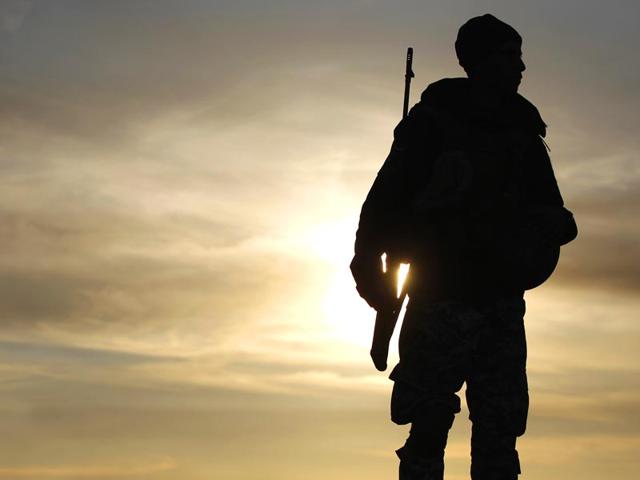
A-Shi-ite-fighter-carries-his-weapon-in-Tal-Ksaiba-near-the-town-of-al-Alam-March-7-2015-Iraqi-security-forces-and-Shi-ite-militia-fighters-struggled-to-advance-on-Saturday-into-the-two-towns-of-al-Alam-and-al-Dour-near-Tikrit-their-progress-slowed-by-fierce-defence-from-Islamic-State-militants-Reuters

While Farah province borders Iran, Nangarhar province borders Pakistan. Intelligence reports indicate no less than six clashes between IS and Taliban fighters in the two provinces since April 18.

The presence of the IS in the Af-Pak region came to the fore after the group claimed responsibility for a suicide attack on a bank in Jalalabad in Nangarhar province on April 18, which left 15 dead and scores wounded.

“The Indian concern is that Nangarhar province sits on the mouth of the Khyber pass, which has been the route to enter into the Indus Valley and the Gangetic plains. Also, Farah province shares borders with Shia Iran. If IS manages to spread in Afghanistan, Pakistan and Central Asia, then India faces a serious security threat,” said a senior official.

Prime Minister Narendra Modi will also discuss the spread of the IS during his bilateral visits to five Central Asian Republics between July 6-13, which will be interspersed with his visit to the BRICS and SCO summits.

While only 16 Indian youth are known to have joined the IS in Iraq and Syria, more than 4,000 youth have joined the extremist group from Central Asian Republics, particularly Uzbekistan.

Intelligence reports say even the Pakistan Army is concerned about the spread of the IS in Afghanistan and beyond. There is a strong possibility that the issue would figure in talks between Modi and Pakistan PM Nawaz Sharif on the sidelines of the SCO summit.

Intelligence reports indicate that the IS has named the Af-Pak region as the Islamic State of Khorasan and appointed Hafiz Saeed Khan, a former Pakistan Taliban commander, as its head. His deputy, Mullah Abdul Rauf Khadim, was killed in a US drone strike in Pakistan’s Federally Administered Tribal Areas (FATA).

Read more

Islamic State attacks kill at least 70 in Egypt

Afghanistan: IS loyalists gain territory in turf war with Taliban

 
ABOUT THE AUTHOR
Shishir Gupta

Shishir Gupta is Executive Editor at Hindustan Times and one of India's top journalists covering national security, strategic affairs, foreign policy and geopolitics. Over the past three decades, he has extensively reported on India's military, diplomatic and security landscape, covering every major conflict and national security challenge, from the 1999 Kargil War and the 2020 East Ladakh standoff to Operation Sindoor in 2025. He has also covered major terror attacks, including the IC-814 hijacking, the 26/11 Mumbai attacks and the 2025 Pahalgam terror strike, along with numerous Pakistan-backed terrorist incidents in the Kashmir Valley and across India. He has reported on national and state elections for more than three decades. A recognised authority on strategic affairs, Gupta has covered India's nuclear programme since the Pokhran-II (Shakti series) tests in May 1998 and has written extensively on global nuclear issues, Indian diplomacy and the country's expanding global outreach. He has also reported widely on international conflicts and terrorism, with a special focus on the Indian subcontinent. Gupta has interviewed Prime Minister Narendra Modi more than four times, including Modi's first interview with the print media after becoming Prime Minister in May 2014. His other interviews include three with the Dalai Lama, as well as conversations with Benjamin Netanyahu, Amit Shah, Yogi Adityanath, S. Jaishankar, Nirmala Sitharaman and Piyush Goyal. He is the author of Indian Mujahideen: The Enemy Within (Hachette, 2011) and Himalayan Face-off: Chinese Assertion and Indian Riposte (Hachette, 2014). He was awarded the Chevening-Wolfson Joint Scholarship at Wolfson College, University of Cambridge, UK, in 1998 and participated in the International Visitor Leadership Program (IVLP) of the US State Department in 2006. He received the Ben Gurion Prize from Israel in 2011 and the K. Subrahmanyam Prize for Strategic Studies in 2015 from the Manohar Parrikar Institute for Defence Studies and Analyses (MP-IDSA). Since 2024, he has hosted Point Blank, Hindustan Times' weekly YouTube show on global geopolitics.

Get the latest India News, breaking headlines and real-time updates from across the country. Stay informed about politics, government policies, crime, weather and major national developments.
SHARE THIS ARTICLE ON
Hindustantimes wants to start sending you push notifications. Click allow to subscribe