Defence minister Manohar Parrikar dedicated the first cable-stayed bridge of north India in Kathua district to the nation on Thursday, which will provide close connectivity between the three states of Jammu and Kashmir, Himachal Pradesh and Punjab.
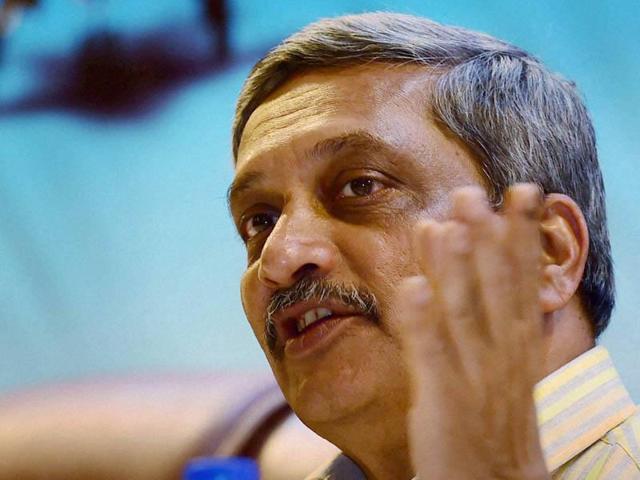
Flanked by Union minister Dr Jitendra Singh and Army chief Dalbir Singh Suhag, Parrikar inaugurated the cable stayed-bridge on river Ravi at Basohli situated on Dunera-Basohli-Bhadharwah road.
The Basohli bridge is fourth of its kind in India. The other three cable-stayed bridges are, Hooghly Bridge at Kolkata, Naini Bridge in Allahabad and Rajiv Gandhi Sea Link in Mumbai, officials said.
With the completion of the bridge, connectivity and tourism between the three states will improve.
The work on the maiden cable-stay bridge of the state was started in September 2011 on the demand of people of Basohli where over 22 villages were submerged in water and evacuated to other places after the construction of Ranjit Sagar dam.
The 592-metre span bridge is being constructed by Border Roads Organisation (BRO) at the cost of Rs 145 crore. It is a joint venture of IRCON, a Railway Company, and SP Singla Construction group.
Out of the 592-metre span bridge, 350 metres is cable-stayed while rest is plain bridge.
{{/usCountry}}Out of the 592-metre span bridge, 350 metres is cable-stayed while rest is plain bridge.
{{/usCountry}}“A typical cable-stayed bridge is a deck with one or two pylons erected above the piers in the middle of the span,” officials said, adding, “The cables are attached diagonally to the girder to provide additional supports.”
“The pylons form the primary load-bearing structure in these types of bridges. Large amounts of compression forces are transferred from the deck to the cables to the pylons and into the foundation,” they said.
The officials said these bridges have a low center of gravity which makes them efficient in resisting earthquakes. “Cable-stayed bridges provide outstanding architectural appearance due to their small diameter cables and unique overhead structure,” they added.