The Supreme Court today dismissed pleas seeking fresh interpretation of the term 'juvenile' in the statute and leaving it to the criminal court, instead of Juvenile Justice Board, to determine the juvenility of an offender in heinous crimes.
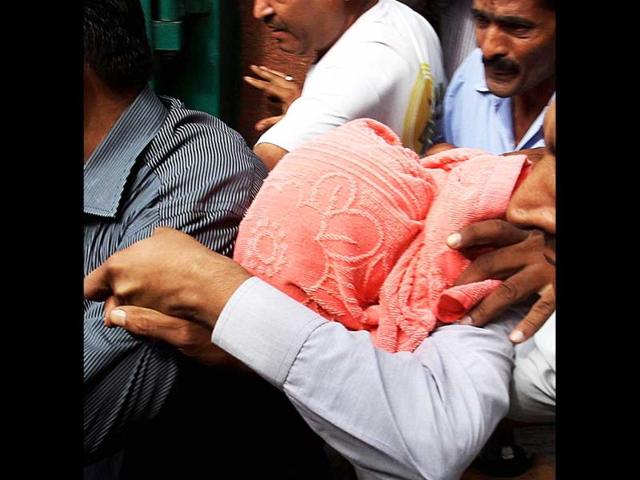
A bench of Chief Justice P Sathasivam, justices Ranjan Gogoi and Shiv Kirti Singh rejected the two petitions, filed by BJP leader Subramanian Swamy and parents of the December 16 gangrape victim, challenging the constitutional validity of the Juvenile Justice (Care and Protection of Children) Act 2000.
The bench dismissed the plea of victim's parents for sending the juvenile convict in the brutal gangrape and murder case to face trial in regular court, saying there was no question of sending him to face regular trial. It said that there is no unconstitutionality for fixing upto 18 years of age for the offenders to be tried under the Juvenile Justice Act. During the proceedings earlier, the two petitions were opposed by the Centre.
The victim's father had said that the August 31, 2013 verdict of the Juvenile Justice Board was not acceptable to the family and so they challenged the Act as there was no other authority which they could approach for such relief. He had sought a direction to declare as unconstitutional and void the JJA to the extent it puts a blanket ban on the power of the criminal courts to try a juvenile offender for offences committed under IPC. His counsel had said "mental and intellectual maturity" of the juvenile involved in the December 16 gangrape has to be taken into account and should be put to trial like the four other accused who have been awarded death sentence.
{{/usCountry}}The victim's father had said that the August 31, 2013 verdict of the Juvenile Justice Board was not acceptable to the family and so they challenged the Act as there was no other authority which they could approach for such relief. He had sought a direction to declare as unconstitutional and void the JJA to the extent it puts a blanket ban on the power of the criminal courts to try a juvenile offender for offences committed under IPC. His counsel had said "mental and intellectual maturity" of the juvenile involved in the December 16 gangrape has to be taken into account and should be put to trial like the four other accused who have been awarded death sentence.
{{/usCountry}}The petition by the victim's parents had said the juvenile "is liable to be tried and punished by the criminal courts for the aforesaid offences, complete with the judicial discretion on established principles of law regarding the award of sentence keeping in view, amongst other factors, the nature and gravity of the offence". Additional Solicitor General Siddharth Luthra had opposed the plea, saying that "judicial flavour is not lost in the JJB proceedings" and the age limit of 18 years fixed for not trying a person in criminal court is a valid parameter based on research worldwide.
The petition had referred to the trial court verdict by which four adult accused were convicted and sentenced to death and sought similar trial for the then juvenile offender, who has now turned major. In his petition, Swamy had said the Act provided for a "straitjacket" interpretation of the term 'juvenile' that a person below the age of 18 years was a minor and it was in violation of the United Nations Convention for the Rights of the Child (UNCRC) and Beijing Rules on the issue.
The UNCRC and Beijing Rules say the presumption of "the age of criminal responsibility" be fixed while "bearing in mind the mental and intellectual maturity" of the offender, he had said. Swamy had said he was neither seeking lowering the 18 years limit set in JJA nor his plea is individual-centric and the reference of the juvenile, one of the accused in the December 16 gangrape case, in his plea was merely an illustration.