The Supreme Court has refused to entertain a batch of petitions by environment activists seeking its intervention to “save” a tiger corridor between Pench and Kanha wildlife parks in Madhya Pradesh. The petitions claimed that the big cats were being threatened by widening work on the National Highway-7, which runs through it.
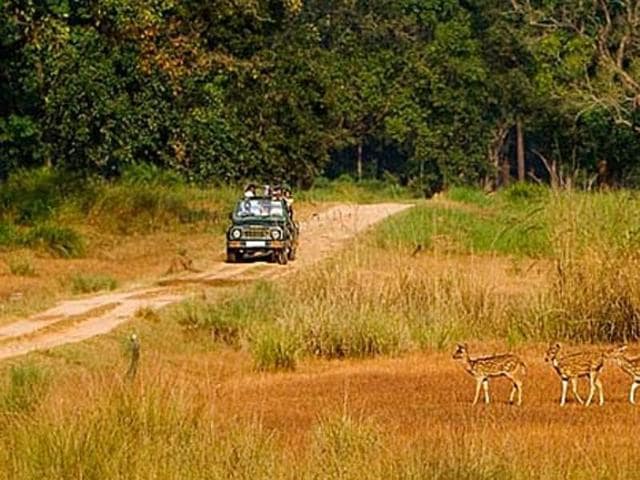
“We need prosperity not only for animals but humans too. We also need development, and this project is meant for that,” a bench headed by Chief Justice TS Thakur said on Wednesday. The petitioners contended that there was no prior forest clearance for building a wider road between the two parks, home to a dwindling tiger population.
The National Highways Authority of India (NHAI) proposes to expand a 10-km stretch of the 35-km-long highway into a four-lane road. However, the reserve forest on either side of the stretch – incidentally the setting for Rudyard Kipling’s Jungle Book – is an identified tiger corridor that provides critical genetic linkage between the tiger populations of both the reserves.
The Bombay high court (HC) had earlier stayed a National Green Tribunal order that prevented the felling of trees for road widening. Following this, the activists moved the Supreme Court against the HC order – alleging that the NHAI was violating environment laws.
In their petitions, the activists stated that the project should not be undertaken until the authorities have formulated a way to protect tigers in the region from road accidents. They said widening of the road could lead to an increase in traffic on that stretch, endangering the animals.
{{/usCountry}}In their petitions, the activists stated that the project should not be undertaken until the authorities have formulated a way to protect tigers in the region from road accidents. They said widening of the road could lead to an increase in traffic on that stretch, endangering the animals.
{{/usCountry}}However, the bench said that poaching – not road accidents – was responsible for the decline in the tiger population. It then asked the petitioners to raise their concerns before the HC.
A report by the Supreme Court-appointed Centrally Empowered Committee had stated that the Pench reserve, covering an area of 16,000 sq km, was populated by 33 tigers. It also advised against allowing heavy vehicular movement in the area because such activities could endanger wildlife.