“I can never forget those 40 days when we staged a sit-in at Chang Gate. I was documenting every moment of that dharna through my camera without a clue that we were making history,” said Ashok Sain, a photographer and activist from Beawar, reminiscing the struggle to demand the Right to Information (RTI) law in April-May 1996.
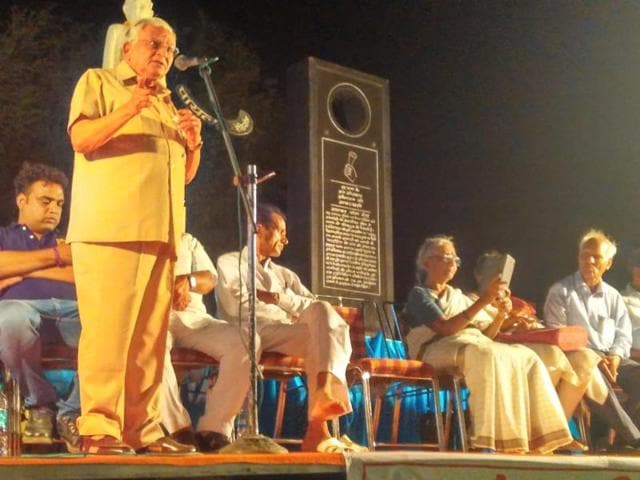
Hundreds of citizens from Beawar and nearby areas gathered at Chang Gate on Thursday evening during the unveiling of a memorial dedicated to the RTI struggle.
Mazdoor Kisan Shakti Sangathan (MKSS), a collective of peasants and labourers, headquartered in a nondescript village in Rajsamand district, waged struggles for peoples’ rights related with land, minimum wages and forest rights since its formation in 1990. The sit-in for RTI began on April 6, 1996.
Former chief justice of the Sikkim high court justice SN Bhargava said he regretted not being a part of the seminal dharna: “I realise that I have really missed a historic opportunity, but now I want to do everything in my capacity to further this movement for transparency, accountability and participatory democracy.”
Justice Bhargava said it was befitting and a matter of pride for the city of Beawar that such a memorial has been constructed. It will give inspiration to millions in the country to fight for their rights, he said.
{{/usCountry}}Justice Bhargava said it was befitting and a matter of pride for the city of Beawar that such a memorial has been constructed. It will give inspiration to millions in the country to fight for their rights, he said.
{{/usCountry}}Socio-political activist and one of the founders of the MKSS, Aruna Roy, said: “India’s Right to Information law is unique as it was brought to pass by poor peasants, farmers and labourers and not by politicians, academics, journalists or the intelligentsia.”
She highlighted the governments’ attempts to dilute the Right to Information and attacks on those using RTI to unearth corruption and wrongdoing.
Kavita Srivastava of the PUCL, who was one of the participants of the 1996 dharna, recalled how everybody in the town became a part of the movement.
“Vegetable vendors provided us free vegetables, owners of dharmshala gave us rooms and traders supported us,” she reminisced. “It was as if the entire city had become our family and a patron to our cause,” she said.
The ceremony ended with a resolution to demand restoration of RTI and contribution of the people of Beawar and Rajasthan in the state education board textbooks.