Sweetmeat sellers demanding withdrawal of the goods and services tax (GST) shut shop across West Bengal on Monday, forcing Bengalis to curb their legendary appetite for items such as the Rosogolla and Misti doi.
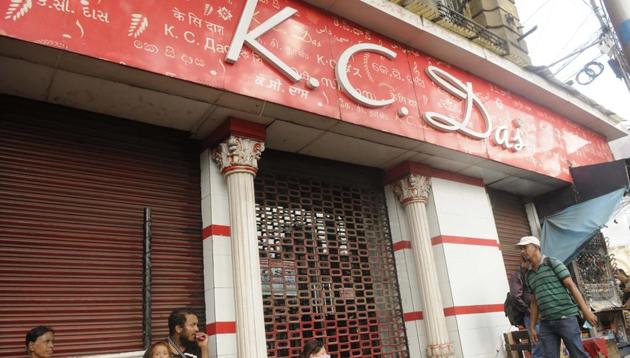
A leader of an organisation representing one lakh-odd sweet shops said the day-long strike is the start of an agitation against GST which has allegedly adverse impacted the business.
The Centre rolled out the GST on July 1, abolishing several taxes with a nationwide single levy, hailed as the biggest tax reform in India since Independence.
Robin Pal, general secretary of the Paschim Banga Mistanna Byabsayi Samiti -- the umbrella organisation of sweet makers -- said unlike sweets and confectionery items made in north or south India, local products are highly perishable.
“Hence, imposing GST on Bengali sweets is not at all unjustified. Today’s strike is only the beginning of our movement...If GST is not withdrawn, a number of sweet makers in Bengal will have to shut shop,” said Pal.
{{/usCountry}}“Hence, imposing GST on Bengali sweets is not at all unjustified. Today’s strike is only the beginning of our movement...If GST is not withdrawn, a number of sweet makers in Bengal will have to shut shop,” said Pal.
{{/usCountry}}He said shop owners and manufacturers will observe a hunger strike from August 23 to 26 at the Maidan in Kolkata.
Read: Tax on Rosogolla, mishti doi: GST injects bitterness into popular Bengali sweets
A majority of the sweet shops in Bengal operate on small scale and were facing difficulty in buying computers and software to calculate and print bills, said Pal.
Under the GST regime, all shopkeepers are mandated to file three online returns every month to the government besides providing computerised bills to customers.
Sweet makers and retailers have been trying to negotiate their way through a maze of GST rates that vary from one category to the next.
Sweet shops across Kolkata witnessed chaos after GST rates were applied to traditional products. Customers could not decide which sweets to buy and how much to pay and discussions with cashiers often ended in heated exchanges.
For example, assorted Rosogollas attract 5% tax but the canned ones are taxed at 18%. A Rosogolla with a pista, or flakes of kesar, fillings attracts 18% because of the GST rate fixed for food items made of dry fruit.
Read: Find out the GST rate for over 1,700 goods and services
Ranjan Saha, owner of Shree Gopal Sweets in the Kasba area, said most of the sweet shop employees do not have any formal education.
“They are having a tough time calculating GST rates that are different for each and every category of sweets,” Saha added.
For Kaushik Ghosh, a resident of Lake Gardens in south Kolkata, the agitation took the sweetness out of his 50th birthday.
“I turned 50 today and wanted to have misti doi (sweetened curd), my most favourite dessert. It seems the next phase in life will be less sweet,” Ghosh added.