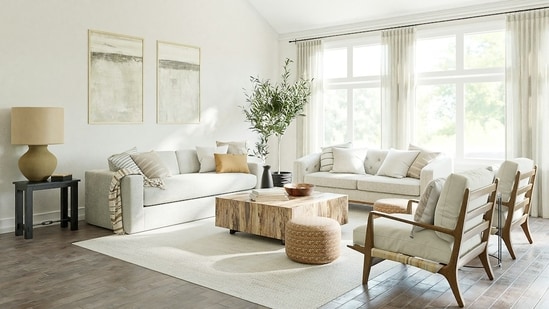
When you return from a long day at work or a regular day out, your home becomes a sanctuary for rest and relaxation. What makes a home comfortable? Contrary to popular opinion, an aesthetically pleasing home can also be uncomfortable. So, comfort is much more than how a room is decorated.ALSO READ: Can your home make you happier? 5 decor tips to create a space you love
What does an expert have to say about what determines a comfortable home beyond aesthetics? Priyanka Sinha, founder of The Opulence Interior Design Studio, reminded us that the rule of thumb is to take into account how people move around and use a room.
She added, "A beautiful house doesn't necessarily equal a comfortable house; whether it's the colours, the furniture or the decor, everything can look appealing, but comfort is a touch more subtle than this.”
Here are some of the mistakes the designer flagged:
1. Choosing looks over function
- Choose furniture and decor that serve a practical purpose, aside from looking good.
- Leave enough space around large pieces, such as sofas, to move comfortably.
- Check whether furniture is comfortable to sit on and easy to use before buying it.
- Pick designs that suit daily lifestyle and everyday routines.
2. Ignoring proportion and scale
- Choose furniture that suits the size of your room. Oversized pieces can make small rooms feel cluttered. Undersized pieces can leave large rooms looking incomplete.
- Consider how each piece fits alongside walls, doors, windows, and open areas for visual balance.
- Measure space and furniture before buying, allowing enough room to walk around comfortably.
3. Using too many colours and patterns
- Choose a consistent base colour palette to create a cohesive look.
- A more harmonised style can be achieved by establishing a unifying base palette and then adding personality with tactful accents.
- Earthy neutrals, natural textiles and well-chosen colour combinations can add richness without being too stimulating.
5. Forgetting the importance of empty space
- Homeowners can tend to want to fill every nook and cranny of their house with furniture, accessories and ornamental objects.
- Empty space is also a design element in a room and provides the eye with a break while providing room for major items to make an impact.
- Open spaces help with mobility and create an airy feel to rooms. Homeowners should sometimes wonder what can be taken out or moved rather than what can be added to a space.
In the end, the designer reiterated the value of a home that prioritises functionality alongside aesthetics. A well-designed space should accommodate your daily routines, allow easy movement and make you feel at ease. After a home should also feel good as much as it looks good.
What defines a good design? She added, “Good design is not about aesthetics alone; it is about achieving a space that is intuitive, harmonious, individual and lasting, and when we are conscious of proportion, space, function, light, colour and breath, then our homes will feel good for us and not just look good.”