
 E-Paper



Casting a spell: A Wknd interview with author Nazneen Ahmed Pathak

 Prefer HTon Google


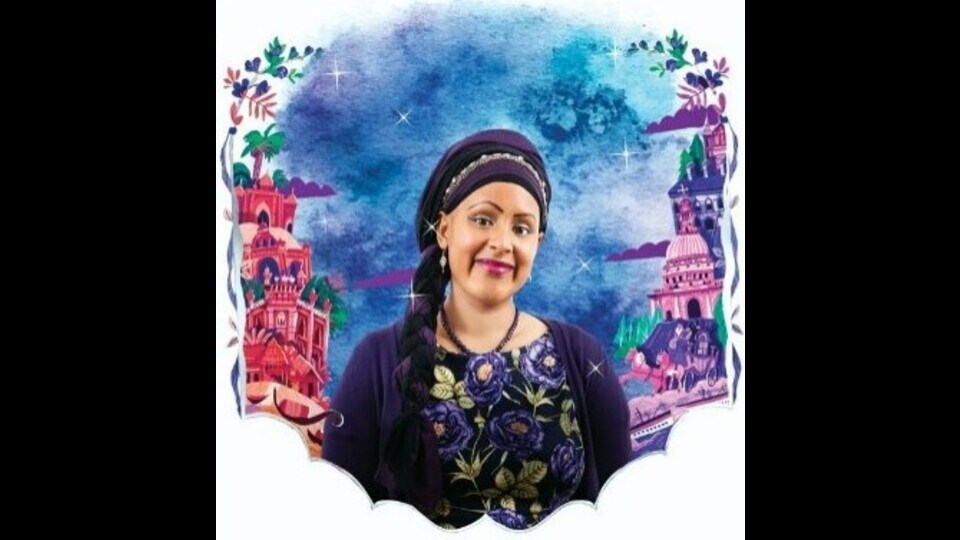
How does one explain colonialism to a child? A Bangladeshi-British writer's new work of fiction has magic, djinns, Englishmen and a broad history of her people.
The idea for her first book is a decade old, about the same age as her son, says Nazneen Ahmed Pathak, 44.
The Bangladeshi-origin British writer and historian was on maternity leave from a research project on the history of migrant communities in East London, when she began to toy with new ideas for ways to tell this story.
Those ideas would eventually take the shape of her first work of fiction, City of Stolen Magic, released by the Penguin Random House imprint Puffin in June. It is a tale of magic and adventure that aims to introduce colonialism to children in and from South Asia.
Set in colonial India in the mid-19th century, it starts out as a tale about how Indian magic is being stamped out, amid British rule. The protagonist, a pre-teen named Chompa, is among those with the gift. She possesses a dangerous power that her mother has forbidden her from using.
But then their home is attacked, her mother kidnapped, and Chompa decides to use all the power at her disposal to get her back. As she makes her way from her village to Dhaka to the smoky, bustling streets of East London, she begins to learn about other changes that British rule has wrought, in indigo farming, the frequency of famine, the building of cities.
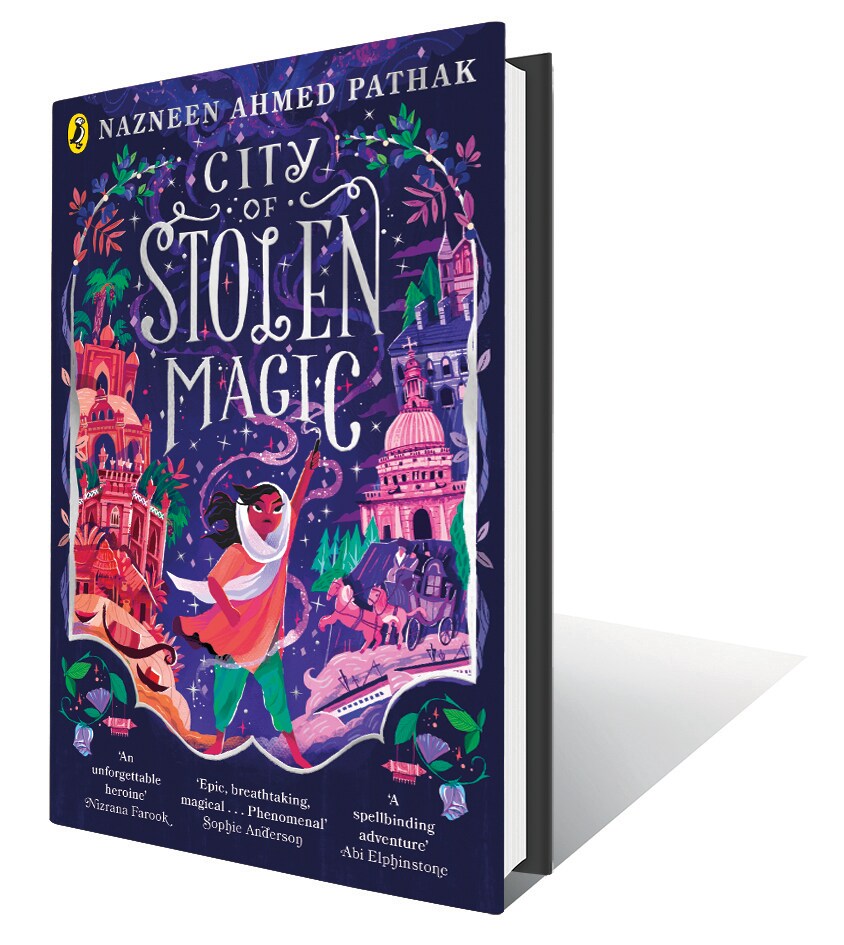
Through Chompa’s story, Pathak says, she wanted to help children understand why the world around them looks the way it does, in terms of the cities and borders it has inherited, the conflicts created then that are still unfolding now.
It is a history that she only excavated as an adult. Growing up, Pathak says she assumed that the first Bangladeshis arrived in London in the 1960s. She couldn’t find evidence of a presence before then; not in the books she encountered or the histories she was taught. “It was like we were invisible as a community.”
She was surprised to discover, during her research work, that merchant navy sailors from present-day Bangladesh had been travelling to England, specifically to port towns such as Southampton, where she grew up, for centuries.
“Some had set up lodging houses for other sailors. These were home to some of the first ‘Indian’ restaurants in the area that is now known as Banglatown.”
With such discoveries, her place in Britain, and the place of her family, became clearer. “It was colonialism that set the wheels of migration in motion or, as Sri Lankan-British novelist Ambalavaner Sivanandan put it so simply and beautifully, ‘We are here, because you were there’,’” she says.
***
Pathak’s father Mesbahuddin Ahmed was born on the river island of Narsingdi in Bangladesh and arrived in UK in the 1960s, aged 25, for postgraduate studies. He would later make a career as a chartered accountant. Her mother Saleha Parveen Ahmed, grew up in the historic old quarter of Dhaka, and migrated in the 1970s, aged 17, after marriage. She would make a career as a care worker.
Pathak grew up interested in history and literature. After graduating with a degree in English literature from University of Warwick, she completed a PhD in Bangladeshi literature from University of Oxford. Her husband is also a first-generation Briton, from a Hindu family with roots in Gujarat.
While on maternity leave, waiting for her son Roshan Pathak (now 10) to be born, she began to wonder how she would explain this story to him. She has since also had a daughter, Khushi Pathak.
“All of these places my children are connected to have also been important nodes in the British empire. We are all connected through the strands of history — and that’s the story I wanted to tell,” Pathak says. “I didn’t want my children to have to wait until adulthood to discover these connections. I didn’t want other South Asian children to have to wait until adulthood either.”
And so her story took shape. She wanted a girl as protagonist; magic and adventure allowed the tale to build with a sense of agency for Chompa. “I didn’t want to write something that would re-traumatise children who have already inherited traumatic histories. But this is a conversation we need to find ways to have with our children, everywhere, in ways that are appropriate for them.”
The magic in her book is very different from the witches, wizards and wands of the West. She weaves in elements of subcontinental heritage such as bhoots or ghosts, djinns or genies, and the engraved amulets called taveez, “the last of which,” Pathak says, “are a symbol, to me, of the power of the written word”.
And she weaves in community. By the end, Chompa learns that even the most powerful magician still needs her friends. “Resistance has always been a collaborative effort involving sacrifice and cooperation, and that’s what she comes to learn and value,” Pathak says.
With lush illustrations by Sandhya Prabhat, the novel ends on a note that suggests potential for a sequel. Pathak, who currently teaches creative writing at the University of Exeter, confirms that Chompa and her friends are set to head out on further adventures informed by the history of British colonial rule in India.
“I’ve been fascinated to explore the histories of female bandits in Bengal, and also the twin contributions of Laxmibai, the Rani of Jhansi, and Begum Hazrat Mahal, queen of Awadh, in the 1857 revolt.” There are also plans, Pathak says, for a book set in the 1930s that delves into the rise of Indian cinema and the Independence movement.


