
 E-Paper



Do you accept these terms?: Check out new words to describe the changing workplace

 Prefer HTon Google


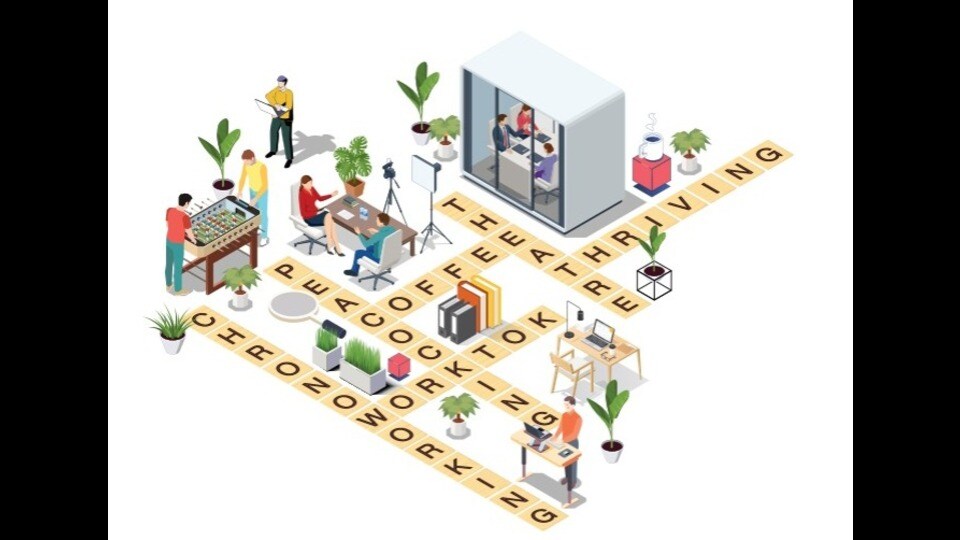
There are phrases for new perks, new work schedules, presenteeism in all its forms, and for offices trying, in desperate and shallow ways, to woo people back.
In late 2020, a sales executive in Arizona named Marisa Jo Mayes sparked a trend on TikTok, called #QuitTok. It began with a series of posts in which she explained why she was burnt out, and could not function in her role any more.
She needed immediate relief, she said, in the minutes leading up to her live-posted resignation. “It’s like an elephant foot off my chest, but I’m also sad,” the 26-year-old added, after it was done.
If that seems like an unusual way to quit, or deal with professional pressures, well, a new generation is finding novel ways to express their experience of the workplace, call out presenteeism in all its forms, and describe a world that is changing at one of the most rapid paces in industrialised history. Take a look.
Office peacocking: This describes an organisation that is trying to make its workplaces seem attractive, while offering nothing more than petty frills. The frills typically include relaxed dress codes, napping areas, recreational zones (think ping-pong tables and kombucha on tap). In many cases, the additions attempt to replicate the comfort of working from home.
A better way forward would be to offer perks such as childcare, extended healthcare and eldercare, says Christopher Barnes, a professor of organisational behaviour at the University of Washington’s Foster School of Business. “With on-site or near-site childcare, employees could gain psychological benefits from seeing their children during lunch hours, or nursing their babies.”
Chronoworking: Here, employees pick schedules that match their chronotype. “Larks” can begin as early as they like; “owls” can log in and stay logged in late. Individuals get to follow their circadian rhythm, while making room for childcare, eldercare and simply life at large.
While this may sound like something a hipster would request, it is how most of the world operated amid the stresses of the pandemic. Many of those patterns are sustainable, says counselling psychologist and leadership coach Sushma IR. “The pandemic proved that flexible workplace conditions did not necessarily cause the chaos that many expected.”
“We now have tools, such as software to record meetings, that allow people to pick up the threads seamlessly, even when colleagues’ schedules vary,” adds Barnes.
Such perks also help alleviate the growing stress that accompanies many full-time work profiles, in the shrunken and shrinking workforces of today.
Coffee-badging: This is the act of resisting back-to-office mandates by arriving at work, having a coffee with colleagues, being sufficiently seen, then heading home.
“With back-to-office mandates, the focus can often shift back to presenteeism, which has been a challenge through the decades, and which can breed inauthenticity and distrust on both sides,” says Sushma.
“Productivity theatre” and “loud labourers” are other new terms for the familiar acts of simulating productivity (often through presenteeism and extended hours) without focusing on efficiency or in fact doing the work.
“Given that new norms are still taking shape, post-pandemic,” Sushma points out, “there is an opportunity for organisations to define the best possible way forward, rather than simply returning to pre-existing formats.”
Ghost work: Coined by anthropologist Mary L Gray and computer scientist Siddharth Suri in their 2019 book of the same name, the term describes the largely invisible, underpaid, monotonous work that fills the gaps that algorithms still cannot fill. This includes gruelling hours spent labelling the data that is used to train artificial intelligence. It also includes online chat-support services, and content moderation on social-media platforms. It is essentially tasks that are so dull, relentless and monotonous, that most users think they are performed by a software program.
Ghost jobs: If there’s one thing that’s more disheartening to a job-seeker than a rejection email, it’s not hearing back at all. Often, the silence comes from the fact that the profile advertised does not actually exist. Ghost or phantom jobs are listings posted by real companies, for positions that they never intended to fill.
Sometimes, this is done to create an impression of growth and inspire confidence in investors. Other times, it is an attempt to assess the talent pool and create a list of potential candidates, for when current holders of the position move on.
How to spot a ghost job-posting? Look for vague descriptions, the absence of a joining timeline, and persistent postings for the same role.
Quiet cutting: This is a new term for an organisational restructuring tactic that involves nudging employees into resigning by reassigning them to less-desirable roles. It’s not a new practice, but it is starting to be viewed differently, as perhaps not the worst way forward, Sushma says. “It allows the employee time to take stock of where their career was going in the first place.” A key factor, she adds, is how the employer communicates the change. Empathy and constructive conversation, she says, are vital.
Quiet thriving: This is the act of finding new purpose while in a frustrating job. Tapping into one’s unique skills could involve offering inputs for the company newsletter, trying out for the office sports team, or building a community of work friends that makes the day seem less futile. In the short term, this can help, Sushma says. But it is important to ask oneself: Why do I feel like this? Expect that to lead to questions that are even harder to answer: “What do I really want to do?” and “How best can I contribute to my society?”
#WorkTok: Conversations about changing office cultures abound on TikTok, Instagram and X, linked to the hashtag #WorkTok. In the pandemic, the hashtag took the place of the proverbial water cooler. It was where one shared light jokes, minor frustrations, ironic observations. It grew from there into a platform for those looking to air serious disappointments, discuss layoffs, toxic work cultures, unfair pay structures and the intensifying post-layoffs grind. It is now a space that is shaping how the world of work is viewed and discussed, partly through the discussion and adoption of new terms, such as coffee-badging and chronoworking.


