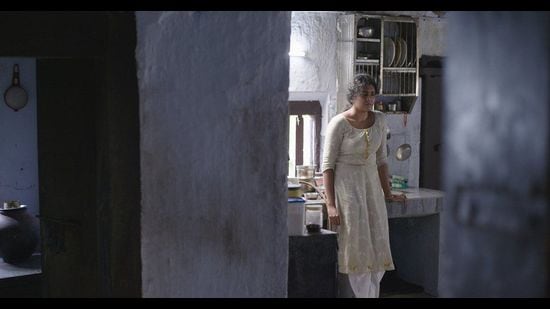
It’s being called Jeo Baby’s first blockbuster. When the Malayalam film The Great Indian Kitchen was released on January 15, it crashed the streaming platform Neestream. The niche Malayalam pay-per-view portal hadn’t anticipated the traffic it would get.
Director Jeo, 38, says he decided to make the movie when he went from helping out in the kitchen to taking over kitchen duties completely, after his wife Beena KV had their first child in 2017.
The film is an insightful and rather disturbing look at the lives of two women — a new wife and her mother-in-law, but mainly the wife — as they trip over themselves to get the breakfast ready, wash the dishes, make lunch, wash the dishes, move on to dinner and more dishes. They work silently and are benignly ignored, except when something isn’t just right. These errors are pointed out kindly, but aren’t to be repeated.
They work in conditions that aren’t ideal — the coconut chutney tastes best when it is ground bit by bit, by hand; sambar is made in fresh batches each morning; the rice is only to be cooked on a wood fire; the kitchen sink is a leaking mess; and no matter what the leftovers from the afternoon, there must always be fresh rotis at night.
The cast is stellar — National Award winner Suraj Venjaramoodu is the young husband, Nimisha Sajayan is sutble and evocative as his wife. The film also touches upon the issue of women entering the Sabarimala temple in Kerala, and the stigma around menstruation, which led some mainstream OTT platforms to reject it. After its grand success on Neestream, the film is now also streaming on Amazon Prime. Excerpts from an interview with Jeo:
{{/usCountry}}The cast is stellar — National Award winner Suraj Venjaramoodu is the young husband, Nimisha Sajayan is sutble and evocative as his wife. The film also touches upon the issue of women entering the Sabarimala temple in Kerala, and the stigma around menstruation, which led some mainstream OTT platforms to reject it. After its grand success on Neestream, the film is now also streaming on Amazon Prime. Excerpts from an interview with Jeo:
{{/usCountry}}You have called the film a lighter version of the real situation…
Yes, that’s right. I have just touched upon what women undergo in our society. The problem is severe and psychological, and I have tried to capture this. What frustrates me is that though these regressive traditions are common, society at large and the government seem to be helpless, in that they don’t seem to know how to respond to these deeply ingrained problems of tradition.
Why do you think we have been unable to alter these traditions, despite all our other “progress”?
The woman’s status in Indian society has to change a lot. It baffles me that these old traditions have carried on into the 21st century without any change. For change to happen at this point, women have to stand up for themselves and fight for their rights. Yet, that is difficult to do in a patriarchal society. What could help are changes at a policy level, where the government undertakes certain measures. It’s the only way there will be justice in a male-dominated society.
Where you do think the family unit and the individual can make a start?
Too many women believe that it is their duty to serve and that kindness from a man is a privilege. If a woman continues her education or career after marriage, she is often grateful to her husband or his family for giving her the permission to do so. The first thing to do is to encourage women to not think this way. It is each individual’s right, freedom and choice to study or work, and no one’s generosity. To empower, we must change mindsets. We must prepare women to emerge from their prisons, and emerge as individuals.
What does your wife Beena think of the movie?
I discussed the script with my wife first. Managing a kitchen alone is when I came by this wonderful and dreadful opportunity to understand what a woman undergoes in the kitchen. If she is a working mother, then the burden is doubled. When Beena and I got married, we decided to share all the household duties and the childcare. So, we have discussed these traditional roles of men and women, husband and wife, a lot.