I have never really liked plain walls. Somehow, they make my room and living space look more like a dormitory. Recently, I came up with the idea of decorating my walls, especially with a gallery wall, but with so many options available, I just cannot decide what to go for. Should I choose one big artwork or multiple portraits? If you are also looking to style your gallery wall but can't decide what to choose, here's what you can add without overcrowding the space.
1. Choose one large artwork for a statement look
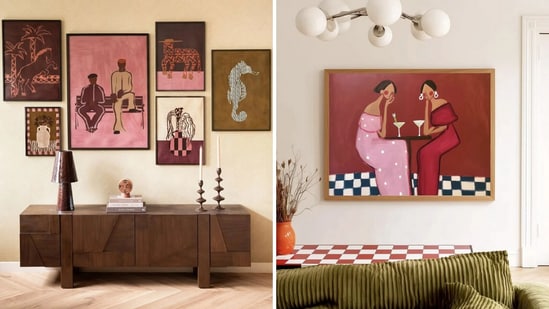
If you prefer a clean and uncluttered look, one large artwork can be enough to transform an empty wall. A statement painting or print draws attention without requiring several frames or decorative accessories. It can work particularly well above a sofa, a console table or the headboard of a bed. When choosing the artwork, consider the proportions of the wall and the furniture beneath it. A very small frame on a wide wall may look disconnected, while an oversized piece can overwhelm a room. If you are placing it above a sofa or console, look for a size that visually relates to the furniture rather than covering the entire wall. The artwork does not necessarily need to feature bold colours. Abstract prints, landscapes, botanical illustrations and monochrome photography can all work, depending on the room's existing palette.
What to consider: Check the artwork's dimensions, frame finish, orientation and hanging requirements before buying.
2. Create a gallery wall with multiple frames
A gallery wall is an excellent choice for displaying multiple prints, photographs, or illustrations. Rather than relying on a single large piece, you can create a composition with frames of various sizes and orientations. You can keep the arrangement cohesive by selecting a common theme, such as botanical art, travel photographs, abstract prints, or black-and-white images. Alternatively, use frames with similar finishes to bring together artwork of various colours and styles.
Before hanging anything, arrange the frames on the floor to test different layouts. You can also cut paper templates in the sizes of the frames and temporarily place them on the wall. This helps you judge the overall shape and spacing before making holes.
3. Mix artwork with personal photographs
If you want your home to feel more personal, combine artwork with photographs from trips, memorable occasions, or everyday moments. This approach gives the wall a collected look rather than making it feel like a display of prints bought all at once. For a cohesive arrangement, use black-and-white photographs, choose frames in two or three complementary finishes, or mix personal pictures with illustrations in a similar colour palette. This idea works well in living rooms, hallways, and bedrooms, particularly where you want the decor to reflect your interests and experiences.
4. Use a pair of artworks for a balanced look
If a single large artwork feels underwhelming and a full gallery wall overwhelms the senses, consider pairing two complementary pieces side by side. This simple duo brings harmony to your space without crowding the walls. Choose matching prints, works from the same collection, or pieces united by a shared colour palette. This arrangement shines above a bed, sofa, or long console table, where a pair of frames elegantly fills the horizontal expanse.
What to consider: Measure the available wall space and decide on the gap between the frames before hanging them. The pair should look like one intentional arrangement rather than two unrelated pieces.
5. Add depth with framed prints and picture ledges
You do not always have to commit to a fixed gallery wall. Picture ledges allow you to display framed prints while making it easier to change the arrangement when you want a refresh. You can layer two or three frames of different heights, then add a small decorative object if the ledge has enough space. This creates a relaxed, layered look and gives you the flexibility to switch artwork seasonally or whenever your preferences change. Picture ledges can be useful in living rooms, bedrooms and workspaces. However, they do need secure installation, and the ledge should be suitable for the combined weight of the frames and any objects placed on it.
6. Style the wall with mirrors and artwork
You could add a centre mirror and place smaller frames around it, or position a mirror beside one statement print. The arrangement can work above a console table or in an entryway where a mirror also serves a practical purpose. Choose the mirror's shape and frame carefully so that it complements the artwork rather than competing with it. For example, a round mirror can soften a wall arrangement dominated by rectangular frames.
7. Try a themed wall for a more cohesive look
If you find it hard to mix different styles of artwork, picking a theme can make it easier. Botanical prints, architectural sketches, abstract art, landscapes, and travel photos are some ideas to try. A theme doesn’t mean every piece has to look the same. You can mix different sizes and styles while keeping a link through the subject, colour scheme, or frame style. For example, botanical illustrations can go well with natural wood frames and some green touches in the room. Travel photos can be shown with maps or architectural prints, while abstract art can match colours already in the furniture and soft furnishings.
What to check before buying wall decor?
Before adding artwork to your shopping list, measure your wall and note the dimensions of any furniture beneath it. This ensures you select pieces that are appropriately sized and won't overwhelm or underwhelm the space. Pay close attention to the frame material, print quality, orientation, and whether the artwork arrives ready to hang. For gallery wall sets, check the number of frames, individual dimensions, and whether prints are included or must be purchased separately.
When decorating a rented home, consider using removable hooks or other wall-friendly mounting options. Be sure to check weight limits and ensure compatibility with your wall surface. For heavier frames and mirrors, secure mounting is especially important. Thoughtful placement will keep your artwork visible and appealing throughout the day.
- 1. Is one large artwork better than a gallery wall?
Yes, it is the best choice for someone who does not like the cluttered wall.
- 2. How do I style an empty wall above a sofa?
You can decorate the wall above the sofa by adding one artwork or many other small artworks to give it your desired look.
- 3. How do I arrange frames for a gallery wall?
Start by selecting the frames and laying them out on the floor. Experiment with different arrangements, keeping the spacing reasonably consistent.
Disclaimer: At Hindustan Times, we help you stay up to date with the latest trends and products. Hindustan Times has an affiliate partnership, so we may get a part of the revenue when you make a purchase. We shall not be liable for any claim under applicable laws, including but not limited to the Consumer Protection Act, 2019, with respect to the products. The products listed in this article are in no particular order of priority.