Stop shaking your ketchup bottle. The condiment shelf these days is a mood: Za’atar for pita, peri-peri for meats, four kinds of soy sauce for stir fries, furikake to dust over a poke bowl, balsamic vinegar for salads. Chilli oil for… well, everything.
Even the desi staples are unrecognisable. Kerala pork relish sits next to Naga bamboo pickle at neighbourhood shops. One aisle away are dry peanut chutneys from Maharashtra, and kasundi, Dijon and honey mustard. Hoisin, sriracha, gochujang – are those the three witches from Macbeth or has the cart rolled into the Asian section? Even restaurants are shilling bottled in-house blends: Honey-mint aioli, chimichurri, toum, fermented sambal oelek, porcini chutney, wasabi crème fraîche. And in the Never Thought I’d Need It category: Vegan mayo, sugar-free ketchup, and miso butter.
India’s sauce and condiment market is, well, heating up as more of us try out new cuisines. Globally, Meghan Markle, Glen Powell, and Brooklyn Beckham have launched everything from jam and ketchup to hot sauce. In India, Janhvi Kapoor is recommending gochujang noodles on Instagram. How did flavour-bombing become our attack method?
Opening notes
{{/usCountry}}Opening notes
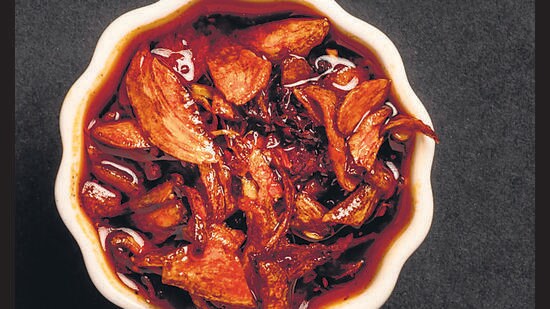
{{/usCountry}}Of course, the pandemic is one part of the puzzle. It’s when we all hacked our way to the restaurant dishes we craved in the lockdown. Raman Okram, freelance chef, learnt to survive on quick, easy recipes through years of boarding school and college. Chilli oil, he found, could rescue almost any dish. In 2019, he launched Ramano’s Chilli Oil, back when the condiment was only found in restaurants, as a sidekick to noodles.
By the lockdown, chilli oil was everywhere, and in everything. We stirred it into noodles, drizzled it on salads, spooned it over fried eggs, bagels, even dal chawal. “In the last five years, we’ve seen a chilli oil revolution,” Okram says. From there, it was a short jump to other easy flavour-boosters. Tahini, we discovered works in a chicken salad, cookies, oats, even hot chocolate. Indonesian sambal oelek can go into tofu, eggs, burritos, and soups. A well-stocked condiment cabinet, we realised, could “cut down cooking time, add fun, and work across cuisines,” says Preetika Chawla Rao, who co-founded Pickle Shickle with her sister Prerna in 2016. “I’m always hunting for new herbs, masalas and chutneys to cook with, and to zhuzh up whatever I’m eating.”
Side orders
At restaurants, a good sauce recipe is like a magic potion. “It complements a dish, and it is also what binds everything together. It should be given its due importance,” says Indian Accent’s chef Shantanu Mehrotra. His menu pairs a tofu medu vadai with sambar cream; burrata chaat with mustard tomato jam; smoked duck shammi with barberry chutney. His go-to? A simple chilli chutney made from just three ingredients found in every kitchen: Fresh green chillies, vinegar and salt.
Sauces also give familiar Indian dishes a bit of a kick. Mehrotra’s menu at Indian Accent includes a strawberry and green chilli chutney for the Meetha Achaar Pork Spare Ribs. “Our Ghee Roast Mutton or Soya Bites are paired with four chutneys, including coriander, green chilli, and black pepper,” he says. “This mix of desi recipes with international influences modernises the dish.”
In most cases, a flagship flavourbomb is the shortcut to appreciating an unfamiliar cuisine. A dab of wasabi feels immediately Japanese. Vinegary beetroot batons? There must be a shawarma nearby. Blue-cheese dressing is the antidote to a crumbly burger.
Niharika Goenka launched Boombay in 2022, selling everything from dips, spreads and dressings, to chilli oils, hot sauces and stir-fry mixes. “We were seeing condiments go viral abroad,” she says. “We knew the wave would reach India.” And when it did, Goenka leaned into the familiar. “Chilli oil couldn’t be more Indian. It’s just oil, garlic, onion, chilli. Plus, after Indian, the next most-loved cuisine here is Asian. So, we focused on flavours like Schezwan, teriyaki and garlic chilli.” They sell better than their vegan mayo, made with nuts, seeds, cold-pressed oil, and coconut vinegar.
At Ramano’s, it’s a similar story. Their Fiery OG Chilli Oil sells better than the honey variant.
Palate cleanser
It’s easier to get excited about a new condiment than a whole new cuisine. It calls for tiny portions, its long shelf life makes for multiple experiments, it delivers a kick that Indian palates naturally love. At Olive Bar and Kitchen, executive chef Dhruv Oberoi has planned a menu that reimagines 20 classic European sauces with local ingredients. Instead of white or champagne vinegar for the Hollandaise, they’re experimenting with jamun vinegar. “It transforms the dish and pairs beautifully with scallops.” Even chilli condiments are going local. “If one’s made with Guntur from Andhra Pradesh, the next is with Mathania from Jodhpur, another with Kashmiri resham patti, or hot peppers from the North East.”
Goenka is seeing a similar shift at Boombay. “Our chef Aditi Keni has replaced lime juice and vinegar in salads with kokum.” Another major change: “People are actively avoiding additives and sugars.” So the brand has tweaked its range to be free of oil and artificial preservatives. Okram skips soy sauce in his chilli oils. Chawla Rao is working on a sugar- and preservative-free tomato sauce for Pickle Shickle.
After taste
Already, there’s a right way and wrong way to pick sauces. “Indian diners are spoiled by this whole Tabasco culture,” says Oberoi. “It’s very American, and doesn’t belong anywhere near Italian food.” Their in-house version has smoked Guntur chillies, fresh oregano, honey, and pepperoncino.”
But the rules are flexible. Chawla encourages customers to try their pork, chicken, mushroom, jackfruit pickles as gol gappa fillings or in tacos. Goenka wishes more Indians would use Schezwan sauce beyond fried rice. “You can grill with it, saute with it. Same with chilli oil— it’s not just a dressing. Condiments are more versatile than we give them credit for. Be creative.”
From HT Brunch, May 31, 2025
Follow us on www.instagram.com/htbrunch