
 E-Paper



Gender no barre: India’s male ballet dancers are shaking up the stage

 Prefer HTon Google


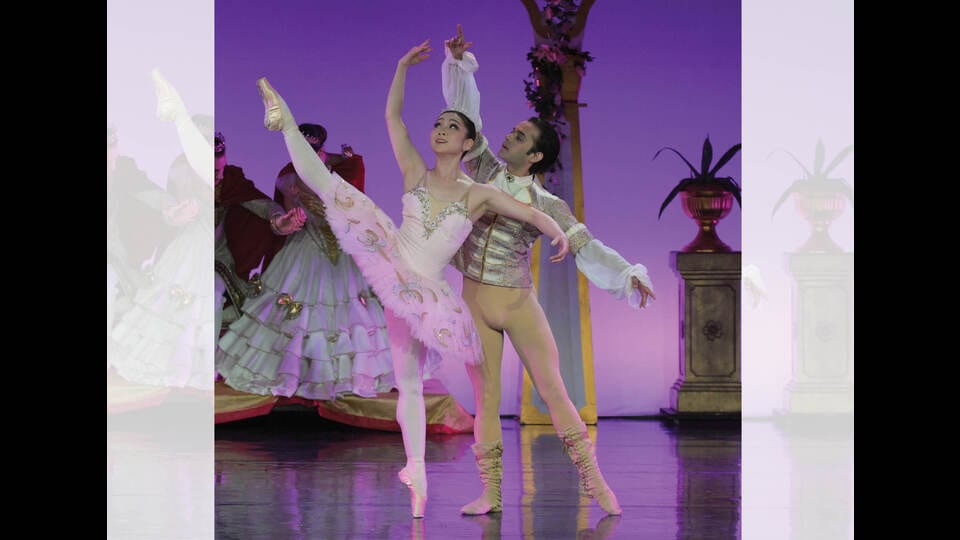
Male ballet dancers are tiptoeing around taboos, training hard, and taking the stage, heads held high. Meet four young men taking this leap of faith
Think of it as an Inception-style dream within a dream. India has only a handful of ballet schools – there are barely a few hundred trained ballerinas. Male ballet dancers are even fewer – who’d dream of a job that is punishing on the toes, demands lightness but also heavy lifting, rarely puts you in the spotlight and inevitably draws sniggers?
Yet, in several cities, young boys are signing up for ballet lessons, even when they’re the only male in a class of 30. They’re making the most of rehearsal, stretching muscles they didn’t know they had, unlearning loose hip-hop moves, correcting body alignment, appreciating ballet’s technical precision. Along the way, they’re realising just how different ballet is for a male. Dramatic leaps, dizzying pirouettes – yes. But also supporting ballerinas (who can weigh as much as 50 kgs) in complex lifts but making it appear effortless.
It’s a gamble from the start. But for most young dancers, ballet is a less-crowded arena than street-dance and Bollywood, offering a better stab at success, more international gigs. See how four young men stay committed and dream within their dream.
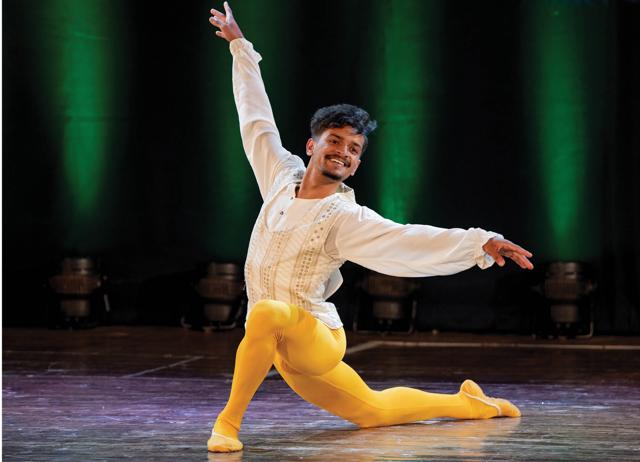
Tejas Saraswathi, 19, Bengaluru
Saraswathi started taking ballet lessons when he was seven. The bullying started shortly after. Boys in school would make fun of him for “dancing like a girl”. It went on for three years. Saraswathi almost gave up. He only kept at it because his grandmother urged him to, and his ballet instructor, Yana Lewis, encouraged him to follow his heart. Ten years on, “there is more appreciation for male ballet dancers,” he says. “The kids who teased me come to my shows and cheer me.”
Still, it’s been a tough journey. Saraswathi was brought up by his grandfather who works in the handloom industry, and his homemaker grandmother, in a two-bedroom rental in Bengaluru. He studied ballet via the Lewis Foundation of Classical Ballet’s outreach programme at his school. “I had never heard of ballet then. I only knew of Bharatnatyam and hip hop,” he recalls. He was one of nine kids out of 120 who showed enough aptitude to make it to the actual classes. “There we saw other dance students. That was when the motivation and love for ballet started for me. Watching them dance so well made me want to do better.”
Saraswathi has put in the time and the sweat. He’s scored 99/100 in an international ballet exam, and he won this year’s edition of the Great Indian Ballet Competition in Mumbai. Some of his favourite moments have been on stage. He had his first nervous solo as Bluebird in The Sleeping Beauty in 2017. Last year he performed his first duet in Alice, the ballet version of Alice’s Adventures in Wonderland. His moves called for not only grand jetés (those broad, high leaps that look like aerial splits) and complicated jumps, but also for supporting his female partner through lifts and spins. “I had to gain more muscle for all the partner work, working out with weights in between rehearsals,” Saraswathi says.
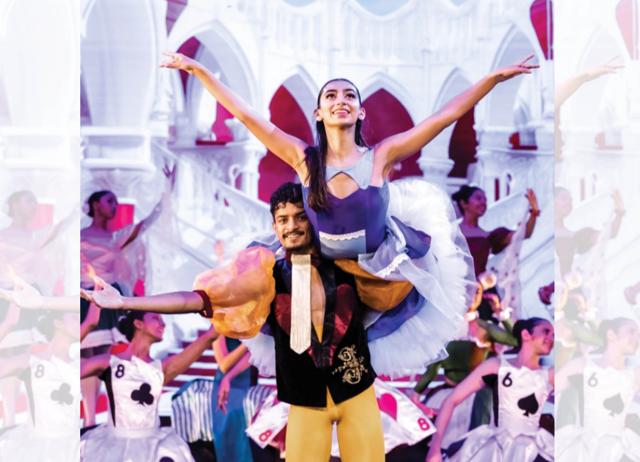
He’s also learning jazz and hip hop at TLFCB, but Saraswathi is one of only six males studying ballet across the institute’s six centres. It’s given him a unique edge. It’s hard for hip-hop and contemporary dancers to stand out. “But with ballet, there are more opportunities to be on stage,” he says. He has also been a training assistant, where he realised that his presence had an encouraging impact on the male students. “They would skip classes, but seeing a male dance instructor motivated them to attend regularly and put in the effort,” he says.
Several of the institute’s alumni, young men and women, have gone on to train and dance abroad. But despite aid, it’s an expensive move. Saraswathi was accepted into the summer programme at New York City’s National Academy of Ballet this year. But the visa, travel, accommodation, and sustenance over three weeks would cost approximately ₹3 lakh. It’s out of his reach.
It’s also why it’s hard for him to plan a career in ballet. “I would love to do this full-time, but I have to take care of my grandparents,” says Saraswathi, who’s studying to become a physiotherapist. He still dances five-hours a week. “Ballet will remain my passion and I will always dance.”
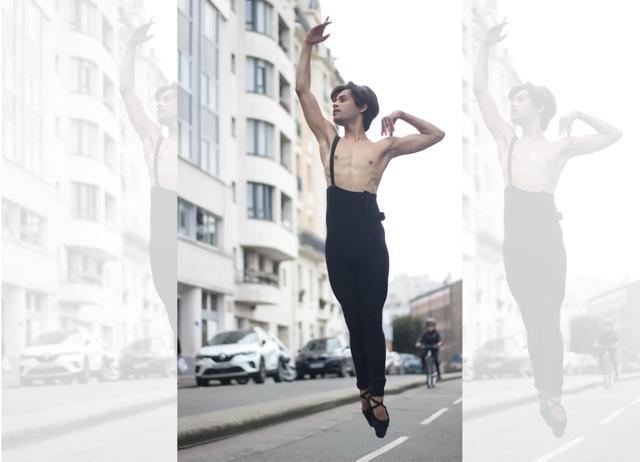
Bobby Roy, 23, Mumbai
“There are no ballet companies or productions in India. I want to change that,” says Bobby Roy, who launched India’s National Youth Ballet, a ballet performance company, in April.
Roy only started learning ballet at 17. His father is a utensils vendor, his mother is a homemaker, but supported his dreams of becoming a Bollywood dancer. His father even took him to Mumbai to enrol in a dance school.
At The Danceworx, Roy took lessons in jazz and contemporary. But observing a ballet class taught by Yehuda Ma’or (who inspired the 2020 film Yeh Ballet) changed his mind. “I didn’t know this dance form existed,” Roy says. He convinced Ma’or to train him and won a full scholarship by The Danceworx’s founder and choreographer Ashley Lobo. Ma’or worked with Roy on technique, posture, and body alignment. He also showed Roy videos of ballet productions such as The Sleeping Beauty. “I discovered something incredible I had never seen before.”
Roy made up for lost time by putting every spare minute into rehearsal, often his lunch breaks too. “If the studio was open, I would practise.” He wore out his ballet shoes and kept sewing them up. Eighteen months in, Ma’or believed Roy ready to audition for international ballet schools.
“I didn’t sleep for a week. I applied to 300 to 400 schools,” he says. Several offered him admission, but only the Paris Marais Dance School threw in both a full scholarship and support in a fundraising event to cover the first six months of his stay in 2019. The dream had begun.
Roy took up a job at an Indian restaurant in Paris to get by. “I did everything from delivery, waiting tables, washing dishes, and occasionally cooking,” he recalls. His Paris training got him opportunities to work with Europaballett in Austria, and dance companies in Germany, despite the pandemic. He loved it. “I got to perform at the Vienna State Opera as a guest dancer.”
Throughout, the fact that he is a man, pirouetting in an overwhelmingly women-focused field, hasn’t bothered him. What’s kept him up at night is the competition. Internationally, it’s common for 600 to 700 male dancers to compete for two spots in a major production. “In Europe, the minimum height requirement for men is about 170 centimetres, and the dance companies look for ‘princely’ features, for the principal roles.” Few Indian ballet dancers make the cut.
So he’s changing the game. “I missed India and thought I could do something here, providing dancers opportunities based on their talent, not their colour or physical features,” Roy says. His Mumbai-based dance company currently has three men and five women. “Not everyone can go abroad. A ballet dancer needs to perform to enjoy the thrill of audience appreciation and to be aware of the art form. This experience is crucial.”
Vivien Rishy, 21, Chennai
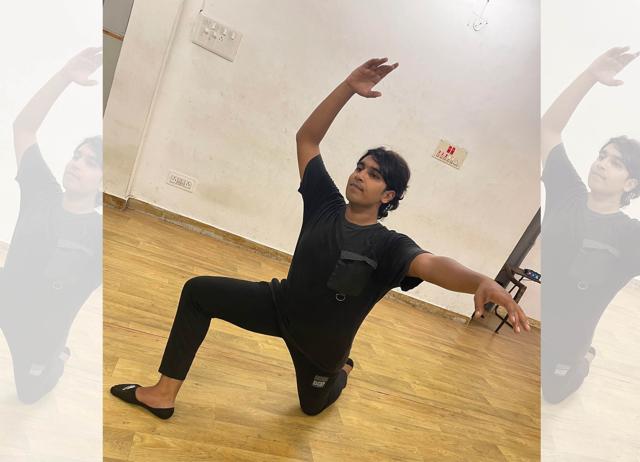
In 2013, at age 10, Vivien Rishy was the only boy in class at The School of Ballet and Contemporary Dance in Chennai. “I thought ballet was for girls. My grandmother was a Bharatnatyam dancer and showed me ballet in videos, encouraging me to take classes,” he recalls. Later, he noticed a few other boys attending evening classes. Seeing other males interested in this “soft and gentle” art form, motivated Rishy to keep learning off and on.
Now 21, with a degree in Visual Arts, he’s part of the school’s advanced batch, dancing twice a week and has performed in the school’s recitals of The Nutcracker. Ballet is part of his larger passion for Western music; he’s also taking classes in piano, guitar, vocals, and the violin. “Freestyle dancing (which includes breakdancing, popping, and locking), which I also do, is more popular and is often about showing power,” he says. “Ballet and Western contemporary dance capture the softer and more emotional side.”
But it’s doubly demanding on the body. Rishy is one of three male dancers in a class of 20 ballerinas. He has to support them through lifts and turns. Plus, it can be lonely with few male dancers as peers, role models, or mentors. Chennai does not have as many ballet schools or male dancers as Delhi or Mumbai. Ann Toner, who runs The School of Ballet and Contemporary Dance, says things are changing. “Earlier they would start really young, now we get young adults, people in college and working professionals,” she says. She’s had neurosurgeons and scientists among former students. “Unfortunately, they branch out into careers and don’t have time to pursue their passion.
Chennai also lacks large rehearsal halls and grand stages designed for ballet, Rishy observes. He hopes to become a choreographer for ballet and contemporary dance. “Male dancers may think ballet is not for them. But every dance style has something valuable to learn and ballet should be explored along with other dance forms you are learning,” he says. It’s a belief echoed by dance schools around the world, which encourage training in ballet before dancers explore other styles.
Rishy says he’s never faced any teasing or bullying about him being in ballet. “But I only tell people if they may seem interested.”
Rahul Chanana, 31, Delhi
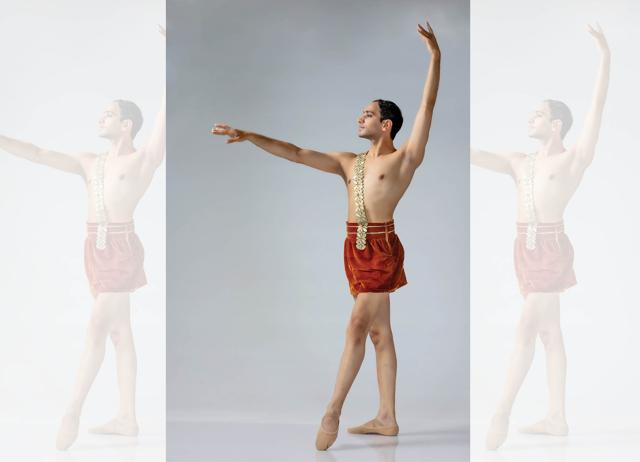
Chanana, by his own admission, is intensely shy. But on the dance floor, he’s a whole other person. He grew up in Delhi’s Moti Nagar with two siblings, a father in the transport field and a homemaker mother. The family couldn’t afford to send him to dance classes, but Chanana would let loose at parties and wedding celebrations, wowing onlookers. He took his first formal lessons, in jazz dance, only when he started working at age 21 – a grown-up in a class of kids. “I was so self-conscious and just nodded nervously anytime the instructor spoke to me.”
He found his groove soon enough. And even found the confidence to try a few ballet sessions. “I didn’t know what the barre was, but the discipline of the form appealed to me,” he recalls. By 2015 and 2016, as a dancer in Disney’s Mumbai production of Beauty and the Beast, he knew he had to go back and train in ballet to do better in other dance styles. He signed up at Central Contemporary Ballet in Gurgaon in 2017 and worked his way up (with an almost perfect attendance record) from learning to teaching and dancing full-time with his mentor and instructor Sanjay Khatri, one of the male pioneers of ballet dancing in India.
The man from Moti Nagar has appeared in productions of Diana and Actaeon and Spartacus. Ballet has given him a confidence that mere dancing couldn’t, he says. “The discipline it requires keeps calling to me. It gives me peace and a sense of comfort,” he says. He’s also much more comfortable in social situations now.
Out of the approximately 150 current students at CCB, only five are young boys (though none of them are Indian). Adult male dancers number only seven. Being a male instructor can be challenging, Chanana says. Parents of young children generally prefer female teachers. But they’ve learnt to trust him over time. Chanana plans to open his own ballet school when he is ready. “Then, I would love to travel abroad, maybe a month during the summer and winter holidays to learn from dancers there.”
From HT Brunch, July 13, 2024
Follow us on www.instagram.com/htbrunch


