
 E-Paper



First look, first taste: Gaggan Anand’s hot new Delhi restaurant, Raga

 Prefer HTon Google


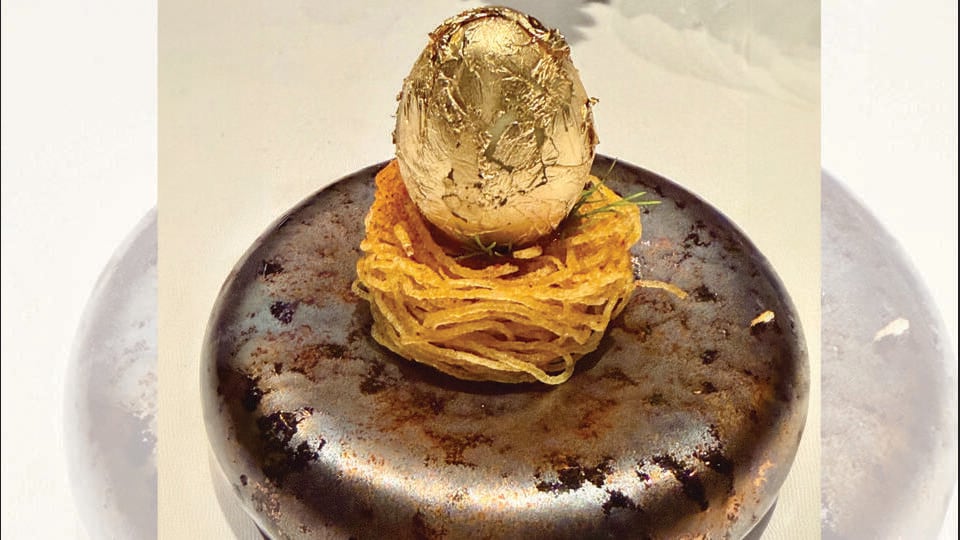
A vada pao-sandwich hybrid, a zero-grease nalli nihari, a yoghurt explosion. Raga is a homecoming for Gaggan Anand, as Rydo Anton takes over the India kitchen
By the time you read this, Gaggan Anand may have opened Raga on Delhi’s iconic Janpath for previews. So, the media will get to try the food and you will hear more about it in the days ahead.
It is no exaggeration to say that Raga is the most awaited restaurant opening of the last several years. I went for a pre-opening tasting and, jaded cynic that I can sometimes be, I was unable to resist being blown away. It is well on its way to becoming the best restaurant in India.
Raga is a homecoming for Gaggan, but it is also the culmination of several unsuccessful efforts by the chef to open a restaurant in India, because serving food to his own people has long been Gaggan’s dream. And despite all the accolades Gaggan has won over the last decade and a half (Asia’s best chef for a record five times, etc), he has always felt incomplete without a restaurant in Mumbai or Delhi.
Not that he hasn’t tried. In 2016, he signed up to open a restaurant in Mumbai. They had a name (Nuage, which means cloud in French, a play on Gaggan’s name), a location (Bandra) and a head chef. Garima Arora was set to run the restaurant, and to prepare, she worked for several months at Gaggan in Bangkok.
At the last moment, the deal collapsed. And though Gaggan had other offers during that period (including a restaurant at Atlantis in Dubai), he turned them down and kept looking for a restaurant in India.
The pandemic, and a split with his original partners, distracted Gaggan. But when he was able to devote his entire focus to restaurants again, he agreed to take over a space (the Mediterranean restaurant Syrah) at Delhi’s Hyatt Regency, and ran a temporary restaurant (a residency) for two months. I was sceptical about how well it would do with a fixed menu at around ₹50,000 per head. But to my astonishment, it was packed every night.
Gaggan had the option of making the residency permanent, but eventually he decided against it because he wanted to build a proper Gaggan restaurant from scratch.
In 2025, Zorawar Kalra and his wife Dildeep came for dinner to the flagship Gaggan restaurant in Bangkok. Kalra is a very successful restaurateur who knew Gaggan but had never really eaten his food. This was ironic, because Kalra’s restaurants had launched so-called molecular gastronomy in India, and the original menus had dishes that were clearly inspired (‘stolen’ is too harsh a word) by Gaggan, including his signature Yoghurt Explosion. (I wrote at the time that some of partially successful copies of Gaggan’s dishes at Kalra’s first Masala Library tasted as though Gaggan had faxed them from Bangkok over a very bad line.) Kalra says once he ate the real thing he knew at once that he had to open a restaurant with Gaggan.
Gaggan had seen many proposals and offers come and go, so he approached this one warily. On the plus side, he liked Kalra and valued his expertise when it came to running restaurants in India. He also liked the location that Kalra was offering: A prime spot on the historic Janpath, where Kalra had once run his Delhi Masala Library.
But given that Gaggan had such specific requirements, could Kalra meet them? For instance, Gaggan wanted the entire restaurant redesigned by his own architect. He wanted to import the crockery and cutlery from Japan, and he wanted it all to be specially created for the restaurant.
Then there was the matter of the kitchen. Gaggan wanted a higher chef-to-guest ratio than any Indian restaurant had ever had. He wanted to import the latest technology. For instance, one machine that he required cost ₹28 lakh. An ice-cream machine (used for just one dish) cost ₹15 lakh.
To Gaggan’s surprise, Kalra agreed to everything. He only disagreed with Gaggan about how much to charge. Kalra wanted to cap the set menu at around ₹11,000. Gaggan, who had charged ₹50,000 at his Hyatt residency thought this was too low. Eventually, Kalra prevailed and Gaggan saw his point: If you are calling it a homecoming, then don’t price it so high that your friends and relatives can’t come to your home.
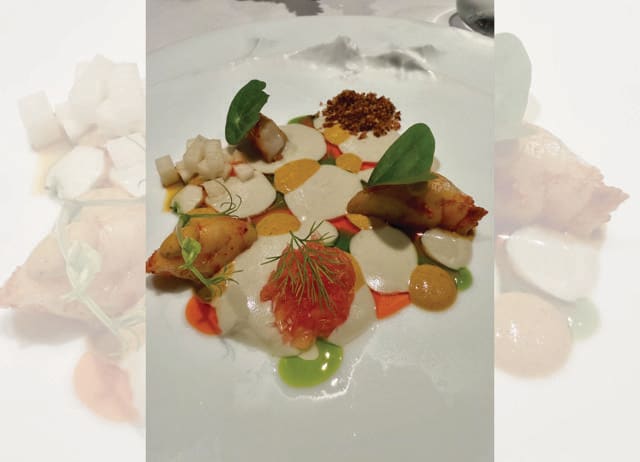
I went for dinner on Monday night and was startled by how the new designers had reworked the space. It looked elegant rather than posh-fancy, and the Japanese aesthetic of less-is-more had given it a stylish but no-nonsense look. Despite his bindaas image, Gaggan is obsessed with details. The evening I went, he had spent the day going to florists to find the right flowers and had bought new candles for the restaurant from Good Earth. Early in our meal, he decided that the piped music was wrong and switched it to one of the playlists he had created for the Bangkok restaurant.
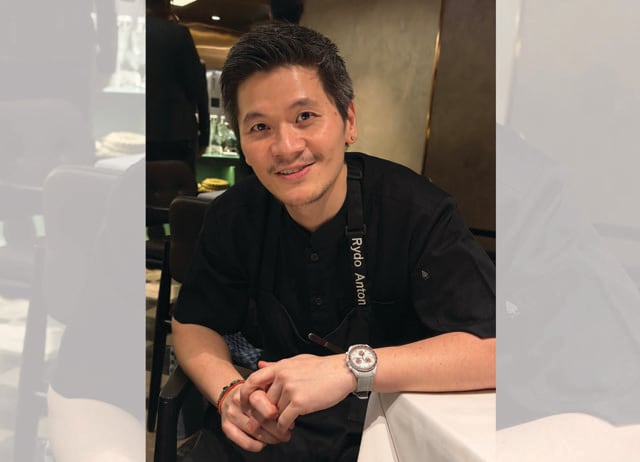
I like good-looking restaurants. But for me, the most important thing is always the food. I knew it would be good because Rydo Anton, the chef who has been the backbone of all of Gaggan’s restaurants, had shifted to India and rented a flat near Janpath to create the dishes.
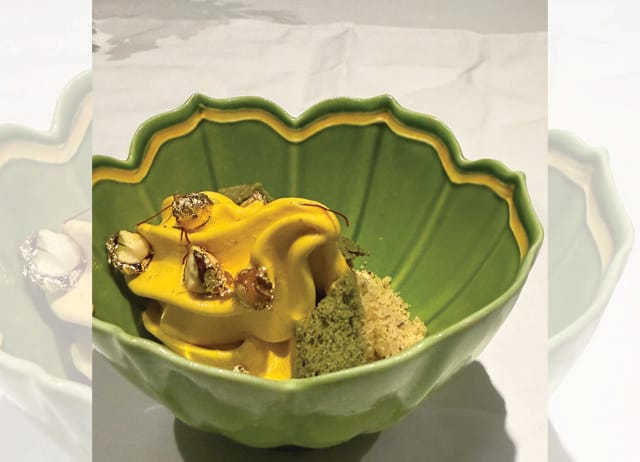
Gaggan has always acknowledged Rydo’s role in his success, but this time he has put Rydo centrestage: Not only is the restaurant called Raga for the initials of Rydo Anton and Gaggan Anand, but Rydo is the actual chef. Gaggan does not wear his chef’s uniform when he is in the restaurant and plans to go from table to table chatting to guests.
I have eaten Gaggan’s food so often that I wondered if he would be able to surprise me, given that all his greatest hits would be on the menu. I needn’t have worried. Rather in the manner of a great rock band, which keeps tweaking and rearranging its hits when it plays them live, Gaggan and Rydo have made the classics seem fresh and exciting. This is the best version of the Yoghurt Explosion yet. The much-imitated Gaggan creation of golgappa pani in a sweet sphere is reinvented.
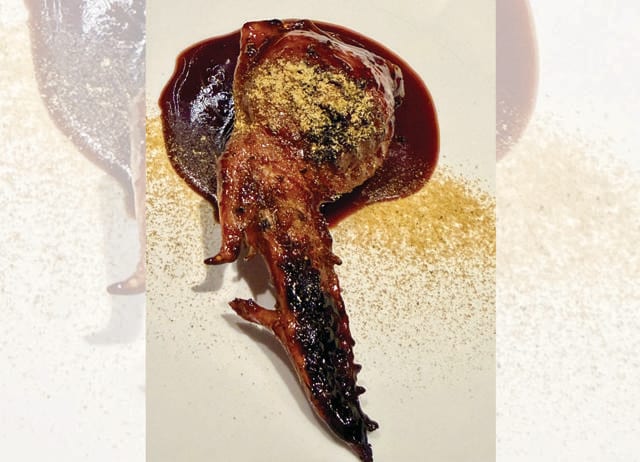
And there are great new dishes. There is a cross between a vada pao and a Bombay sandwich. A soft-serve ice-cream has a perfect texture and deep saffron flavour. (Gaggan credits the very expensive ice cream machine.) The breakthrough is a tiffin (to the extent that fancy Japanese crockery layered together can be called a tiffin) of Tabak Maas; gobhi made to look like brain (the brain joke was once the funniest part of Gaggan’s Bangkok monologues) and an incredible Nalli Nihari, which has all of the deep flavour of the best nihari and none of the greasiness. I suspect the ₹28 lakh kitchen machine may have been purchased only because Gaggan and Rydo wanted to make a non-greasy nihari.
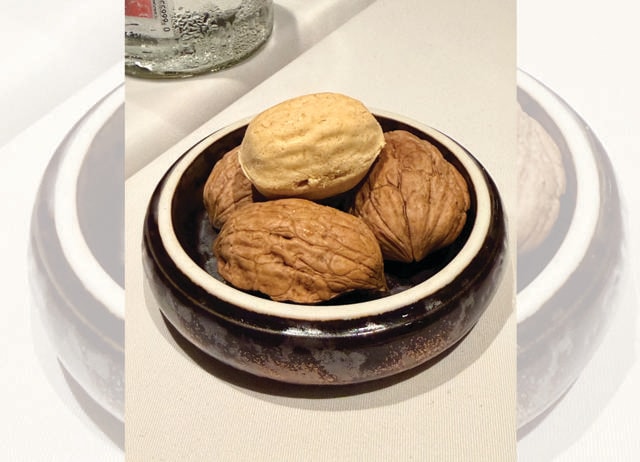
It sounds heretical, but I may actually prefer it to Gaggan’s Bangkok flagship, which is theatrical and wonderful, but which you can’t keep going back to again and again. This is like a normal restaurant, where you can chat to the rest of your table and enjoy the meal that is of the same quality as the food in Bangkok. And you can keep coming back.
Finally, Delhi, which has lagged behind Mumbai so much, may have the distinction of being the location of the best restaurant in India.
From HT Brunch, August 22, 2026
Follow us on www.instagram.com/htbrunch


