Cittamani
Regional Indian food; in Milan, Spain
Ritu Dalmia has built her career on serving acclaimed, high-quality, Italian food in India. But when she revisited Milan after a long gap, in 2015, she knew the script could flip. The city was finally open to new flavours – there was food from all over – it was the perfect place to set up an international outpost.
Cittamani by Ritu Dalmia opened in 2017. It’s not a curry house, there’s no vindaloo or generic chicken masala on the menu. It serves regional comfort food, doing for Italy what her Italian food does for India. “More than skill, I tap into my roots,” Dalmia says. “I bring lesser-known favourites to the table.”
She started cautiously, with a menu that featured safe bets: Kadi samosa chaat, kachori subzi and Coorgi pork ribs. “I was not willing to serve dishes that might not be acceptable to the Italian palate,” Dalmia recalls. “I underestimated them.” Cittamani diners can now choose from the Gujarati snack sambharo fafda (Dalmia’s favourite), Calcutta Club kachoris, and a meaty jadoh from Shillong. The most popular dish: Dal chawal, served with Bihari chaunkha.
“The biggest challenge was the pre-conceived notion Italians have about Indian food; that it has to be greasy, spicy and cheap,” says Dalmia. But the food has been a hit with Italians who’ve travelled East, and locals who are curious. The flavours pass muster with Indian visitors too. Dalmia sources the pungent-peppery spice radhuni, from West Bengal, and puts out potato papads rather than the usual dal ones. The Indian touch goes far, she says. “Though I used to have an Italian chef who made better dosas than most places I have eaten in South India. But that’s a different story!”
{{/usCountry}}“The biggest challenge was the pre-conceived notion Italians have about Indian food; that it has to be greasy, spicy and cheap,” says Dalmia. But the food has been a hit with Italians who’ve travelled East, and locals who are curious. The flavours pass muster with Indian visitors too. Dalmia sources the pungent-peppery spice radhuni, from West Bengal, and puts out potato papads rather than the usual dal ones. The Indian touch goes far, she says. “Though I used to have an Italian chef who made better dosas than most places I have eaten in South India. But that’s a different story!”
{{/usCountry}}Indienne
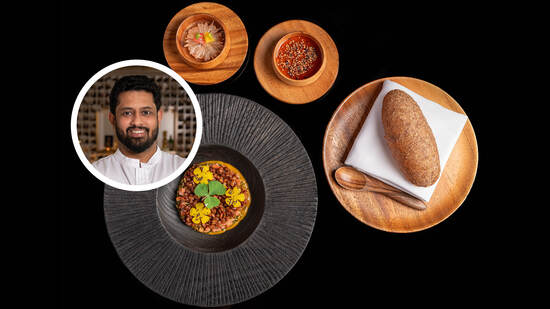
Offbeat favourites, with an American touch; in Chicago, US
At the two-year-old Indienne, chef Sujan Sarkar knows exactly what his food is supposed to do: Reassure the desi, accommodate the American and mix both sensibilities just enough so that everyone’s happy.
Indienne gets plenty of diners who’ve never tasted Indian food, but “Americans experiment more than Europeans,” he says, drawing on the 11 years he spent in the kitchens of high-end restaurants in London. The restaurant leans in by incorporating local ingredients: the Alleppey fish curry is made with lobster; a Goan-style octopus dish is made on a wood-fired grill, and has a touch of miso sauce; there are Kashmiri duck tacos, with a trendy birria-style dip on the side. The Odisha-style dahi bada with aloo dum is essentially an air donut atop a potato nest, served with broth, goat cheese and chutney. Americans also prefer their dessert a little salty, compared to the full-on sweet hit of mithai. So, the Goan bebinca comes with brown butter ice-cream. “Indians might not like it as much. For them, there’s elaneer payasam, or mishti doi tart, much like a Key lime pie.”
Those who’ve grown up with Indian food will know right away that the masalas are fresh (they’re made in-house) and that there’s attention to detail. There’s no idli masquerading as sanna; the Kashmiri tabak maaz (glazed lamb ribs) comes with chutney made of fermented ram phal (a kind of custard apple); the chicken for butter chicken is smoked on charcoal.
It’s made Indienne a hit with two unlikely demographics: Indians looking to show off their cuisine to guests, and third-generation Indian-Americans rediscovering the food of their community. Everyone’s happy. Even Michelin reviewers, who awarded Indienne a star in 2023.
Avatara
Indian, vegetarian, upmarket; in Dubai, UAE
The UAE is home to more than 3.5 million Indians. With a market so large, why experiment when you can just serve regular fare? And yet, Rahul Rana, executive chef at Avatara, saw an opportunity where none did. “Curries and spiced vegetables are familiar and loved worldwide. Many guests view vegetarian food as dull,” he says. “The challenge lay in shifting the old assumptions.”
The tweaks are novel. The Jain dishes swap onion, garlic, paneer and mushroom for turnip, bitter gourd and drumstick. Little-known preparations are celebrated – Grinjanah, their variation of a Kashmiri curry with rajma (kidney beans) and turnip, has a turnip kebab with rajma nihari, served on flaky Kashmiri Katlam bread.
Dubai’s cosmopolitan population is more open to exploring Indian food beyond Europeanised naan and tikka masala. Avatara is where they might take baby steps. On the menu is a raw-banana chaat, which has a familiar tangy, crispy texture. “We balance it out with a creamy avocado chutney, given that Dubai gets high-quality avocados,” Rana says. The chef also serves high-end versions of the food of his hometown, Uttarakhand. Bal mithai, a sweet, and Dalika, a horse-gram curry are both from Kumaon. The mithai is accompanied by a chocolate rosette and wild java plum sorbet.
“Many times, meat-eaters will come in, dragged along by a vegetarian or vegan companion, convinced they won’t like the food, but they’ll walk out with their minds changed,” Rana says.
Colonel Saab
Sweets with a global twist; in London, UK
Even London, birthplace of the chicken tikka masala, home to 98-year-old curry houses, is changing the way it views Indian food. “There’s a growing vegetarian and vegan culture, and Indian food is getting sophisticated,” says Sohan Bhandari, head chef at Colonel Saab, which opened in 2021 and has two outposts in the city.
Brits drop in for the cauliflower confit, falahari kofta curry from Uttarakhand, gutti vankaya (stuffed eggplant) from Andhra Pradesh, and nadan fish curry from Kerala. But what sets the place apart is the mithai. Bhandari admits to having a sweet tooth – he bit into jalebi as a toddler and never looked back, he says. “During my hotel-management training in India, I was fascinated that using the same ingredients but different techniques could result in different mithai,” he recalls.
So, he experimented with flours, milk, milk solids, fermented food, root vegetables, raw and roasted seeds, seasonal fruit, fruit pastes and dry fruit, to tweak the old classics. Khoya is hard to find, and too rich, anyway, so he uses condensed milk. Instead of rasmalai, he serves a rasmalai cake with boondi laadu caviar. “We even use candy-floss to make mithai,” he says. And he faces very Indian challenges too: Using fresh ingredients and keeping his sweet stocks from going bad.
Colonel Saab draws more non-Brown diners than desis. A British couple dropped in a few years ago. The man said he had never ventured beyond chicken tikka masala, but was persuaded to try the six course tasting menu, which includes rasam and raj kachori. “When the kachori arrived, he was surprised. He didn’t expect so many elements on the thali either,” Bhandari recalls. “He was expecting spice, but not the sweet or tangy flavours, and asked the staff about the ingredients. It’s nice to see someone discover and fall in love with a new kind of food.”
Malabar Darlinghurst
Going coastal and staying local; in Sydney, Australia
When Mohammed Sali moved from Chennai to Australia in1997, India’s growth story had just begun. But Down Under, Indian restaurants were still stuck serving north-Indian food. He opened a tiny shop in Sydney, selling masala dosa and other south-Indian snacks, in 2003. The lighter, more aromatic foods of the coast – many of them plant-based and gluten-free – proved to be a hit with locals. “They loved keerai massiyal (spinach curry) and the drier vegetable kootu from Tamil Nadu, Kerala stews,” says Sali. He also added in his childhood favourites: Kheema dosa, prawn balchao, goat mappas, Konkan prawn dishes and fish fries. They loved that too.
Malabar Darlinghurst is now a 150-seater filled with Aussie regulars. Their most popular dish? Barramundi varuval – local fish grilled with Indian spices. “It’s a great fusion of local produce with traditional South Indian flavours. It’s approachable yet exciting,” says Sali. Australian produce appears in other tweaks too. Pink ling, not pomfret, goes into the Goan fish curry. “it’s firmer, so we steam it before cooking,” he explains. Smaller local goat means the mutton dishes are tender, and cook faster. “Even the local brown rice cooks in about half the time of traditional Indian rice.”
Besides, Australians love to travel, and many Sydney folks have visited India. They return and request Sali to make specific dishes they tried, keeping him on his toes. His top tip for first-time diners: Don’t order more than one coconut-based dish in the same meal.
The Madras Diaries
The taste of the south, up north; in Amsterdam, the Netherlands
Who knew the Dutch liked dosa? Chefs Padmanaban Subburaj, Malliah Rajendran, and Gokulakannan Sekar opened The Madras Diaries in December 2020 largely because Amsterdam’s food scene was dominated by korma-naan menus at generic Indian restaurants. The old stereotype was still going strong. “People believed that Indian food is only about heavy curries, or that it’s always spicy,” says Sekar, who moved to the Netherlands 12 years ago.
They took a risk and went big, putting keerai vadai (vadas with green amaranth and split Bengal gram), kadala or chickpea curry, bondas, local biryanis and chicken Chettinad on the menu. “People in the Netherlands are more willing to try unfamiliar spices, textures, and cooking techniques than, say, the UK,” says Sekar. They knew they’d have to work harder, making the food taste authentically Indian for homesick desis, and accessible enough for others who walked in.
The first part was easier. The chefs source the Byadgi chilli, yellow chilli powder, Madras coffee powder and local lichen such as kalpasi from little markets in India. Getting Amsterdammers to develop a taste for sea-crab rasam and paneer ghee roast has taken some time. Sekar says the dosa, idli and biryani are popular with non-Indians, an achievement in itself.
What’s helped are small adjustments that make the most of the regions focus on local, sustainable produce. The spinach in the restaurant’s palak paneer is the Dutch type, which doesn’t sound challenging until one realises that it is more delicate than the Indian variety. “It wilts faster and is more tender, so we blanch it lightly instead of fully cooking it. And the paneer is made in-house,” says the chef. It’s just one of the reasons they’ve become popular enough to open their second restaurant 50km away in Utrecht this year.
From HT Brunch, September 21, 2024
Follow us on www.instagram.com/htbrunch