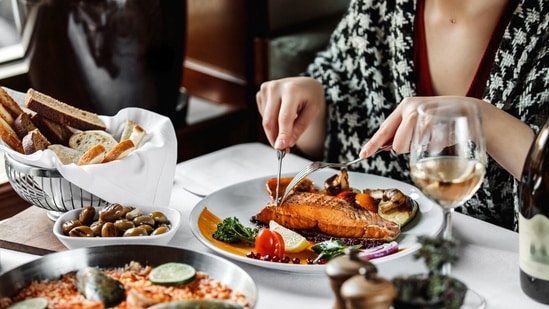
Whenever you head to a restaurant and sit down, you may find yourself savouring the ambience, taking in the interiors and enjoying the aroma of delicacies wafting through the air. Dining out can be an immersive sensory experience. But struggling to place your order can quickly disrupt that experience. When you open the menu and are faced with several unfamiliar dishes, you may wonder which one would be the best choice.ALSO READ: Independence Day 2026: 4 easy chef-recommended tricolour recipes to bring Tiranga to your table
Decision paralysis may set in, leaving you repeatedly asking the server for more time, or settling on something familiar or something random haphazardly.
So, what is the hack to navigating an extensive menu without getting worked up or falling back on the safest, most familiar dish?Vikas Narula, co-founder of Depot48, one of Delhi's best-known independent live music venues and restaurants, where food, music and culture collide by design, shared the most common mistakes diners make while ordering and described how to choose dishes that are not the familiar type, but rather convey the kitchen's strengths and create a perfect, wholesome meal
What is the biggest mistake diners make while ordering?
Many diners take the wrong approach to reading a menu. But what exactly are they doing incorrectly? Vikas said, “Twelve years into running a restaurant, I can tell you the biggest ordering mistake isn't picking the wrong dish. It's treating the menu like an exam. It isn't one. It's an introduction.”
Do not think about what is right or wrong or search for the supposedly best option. Vikas noted that diners often ask servers, “What is the best dish?,” as if there is one correct choice that will guarantee the best dining experience. But there is no single correct answer when navigating a menu. Instead, Narula believed it should be used to understand the restaurant's identity, culinary strength, and preferred cooking methods.
{{/usCountry}}Do not think about what is right or wrong or search for the supposedly best option. Vikas noted that diners often ask servers, “What is the best dish?,” as if there is one correct choice that will guarantee the best dining experience. But there is no single correct answer when navigating a menu. Instead, Narula believed it should be used to understand the restaurant's identity, culinary strength, and preferred cooking methods.
{{/usCountry}}Vikas then shared an example. Suppose you visit a Japanese restaurant, and you find an entire page devoted to robata dishes; do not immediately skip to sushi because it is recognisable. There is likely a reason why the restaurant has highlighted slow-grilling barbecue Japanese food so prominently. Paying attention to such clues can help you understand the kitchen's strengths and order a dish that represents what the restaurant is best at.
He also shared his personal observation: “I've eaten my way through enough countries to know the same rule holds everywhere: restaurants introduce themselves before they reveal everything else. Ordering the dish a kitchen actually wants to cook is one of the few genuine compliments left in dining.”
So, this reveals that a menu gives a quick glimpse into a restaurant's culinary identity.
How to order a more satisfying meal?
Choosing a satisfying meal requires careful attention and inquisitiveness. First, by observing the menu carefully, then asking the right questions to the server, and pairing the dishes well.
Here are Vikas Narula's suggestions:
1. Identify the kitchen's specialty
- Look for ingredients, cooking methods, or flavours that appear repeatedly across the menu.
- Suggests the kitchen's culinary strength.
2. Ask server-specific questions
- Don't always ask ‘What’s your best dish?,' Ask what a first-time diner should order to understand this restaurant.
- The server can tell what is especially good that day, which dishes may be too similar to order together, and what may leave you too full for dessert.
3. Create a rhythm across courses
- Avoid ordering several rich, fried, or creamy dishes consecutively, as your palate may feel overwhelmed before the meal is over.
- Similar textures and flavours may not taste good.
4. Balance rich and refreshing dishes
- Pair heavier dishes with something fresh, bright, or acidic.
- For example, a lighter or tangier appetiser may balance a rich, slow-cooked main course.
5. Choose dessert based on preceding courses
- After a heavy meal, consider a light or citrus-based dessert instead of eating another rich chocolate preparation.
6. Order dishes for the table
- Sharing ensures you are able to taste more food and waste less food.
- When shared, you discover dishes that you would not have chosen if you ordered separately.
7. Do not order for aesthetics
- Avoid ordering dishes that are large, elaborate, aesthetic or more social-media friendly to attract attention.
- Appearance does not guarantee flavour or quality.
8. Be open to unfamiliar options
- Be adventurous and go for dishes you don't know about.
- It may expose you to new flavours.