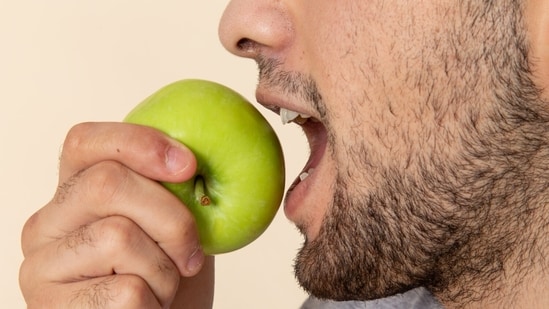
Are you always gulping down your meals as you binge-watch your favourite show or scroll through your phone? Or perhaps it is a busy day, you are running late, and you hurriedly scarf down your food. You rarely look at what you are eating. Chewing receives little attention, even though it plays an essential role in digestion.
Suhasini Viswanathan, director nutritionist at QUA Nutrition-Signature Nutrition Clinic, highlighted the importance of chewing your food properly.
Why should you chew your food properly?
Let's understand the basics of why chewing matters. When you understand its value, you are more likely to focus on it as you are eating. The expert emphasised that digestion begins in your mouth.
She described how chewing helps kick-start digestion, with the process beginning even before you take your first bite. “Digestion begins when you see food and your salivary glands wake up, and then when you eat, our teeth grind the food while the salivary enzymes mix to kick-start digestion,” she said.
Suhasini further added, "The sight, smell and taste of food send signals to our brain to signal the stomach, pancreas and gut to release stomach acids and digestive enzymes even before the food arrives. This phase is in fact responsible for 1/3rd of the stomach acid released as part of digestion.”
{{/usCountry}}Suhasini further added, "The sight, smell and taste of food send signals to our brain to signal the stomach, pancreas and gut to release stomach acids and digestive enzymes even before the food arrives. This phase is in fact responsible for 1/3rd of the stomach acid released as part of digestion.”
{{/usCountry}}What happens when you don't chew enough?
You may experience problems such as acid reflux, upper stomach discomfort, and bloating. Over time, the dietician cautioned, inadequate chewing may lead to a lower intake of fibre-rich foods, potentially affecting gut microbial diversity. Suhasini attributed these diversity issues to insufficient mixing food with saliva.
Why might chewing help reduce bloating? The dietician pointed to the composition of saliva, which contains digestive enzymes such as amylase and lipase. She noted that chewing properly may help reduce bloating after a meal and support nutrient absorption.
Other reasons why you should chew
The dietician mentioned that the benefits of chewing extend beyond gut health to oral health, helping prevent tooth enamel damage and tooth decay. It also maintains the balance of the oral microbiome.
How much to chew
The dietician noted that there is no established chewing count to aim for. Instead, she suggested focusing on the texture of the food and taking time to enjoy each bite.
“The goal is to chew and enjoy every bite of food until it is soft before swallowing, instead of rushed eating. Chewing well also encourages us to include more fibrous foods, which in turn can improve our microbiome diversity, thereby influencing everything from constipation to immunity and mental health,” she added.
Note to readers: This article is for informational purposes only and not a substitute for professional medical advice. Always seek the advice of your doctor with any questions about a medical condition.
Catch your daily dose of Fashion, Taylor Swift, Health, Festivals, Travel, Relationship, Recipe and all the other Latest Lifestyle News on Hindustan Times Website and APPs.
Catch your daily dose of Fashion, Taylor Swift, Health, Festivals, Travel, Relationship, Recipe and all the other Latest Lifestyle News on Hindustan Times Website and APPs.