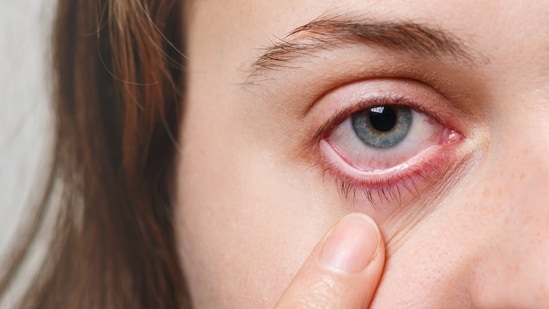
October is observed as Blindness Awareness Month, aimed at raising awareness about the various causes of vision loss and the importance of timely eye examinations.ALSO READ: 9 eye makeup mistakes that may damage your eyes: From tightlining to sharing mascara
Blindness is usually associated with complete darkness, but changes linked to vision loss can be more subtle. Because these changes may seem like signs that your glasses prescription needs updating, many people do not take them seriously, which is precisely the problem. Dr Vikas Jain, group chief operating officer at ASG Hospital Limited, shared with us how vision loss can manifest and which signs should not be ignored.
Does blindness always mean complete darkness?
People tend to think blindness means suddenly losing sight and seeing complete darkness. In reality, vision loss can develop differently from person to person, with no single pattern of progression.
The doctor described, “Vision loss begins quietly and rarely looks the same from one person to the next. Some people lose their side or peripheral vision first; some lose clarity at the centre, and some notice nothing at all until the damage has advanced. That is exactly what makes it so easy to miss.”
What are the different vision loss issues?
The signs of vision loss depend on which part of the eye is affected. Some affect the side vision, some make it hard to see what is in front of you.
{{/usCountry}}The signs of vision loss depend on which part of the eye is affected. Some affect the side vision, some make it hard to see what is in front of you.
{{/usCountry}}Describing how glaucoma shows up, Dr Jain said, “In glaucoma, peripheral vision narrows slowly, and the brain fills in the gaps, so people often don't realise anything is wrong. They may find themselves bumping into doorframes or missing a step and put it down to carelessness.”
But not every eye condition has observable changes. The doctor pointed out that in diabetic eye disease, vision can seem normal for years, despite blood vessels of the retina being affected by the disease.
There are some vision losses that appear a bit different. The ones that affect the macula, the part of the retina responsible for sharp vision, as per the expert, look blurry. He said, “Straight lines may look wavy, faces may seem blurred, reading may become harder, or there may be a dark or empty patch right in the centre of what you're looking at.”
What are the warning signs?
Here are the three warning signs that the doctor shared need urgent attention:
- Sudden flashes of light
- A shower of new floaters
- A curtain-like shadow moving across vision
These indicate a retinal tear or detachment, and Dr Jain flagged it as an emergency.
Vision lost to many of these conditions is difficult to restore. That is why the goal is to catch changes early, where treatment can help to protect the sight that you have.
Dr Jain shared a self-assessment guide: “Carry out self-assessment tests at home occasionally, where you cover one eye at a time and look at a doorframe or a page of text to check whether anything seems distorted, dim, or missing. Make it a habit to notice small changes rather than brushing them away. And any sudden change in vision should be examined the same day as a priority.”
Note to readers: This article is for informational purposes only and not a substitute for professional medical advice. Always seek the advice of your doctor with any questions about a medical condition.
Catch your daily dose of Fashion, Taylor Swift, Health, Festivals, Travel, Relationship, Recipe and all the other Latest Lifestyle News on Hindustan Times Website and APPs.
Catch your daily dose of Fashion, Taylor Swift, Health, Festivals, Travel, Relationship, Recipe and all the other Latest Lifestyle News on Hindustan Times Website and APPs.