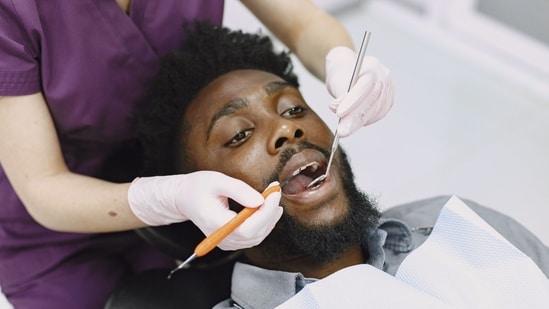
The festive season has a familiar routine. You eat endless mithai after dinner, maybe another piece before bed, and after a long day of celebrations, brushing your teeth is the last thing on your mind. Missing it once is unlikely to cause immediate damage, but going to sleep without brushing can increase your risk of tooth decay. The problem isn’t just that sweets contain sugar, but also how long the sugar stays in your mouth and how often your teeth are exposed to it. In an interview with HT Lifestyle, Dr Sharmishtha Lad, dentist and healthcare entrepreneur at Smilers Dental Clinic, explained the dental risks and preventive steps.
Also read | From joint stiffness to posture changes: How sitting cross-legged for long hours may affect your body
What happens when you eat sweets before bed?
According to Dr Lad, bacteria in dental plaque use sugars from food and drinks to produce acids that attack tooth enamel. Frequent acid attacks can slowly weaken the enamel and cause cavities. “This risk increases when we eat sugary foods often and don’t maintain a regular oral hygiene routine. At night, the mouth produces less saliva, which normally helps wash away food particles and neutralise acids,” said Dr Lad. With less saliva during sleep, teeth have less natural protection against decay. That’s why it’s best to avoid eating sugary foods right before bed, especially after brushing your teeth.
Does this mean giving up festive sweets?
“Not at all,” said Dr Lad. Enjoying kaju katli, laddoos, jalebi, or gulab jamun during Diwali doesn’t mean you have to worry about your teeth. What matters is how often you eat them. Try to enjoy sweets with meals rather than snacking throughout the day. Sticky sweets can stay on your teeth longer, while sugary drinks increase sugar exposure. Drink water after eating and, most importantly, brush your teeth before bed, even after late-night celebrations. You can enjoy festive treats while still taking good care of your oral health.
What should your night-time routine look like?
{{/usCountry}}“Not at all,” said Dr Lad. Enjoying kaju katli, laddoos, jalebi, or gulab jamun during Diwali doesn’t mean you have to worry about your teeth. What matters is how often you eat them. Try to enjoy sweets with meals rather than snacking throughout the day. Sticky sweets can stay on your teeth longer, while sugary drinks increase sugar exposure. Drink water after eating and, most importantly, brush your teeth before bed, even after late-night celebrations. You can enjoy festive treats while still taking good care of your oral health.
What should your night-time routine look like?
{{/usCountry}}Dr Lad advises brushing for two minutes with fluoride toothpaste before going to bed, as well as once more during the day. Clean between your teeth daily, using floss or another suitable interdental cleaner. After brushing, spit out the toothpaste rather than rinsing your mouth with water, so that more fluoride remains on your teeth. If you have eaten sweets late at night, simply return to your regular oral-care routine. Brush your teeth gently before bed and try to avoid making late-night sugary snacking a daily habit.
Festive treats are meant to be enjoyed, and keeping teeth healthy doesn’t mean giving up sweets completely. Being mindful of how often sweets are eaten and remembering to brush before bed can help maintain good oral health, even during busy celebrations.
Note to readers: This article is for informational purposes only and not a substitute for professional medical advice. Always seek the advice of your doctor with any questions about a medical condition.
Catch your daily dose of Fashion, Taylor Swift, Health, Festivals, Travel, Relationship, Recipe and all the other Latest Lifestyle News on Hindustan Times Website and APPs.
Catch your daily dose of Fashion, Taylor Swift, Health, Festivals, Travel, Relationship, Recipe and all the other Latest Lifestyle News on Hindustan Times Website and APPs.