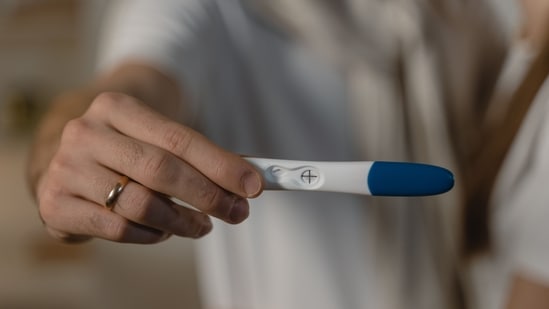
Roughly 10 to 15% of married couples in India experience infertility, translating to an estimated 27 to 28 million couples facing fertility challenges, according to data released by the National Institutes of Health. For many of these couples, therefore, IVF (In Vitro Fertilisation) becomes a source of hope for becoming parents.
In an interview with HT Lifestyle, Dr Manjunath CS, a fertility specialist at Birla Fertility and IVF with over 19 years of experience, said that maintaining a carefully controlled environment is essential for embryo development. The goal is to create the most stable and controlled environment possible for fertilisation and embryo development. Therefore, when opting for IVF, one should keep certain things in mind to minimise avoidable risks.
According to Dr Manjunath, an IVF laboratory may look perfectly clean, but invisible chemicals in the air can still be a concern. He explained, “Perfume, fresh paint, cleaning sprays and new furniture can release volatile organic compounds (VOCs). These are substances that easily turn into gases at room temperature. In an IVF laboratory, where eggs and embryos spend time outside the body, limiting unnecessary exposure is an important precaution.”
Why are embryos particularly sensitive?
During IVF, eggs are collected, and fertilisation occurs under carefully controlled laboratory conditions, according to Dr Manjunath. Embryos then develop in incubators that regulate temperature and gas levels, while a specially prepared nutrient-rich liquid supports their development.
{{/usCountry}}During IVF, eggs are collected, and fertilisation occurs under carefully controlled laboratory conditions, according to Dr Manjunath. Embryos then develop in incubators that regulate temperature and gas levels, while a specially prepared nutrient-rich liquid supports their development.
{{/usCountry}}“Unlike cells inside the body, eggs and embryos in the laboratory depend on this controlled environment. Certain airborne chemicals may enter culture media or affect conditions around them, potentially disrupting development. This does not mean that perfume will damage an embryo. The risk depends on the chemical, its concentration and the duration of exposure,” he added.
According to him, researchers have identified laboratory air quality as a factor worth controlling, although studies cannot predict the effects of individual VOCs.
What makes everyday products a concern?
VOCs are emitted from many sources, including paints, adhesives, solvents, air fresheners, cosmetics, and cleaning agents, Dr Manjunath stressed. “Their presence does not automatically mean that a product is harmful at every level of exposure. The concern in an IVF laboratory is that some compounds may affect sensitive reproductive cells, even when they are not obvious to the people working in the space,” he explained.
Therefore, construction and renovation require particular care because newly installed flooring, furniture, paint, and sealants can also release VOCs over time, he stated. “Laboratory guidelines therefore recommend suitable building materials, adequate ventilation, and time for materials to release these compounds before the space is used.”
How do embryology labs control exposure?
Dr Manjunath also explained how embryology labs control exposure, highlighting what couples should look for:
⦿ “Air quality management involves more than installing a filter. IVF laboratories use HEPA filtration and systems to remove VOCs. HEPA filters capture airborne particles. Gaseous chemical contaminants require additional filtration,” Dr Manjunath specified.
⦿ “Laboratories also monitor other environmental conditions. They control access to sensitive areas. They choose their cleaning products, disinfectants, and other consumables carefully,” he stressed.
⦿ “Perfumes and other fragranced personal-care products may be restricted in laboratory and treatment areas because they can introduce avoidable chemical emissions,” Dr Manjunath highlighted.
According to him, research has linked improved laboratory air quality with better embryo development in some settings, although the evidence does not establish that every VOC exposure leads to poorer IVF outcomes. “Maintaining a controlled environment is one part of good laboratory practice, alongside careful handling of eggs and embryos.”
Lastly, he cautioned that patients should also follow their clinic's guidance on perfume, scented cosmetics, or other products on procedure days. “Such advice is about protecting laboratory conditions, not suggesting that everyday fragrance use causes infertility,” he added.
Note to readers: This article is for informational purposes only and not a substitute for professional medical advice. Always seek the advice of your doctor with any questions about a medical condition.
Catch your daily dose of Fashion, Taylor Swift, Health, Festivals, Travel, Relationship, Recipe and all the other Latest Lifestyle News on Hindustan Times Website and APPs.
Catch your daily dose of Fashion, Taylor Swift, Health, Festivals, Travel, Relationship, Recipe and all the other Latest Lifestyle News on Hindustan Times Website and APPs.