One of Prime Minister Narendra Modi’s key campaign issues in the 2019 election was national security and it is likely India’s February 26 air strike on a Jaish-e-Mohammed (JeM) terror training camp at Balakot in Pakistan played a part in his party’s huge win.
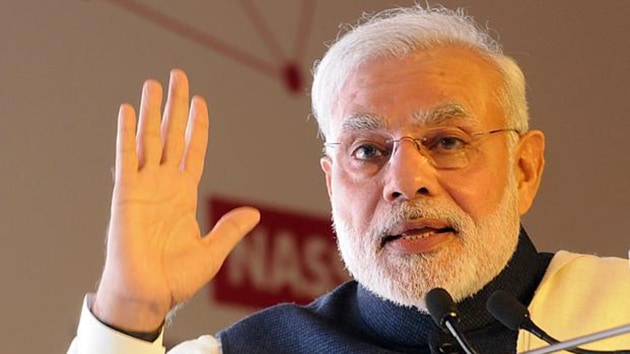
While the political decisiveness shown by the PM mattered in both the 2016 surgical strike and February air strike, credit is also due to his national security team led by National Security Advisor Ajit Doval. It was this core team of Research and Analysis Wing Chief Anil Dhasmana, Director, Intelligence Bureau Rajiv Jain, NTRO chief Satish Jha, DRDO Chief Satheesh Reddy and the three services chiefs who largely delivered for PM Modi.
In the past five years, not a single major terror attack has taken place in the Indian hinterland, barring one in Punjab; the rest have been confined to the state of Jammu and Kashmir. It was due to NSA Doval’s core team that the country was able to control the surge of so-called Islamic State sympathizers with former Director of IB Asif Ibrahim being able to convince the clergy with a counter-terror narrative.
But the biggest dividend was yielded by PM Modi and NSA Doval’s outreach to West Asian nations with countries such as the United Arab Emirates, Saudi Arabia and Jordan on a priority as far as bilateral relations were concerned. It was deft diplomacy that helped the duo engage both Shia Iran and Sunni Saudi Arabia at the same level while maintaining very close ties with Israel.
{{/usCountry}}But the biggest dividend was yielded by PM Modi and NSA Doval’s outreach to West Asian nations with countries such as the United Arab Emirates, Saudi Arabia and Jordan on a priority as far as bilateral relations were concerned. It was deft diplomacy that helped the duo engage both Shia Iran and Sunni Saudi Arabia at the same level while maintaining very close ties with Israel.
{{/usCountry}}Read: PM Modi set for second term with bigger mandate, sweeps Hindi heartland
While NSA Doval’s team and the three service chiefs remain in shadow on the massive electoral victory, both the surgical strike and the air strike were conducted with precise intelligence and pin-pointed accuracy. The Modi-Doval duo learned their Pakistan lesson well from the January 2, 2016 Pathankot strike and chose to retaliate by dismissing the so-called nuclear flashpoint theory conjured by arm-chair strategists. The capacity to conduct counter strikes gave credence to PM Modi’s missile threat to Pakistan, which may have forced the latter to release Wing Commander Abhinandan Varthaman within 24 hours after his capture.
The demonstration of the antisatellite weapon capability and the designation of JeM chief Masood Azhar as a global terrorist by the UN in midst of the 2019 elections is also an achievement for the national security team as is the deportation of Rajiv Saxena, an accused in the AgustaWestland bribery case and civil aviation lobbyist Deepak Talwar from UAE. All this added to the perception of Modi as a decisive national leader.
Also read: Decoding the role BJP chief Amit Shah played in PM Modi’s epic victory
The RAW and IB Chiefs are nearing the end of their terms and India will have new army and air force chiefs later this year, but PM Modi is expected to retain the services of his NSA for his second term.