...
...
Next Story

Lok Sabha elections 2019: In biggest phase of Lok Sabha polls today, BJP faces test in its strongholds

Of the 117, polling in one seat in Tripura was deferred from an earlier phase and polling in Anantnag, Jammu & Kashmir, will happen in three phases starting with the third one.

Updated on: May 2, 2020, 19:51:42 IST
Hindustan Times, New Delhi | By
Prefer HTon Google
Advertisement

Voting has begun in 117 parliamentary constituencies across 13 states and two Union Territorries in what is the biggest of the seven phase general election schedule for 2019.
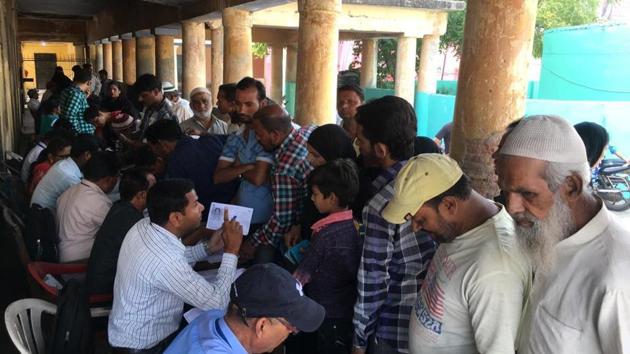
Voters at a help desk in Bareilly, Uttar Pradesh. (Chandan Kumar/HT photo)

In 2014, the Bharatiya Janata Party (BJP) finished ahead of the Congress in the seats which went to polls in the first and second phase, but was behind non-Congress, non-BJP parties. Parliamentary constituencies which will go to polls in each phase beginning today saw the BJP winning a majority in the 2014 elections. Of the 117 seats, the BJP won 62 and the NDA, 67, in 2014.

Of the 117, polling in one seat in Tripura was deferred from an earlier phase and polling in Anantnag, Jammu & Kashmir, will happen in three phases starting with the third one.

Watch | Lok Sabha Elections 2019: Big fights to watch out for in Phase 3 of voting

Tuesday’s polling will also mark an end to the electoral battle in southern India. With polling already complete in Tamil Nadu (except Vellore), Andhra Pradesh and Telangana, 20 seats in Kerala and the remaining 14 in Karnataka will go to polls on Tuesday.

Both states are important from the ruling BJP’s point of view. It is looking to make an impact and probably open its account in Kerala, hoping to exploit the widespread protests against the Supreme Court order allowing entry of women of menstruating age at the Sabarimala shrine. In 2014, the BJP won 11 out of the 14 PCs which go to polls in Karnataka (it won six of the 14 that went to polls in the second phase).

 
ABOUT THE AUTHOR
Roshan Kishore

Roshan Kishore is the Data and Political Economy Editor at Hindustan Times. He heads the newsroom's data journalism team, which produces Number Theory, a daily data-driven feature for the print edition and the HT app. Number Theory uses data analysis and story-telling based on it to add value to the newsroom’s daily coverage by putting stories in a larger context on a range of issues, including politics, macroeconomy, markets, global affairs and climate. Under his leadership HT’s data journalism work has established itself as a niche product in Indian journalism and pushed the boundaries of marrying academic rigour with news sense and speed. Along with writing and editing data stories, he has also been writing a weekly political economy column called Terms of Trade for HT Premium. A trained economist with an MPhil degree from Jawaharlal Nehru University, Kishore has also been a visiting fellow at the Centre for Advanced Studies of India (CASI) at the University of Pennsylvania. Along with his journalistic work, his writings have also appeared in journals such as the Economic and Political Weekly and working papers for CASI and UNESCAP.

SHARE THIS ARTICLE ON
Hindustantimes wants to start sending you push notifications. Click allow to subscribe