The Congress on Tuesday promised a constitutional amendment to make the Supreme Court a constitutional court that will hear and decide only important cases involving the Constitution’s interpretation if the party is voted to power - an idea experts described as difficult to implement.
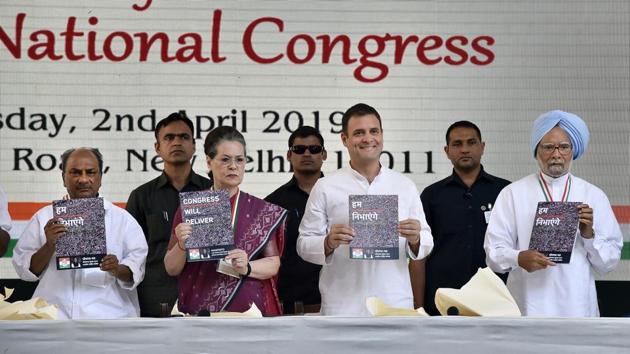
In its election manifesto released ahead of the staggered national polls that begin on April 11, the Congress pledged to establish a Court of Appeal to hear appeals related to judgments and orders of the high courts. The Court of Appeal will sit in multiple benches of three judges each at six locations, the manifesto said. The party pledged “practical solutions” to problems plaguing the legal system and to repeal the Indian Penal Code (IPC)’s Section 499 and make defamation a civil offence. It also promised to omit the IPC’s Section 124A that defines sedition “which has become redundant because of subsequent laws”.
The manifesto also referred to the need to amend the Armed Forces (Special Powers) Act (AFSPA) “to strike a balance between the powers of security forces and the human rights of citizens and to remove immunity for enforced disappearance, sexual violence and torture”.
AFSPA gives immunity to security forces from criminal prosecution if they are carrying out operations in disturbed areas such as Jammu and Kashmir.
{{/usCountry}}AFSPA gives immunity to security forces from criminal prosecution if they are carrying out operations in disturbed areas such as Jammu and Kashmir.
{{/usCountry}}Criticising the Congress’s proposed amendment to AFSPA and omittance of sedition law, Union finance minister Arun Jaitley said the promises made in the election document is an “agenda for the Balkanisation of India”.
The Congress has highlighted the need for prison reforms in the manifesto along with the demand to recognise the rights of under trials. “Release immediately all remand and under trial prisoners facing charges punishable with imprisonment of 3 years or less who have spent 3 months in prison. Release immediately all remand and under trial prisoners facing charges punishable with imprisonment of 3 to 7 years who have spent 6 months in prison,” the manifesto said. The manifesto also stresses on the need to have an independent National Judicial Commission (NJC) comprising judges and parliamentarians for the appointment of judges to the higher judiciary.
Supreme Court lawyer Viplav Sharma called the promises worthy but a difficult to fulfil. “For instance, the promise to make the Supreme Court a constitutional court unburdened by the task of dealing with daily criminal and civil disputes is a welcome move,’’ he said. “But our country has peculiar demands and the apex court plays a much wider role than that is being envisaged. However, the suggestion of prison reform, NJC and repeal of outdated laws is laudable.”