In 2014, the Bharatiya Janata Party (BJP) registered its biggest ever victory in Jharkhand, winning 12 out of the 14 seats in the state. The BJP polled 40.7% of the total votes polled, 16.1 percentage points more than what the alliance of Congress, Jharkhand Mukti Morcha (JMM) and the Rashtriya Janata Dal (RJD) could manage.
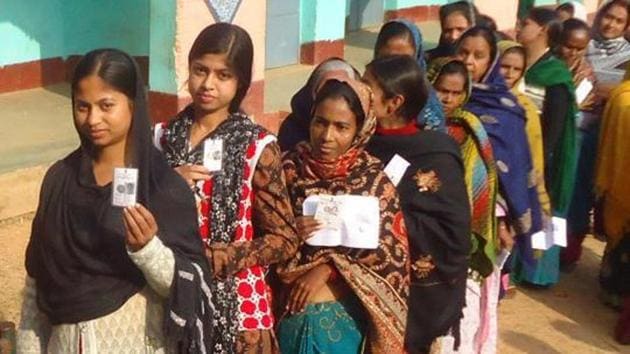
Jharkhand also had assembly elections in November and December 2014. Despite having swept the state in the Lok Sabha elections, the BJP formed an alliance with the All Jharkhand Students’ Union Party (AJSUP) and won 42 out of the 81 seats in the assembly. Raghubar Das became the first non-tribal chief minister in Jharkhand after the NDA’s election victory.
While the BJP entered an alliance despite having won the Lok Sabha, the two main opposition parties, JMM and Congress, parted ways. The JMM put up candidates in 79 assembly seats, and the Congress forged a 62-19 seat alliance with the RJD. The combined vote share of the JMM and the Congress-RJD alliance was 34.6%, pretty close to the NDA figure of 35.5%.
The opposition seems to have learnt its lessons from the 2014 debacle in the battle for 2019. Jharkhand is probably the only state where the BJP is pitted against a grand alliance. Not only have the Congress, JMM and the RJD joined hands once again, they have also extended their alliance to include the Jharkhand Vikas Morcha (JVM), which has a significant vote share in the state. The combined vote share of the opposition alliance comprising the Congress, JMM, RJD and the Jharkhand Vikas Morcha (JVM) was 36.9% and 44.8% in the 2014 Lok Sabha and assembly elections. If the votes of these four parties were aggregated at the parliamentary constituency (PC) level, and compared to the vote share of the BJP and the AJSUP, the BJP’s tally in 2014 Lok Sabha would have come down to nine instead of 12. An extrapolation of 2014 assembly results shows that the combined vote share of these four parties was more than that of the NDA in 11 PCs.
{{/usCountry}}The opposition seems to have learnt its lessons from the 2014 debacle in the battle for 2019. Jharkhand is probably the only state where the BJP is pitted against a grand alliance. Not only have the Congress, JMM and the RJD joined hands once again, they have also extended their alliance to include the Jharkhand Vikas Morcha (JVM), which has a significant vote share in the state. The combined vote share of the opposition alliance comprising the Congress, JMM, RJD and the Jharkhand Vikas Morcha (JVM) was 36.9% and 44.8% in the 2014 Lok Sabha and assembly elections. If the votes of these four parties were aggregated at the parliamentary constituency (PC) level, and compared to the vote share of the BJP and the AJSUP, the BJP’s tally in 2014 Lok Sabha would have come down to nine instead of 12. An extrapolation of 2014 assembly results shows that the combined vote share of these four parties was more than that of the NDA in 11 PCs.
{{/usCountry}} 
To be sure, there is no guarantee that an electoral alliance of so many parties will be able to ensure perfect transfer of votes in different constituencies. At the same time, there is no guarantee that the BJP would retain its 2014 vote shares that could have been an effect of the Narendra Modi wave. Anecdotal accounts also suggest that there could be significant tribal discontent against the BJP’s state government. The exact impact of these factors will only be known on May 23, but it can be said that the BJP’s main challenge in Jharkhand will to be cut its losses as much as possible