Two Bharat Ratna awardees, former Prime Minister and Bharatiya Janata Party (BJP) stalwart late Atal Bihari Vajpayee and social activist Nanaji Deshmukh, were elected to the parliament from Shravasti (then Balrampur) Lok Sabha constituency.
The place also has a glorious history associated with Gautam Buddha. If the neighbouring constituency Siddharthnagar is associated as the place where Gautam Buddha spent his time from infancy till the age of 29 as prince Sidharth, then Shravasti is the place where he spent 24 monsoon seasons as Gautam Buddha, according to the descriptions on signboards of the Archaeological Survey of India (ASI) that one comes across at the sites associated with Buddha in Shravasti and Siddharthnagar.
Shravasti district and Lok Sabha constituency has a glorious past and an ignominious present.
Shortly before the 2009 Lok Sabha elections, Balrampur seat ceased to exist and Shravasti constituency was born after delimitation.
Despite its glorious electoral and Buddhist history, the district is very low on development index.
Shravasti is on the list of BRGF (backward region grant fund) of union government and figures in the list (prepared in 2006) of 250 backward districts. UP has 34 of its districts on the list.
It is the least literate district among all the 75 Uttar Pradesh districts and figures on the sixth spot in the list of top ten least literate districts of the country.
Barring half-a-dozen prominent Buddhist sites like Jaitvana, Orarjhaar and Angulimal stupa, which are well maintained as part of the Buddhist circuit funding, the entire area is rural and backward.
The district is poverty stricken even though the land is fertile. Flood is a perennial problem in most of the districts with flash floods from Nepal rivers, unemployment, migrations and lack of industries being the major issues.
{{/usCountry}}The district is poverty stricken even though the land is fertile. Flood is a perennial problem in most of the districts with flash floods from Nepal rivers, unemployment, migrations and lack of industries being the major issues.
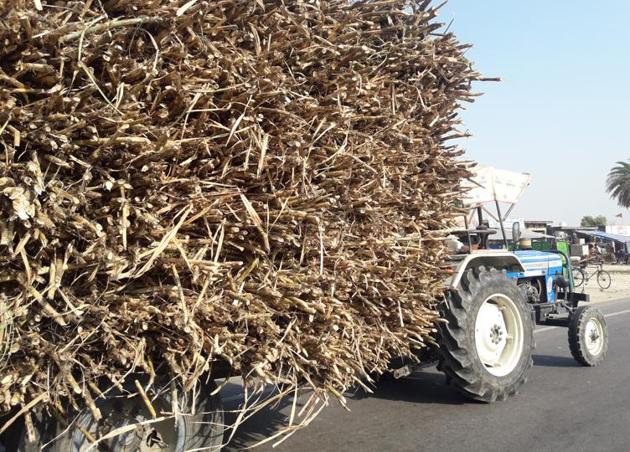
{{/usCountry}}“We do not even have a sugar mill, government or private, even though this is a high sugarcane cultivation area. We ferry our cane to sugar mills in Bahraich or Balrampur districts,” says Radhey Nath, a farmer in Ikona.
Sitting BJP MP Daddan Mishra is seeking re-election. The main rival candidates against him are Alliance’s Ram Shiromani Verma (BSP) and Dhirendra Pratap Singh (Congress).
When Daddan won the election in 2014, it was with a narrow margin of 85,000 votes, that too, when the Samajwadi Party, the Bahujan Samaj Party and the Peace Party cut each other’s votes, including 5.5 lakh Muslim votes.
The combined vote share of SP, BSP and Peace Party was a whopping 57 per cent. Now, Rizwan Zaheer of Peace Party, who has an influence on Muslim voters, is campaigning for the Alliance candidate.
Rizwan lost the 2009 Lok Sabha elections on the seat as the BSP candidate by only 42,000 votes. Zaheer had won 1998 and 1999 Lok Sabha polls as Samajwadi Party candidate when it was Balrampur Lok Sabha seat.
With Zaheer’s support, the SP-BSP alliance has become a formidable rival to the BJP. Shravasti is no party or individual’s citadel.