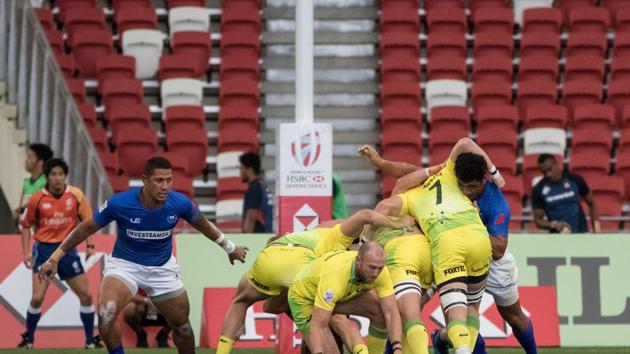
People who play contact sports such as football and hockey - that have higher risk of body collisions - are more likely to show changes in their brain structure and function, a study has found.
Researchers at St Michael’s Hospital in Canada performed preseason brain scans of 65 varsity athletes - 23 from collision sports (with routine, purposeful body-to-body contact), 22 from contact sports (where contact is allowed, but is not an integral part of the game) and 20 from non- contact sports.
They found that the athletes in collision and contact sports had differences in brain structure, function and chemical markers typically associated with brain injury, compared to athletes in non-contact sports.
There is a growing concern about how participation in contact sports may affect the brain, said lead author Nathan Churchill, a post-doctoral fellow in St Michael’s Neuroscience Research Programme. Most of the research in this area has focused on the long-term effects for athletes in collision sports, such as football and ice hockey, where players may be exposed to hundreds of impacts in a single season.
Less is known about the consequences of participating in contact sports where body-to-body contact is permitted, but is not purposeful, such as football, basketball and field hockey. This study looked at both men and women from a variety of sports, and found progressive differences between the brains of athletes in non-contact, contact and collision sports. This included differences in the structure of the brain’s white matter- the fibre tracts that connect different parts of the brain and allows them to communicate with one another.
{{/usCountry}}Less is known about the consequences of participating in contact sports where body-to-body contact is permitted, but is not purposeful, such as football, basketball and field hockey. This study looked at both men and women from a variety of sports, and found progressive differences between the brains of athletes in non-contact, contact and collision sports. This included differences in the structure of the brain’s white matter- the fibre tracts that connect different parts of the brain and allows them to communicate with one another.
{{/usCountry}}Athletes in sports with higher levels of contact also showed signs of reduced communication between brain areas and decreased activity, particularly within areas involved in vision and motor function, compared to those in non-contact sports, such as volleyball. The study fills an important gap in understanding how contact affects healthy brains, as a step toward better understanding why a small number of athletes in contact sports show negative long-term health consequences. The findings were published in the journal Frontiers of Neurology.
Follow @htlifeandstyle for more