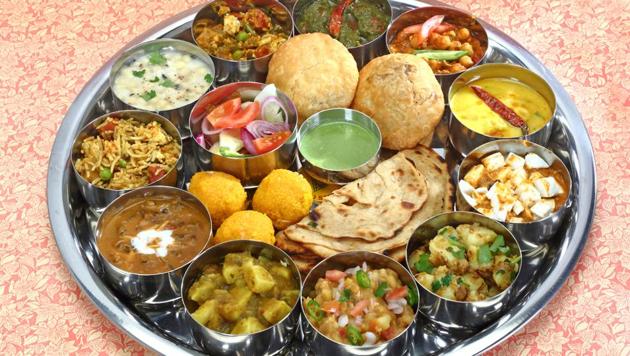
With several festivals across town seeking to recreate cuisines from the erstwhile royal kitchens of India, 2017 was a year to savour regally delicious flavours from a bygone era. Several leading restaurants and hotels treated Delhiites to a decadent array of tastes and aromas, whipping up dishes once served to ‘rajahs’ and ‘nawabs’.
From the humble Nimone ki Sabzi, a dish of green peas fresh from the fields, to the Gosht Makhana Kurma, an elaborate meat curry, it was all on offer in the year that was. The Leela Ambience Convention Hotel, for instance, here curated the ‘Dining with the Maharajas’ event -- a series of food fests bringing to the table authentic flavours from the kingdoms of Hyderabad and Mahmoodabad in Uttar Pradesh in October.
Chef de Cuisine Ashwani Kumar Singh from the hotel travelled to Sitapur in Uttar Pradesh to acquaint himself with the flavours of the era and the region and recreated not just the royal cuisine of the estate, but also the popular street food.
The elaborate Dastarkhwan -- the meticulously laid-out ceremonial dining spread -- comprised flavoursome Mahmoodabad specialities such as Murgh Mussallam, Gosht Makhana Kurma, Matter Latpata, Paneer Hazrat Mahal and Laab-i-Mashooq.
The hotel had organised the ‘The Grand Trunk Road’ festival in 2016 and it felt natural to carry on the gastronomical celebration with the theme of royal cuisines of India, said executive chef Rohit Tokhi. “Part of our past heritage involved the preservation and maintenance of these original recipes in the royal households to pass down from generation to generation. Some of the recipes have been lost along the way we have tried to preserve them...,” the chef told PTI.
{{/usCountry}}The hotel had organised the ‘The Grand Trunk Road’ festival in 2016 and it felt natural to carry on the gastronomical celebration with the theme of royal cuisines of India, said executive chef Rohit Tokhi. “Part of our past heritage involved the preservation and maintenance of these original recipes in the royal households to pass down from generation to generation. Some of the recipes have been lost along the way we have tried to preserve them...,” the chef told PTI.
{{/usCountry}}A chain of thought subsequently led to the second leg of the festival, this time focusing on rich concoctions from the royal Hyderabadi ‘dastarkhwan’. The appreciation and zest for royal flavours earned foodies in the city another unique offering, ‘Dining with Royalty’, a festival at the Belgian Embassy in October, which saw 20 royal families themselves serve regal dishes straight from the menus designed for the imperials.
Cuisines from 12 states across India were served in six luxury tents with people enjoying delicacies the “maharajas ate in the palaces”. The list of participating royal families was long, representing various parts of India – including Aaron and Myana, Amarkot, Awadh, Badnore, Limbdi, Balasinor, Bedla, Bhopal, Bhainsrorgarh, Bolangir, Deolia, Kalan, Jhabua, Kangra, Jhalamand, Jodhpur, Kanota, Kishangarh, Kotwara, Loharu, Mahmoodabad, Nimaj, Patiala, Raghogarh, Sandur, Rampur and Santrampur.
“The idea was to promote Indian cuisine internationally and see that it gets the respect it deserves, given its depth and diversity,” said Sonal Saxena, founder, Dine with Royalty. In November, food connoisseurs were treated to Bundelkhand’s ‘mehmaan-nawasi’ at the Taj Diplomatic Enclave here.
However, unlike any other royal platter, characterised by the richness of its flavours and a clear dominance of a variety of meats, Bundelkhandi cuisine is marked by simple flavours and comprises fresh harvest. From Nimone ki Sabzi and Bundeli Kadhi to Aanwaria and Dal Bhajiya, each dish stands out for its earthly flavours and distinct aroma.
Back in the day, non-vegetarian dishes like Bundeli Gosht and Shikaar Gosht were made only from the meat of animals hunted by people themselves. That can’t happen, of course, but the flavours can still be recalled.
“Termed as ‘tribal cuisine experiences’ the uniqueness of the taste of these dishes lies in their traditional style of preparation; use of raw materials and extensive consumption of different types of millets,” said Rajesh Wadhwa, executive chef at the Taj Diplomatic Enclave.
The ever-changing food habits of people is a challenge that most chefs take as opportunities to refine their culinary art. According to Chef Wadhwa, people in Delhi are getting more experimental today. He believes that people are saturated to a large extent with the fast food culture and cuisines from abroad.
In his view, the inquisitive nature of Delhiites, who want to know the art and history behind what they eat, encourages such food festivals. “There is always room for innovation. And, there are chances if it is good, the concept will be very well received,” the chef said.
Food brings people together. A richly laid dinner table can see lasting friendships forged and old traditions recalled. As chefs across the city cooked up a storm to recreate the banquets of kings and queens, the effort to envelope Delhi in old world charm is likely to continue in the new year. Of course, the real challenge will be to reach out to those who can’t access the rarefied worlds of luxury hotels and embassies. The royal can then maybe become a little more common.
Follow @htlifeandstyle for more