
 E-Paper



1,135 cases in Maharashtra within a month; where did state go wrong?
Doctors and medical experts attribute these figures to “porous and faulty” policies of the state health department, including “delayed” universal screening of passengers from abroad and “inadequate” testing — one test per 4,208 citizens – in Maharashtra.

 Prefer HTon Google


Maharashtra on Wednesday reported 117 more cases of the coronavirus disease (Covid-19), taking the number of infected people in India’s worst-hit state to 1,135. The state crossed the 1,000-case mark in 30 days, from March 9 to April 7, with a 5.98% mortality rate, more than twice the country’s rate of 2.66%. The past five days accounted for 56.8% (645) of the state’s cases. Maharashtra’s capital, Mumbai, is the worst-affected city in India with 714 cases, which is 62.9% of the state’s total. At 45 deaths, Mumbai recorded 62.5% of the state’s toll of 72, including eight deaths on Wednesday.
Doctors and medical experts attribute these figures to “porous and faulty” policies of the state health department, including “delayed” universal screening of passengers from abroad and “inadequate” testing — one test per 4,208 citizens – in Maharashtra.
On March 9, Maharashtra reported its first case of Covid-19 when a couple from Pune, who had travelled to Dubai, tested positive for Sars-Cov-2, which is the virus that causes Covid-19.
The next day, three more people in the city who had come in contact with the couple tested positive. All five of them were admitted to Naidu Hospital in Pune.
On March 11, two people in Mumbai who were co-passengers of the Pune couple tested positive, making them the financial capital’s first cases. All these people were part of a 40-member tourist group that returned to Mumbai from Dubai on March 1.
They were not screened at the Mumbai international airport as the United Arab Emirates (UAE) was not in the list of 12 countries for compulsory screening at airports to find any infected patients. This is despite the World Health Organization (WHO) already declaring an “outbreak” of coronavirus.
According to the Airport Health Organisation (AHO), universal screening of passengers started from March 17.
“In Maharashtra, more than 40% of the infections were owing to travellers who returned from the UAE. Even though Maharashtra’s first case was of a Dubai returnee, the state government waited for 10 days to start screening travellers from the UAE. This was a major loophole in the screening process,” said Dr Avinash Bhondwe, president of Indian Medical Association, Maharashtra.
If the government didn’t have adequate kits to run tests on thousands of travellers, they should have quarantined them for 14 days, said doctors.
Dr Bharat Purandare, infectious diseases expert, Deenanath Mangeshkar Hospital, Pune, said, “In retrospect, we can say that the government should have made universal screening of all passengers mandatory much earlier. Also, we should have stopped international flights in the first week of March.”
“The outbreak of the infection was reported in China in the last week of December. Despite this, the Brihanmumbai Municipal Corporation (BMC) didn’t make arrangements to quarantine international travellers until they started the SevenHills Hospital facility on March 18. Mumbai has one of the biggest international airports, so the government should have kept a more diligent eye on travellers,” added Dr Bhondwe.
Doctors have also blamed the state’s testing policy for the spread of the infection, pointing to the example of a 43-year-old Covid-19 patient with no travel history or close contact with an infected person. She is undergoing treatment in an intensive care unit (ICU) in Fortis Hospital, along with her son. On March 19, when she developed symptoms, she contacted the civic-run Kasturba Hospital for a test. But the hospital refused as she was not a high-risk patient. On March 27, she was diagnosed with the disease through a test conducted in a private laboratory, but it was too late as her son and mother were already exposed to the virus because of the delay in diagnosis.
Similarly, there are several other patients with no international travel history or close contact with infected people, but owing to the “rigid testing policy of the state government”, many were refused the test, which further spread the infection, said doctors.
Maharashtra has a population of 11.50 crore, but only 27,090 tests have been conducted till Wednesday night — which is one test per 4,208 citizens.
Experts said this is inadequate as the number of asymptomatic patients in the state has increased to 76%, according to the state health department.
“A freely accessible testing policy through both private and public-sector clinics, which is available on demand and with assured privacy of results, should be the first national priority to identify and quarantine asymptomatic patients. This is likely to increase the numbers of Covid-19 patients, but is essential to determine the extent of the spread in order to contain it,” said Dr Ramen Goel, president, Indian Association of Gastrointestinal Endosurgeons (IAGES).
Another lapse that has recently come to light is the lack of appropriate standard operating process (SOPs) in private hospitals to diagnose asymptomatic patients. More than 60 medical staffers have been infected with the virus after unknowingly getting exposed to Covid-19 patients.
Nursing associations have criticised the government for not providing adequate training to them in handling coronavirus patients. Along with that, lack of personal protective equipment (PPE) has turned into a big hurdle in treating Covid-19 patients.
A doctor from King Edward Memorial (KEM), Parel, said they aren’t given proper PPE to screen or treat patients. “We are using protective kits for HIV while treating Covid-19 patients in ICU or isolation wards,” said the doctor, on condition of anonymity.
Dr Manohar Kamath, general secretary of Consumer Guidance Society of India (CGSI), said, “In China, due to the same mismanagement, more than 3,000 medical staffers got infected. In this situation, we need more medicos. We can’t afford to get front-liners infected. The government should have planned about the procurement process earlier, considering the size of the state.”
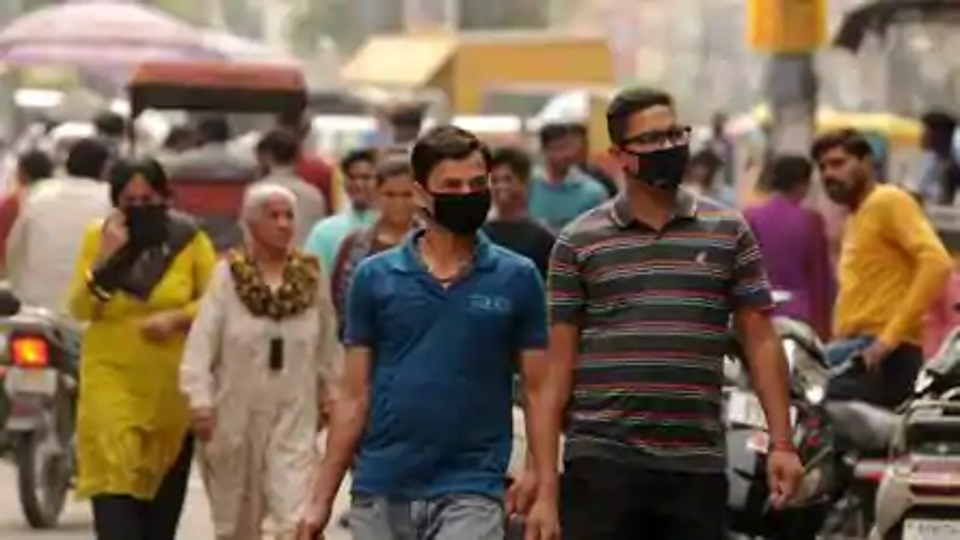
During the beginning of the outbreak, the state health department stated that surgical masks were enough for medical staffers in hospital setups. But soon, as doctors started contracting the infection from asymptomatic patients despite wearing surgical masks, the health department on Wednesday has made it mandatory for everyone who steps out to wear masks.
“This is a new strain of coronavirus, so medical knowledge about the virus is very limited, but health officials should have taken notes of the mistakes done in China. We have done several things wrong, which led to the spread,” said a senior epidemiologist, on condition of anonymity.
Some doctors are suggesting bringing in the Army, like in the United Kingdom (UK), to streamline healthcare supply logistics. “In addition to immediate policy action, the Indian Army, too, can be asked to step in for the protection of healthcare facilities. Without our soldiers — both literal and proverbial — India’s ability to reduce the fatalities of this war could be severely crippled,” said Dr Goel.
Anup Kumar Yadav, commissioner (family welfare) and director, National Health Mission, Maharashtra said, “The screening of passengers at the airport comes under the Central government and we just followed their guidelines. Maharashtra has done the highest number of tests so far in the country, so it’s unfair to say that we haven’t done adequate testing. We are setting up thousands of makeshift shelters for high-risk people to break the chain of transmission.”


