Reported marine animal deaths along coastal areas in the Mumbai Metropolitan Region (MMR) have increased by 183% in the past four years, according to government data.
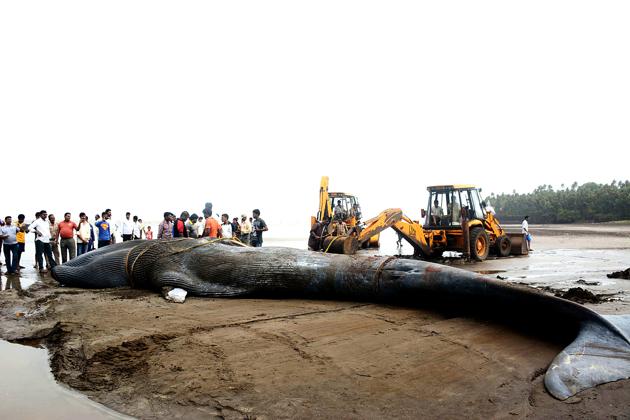
According to the Mumbai Mangrove Conservation Unit (MMCU), which is under the state mangrove cell, marine animal mortalities increased from 12 cases in 2015 to 34 cases in the first nine months of 2018. In 2016 and 2017, 21 and 27 deaths were reported respectively. Prior to 2015, there was no protocol to record such cases, said MMCU officials.
The 94 reported marine animal deaths between 2015 and 2018 include 40 Indian Ocean humpback dolphins, 28 turtles, 17 Indo-Pacific finless porpoises, four flamingos, and five whales (one blue whale, three Bryde’s whales, and one dwarf sperm whale). Makarand Ghodke, assistant conservator of forest, state mangrove cell, said that autopsies were carried out in 10% of all cases reported over four years. “Most of the carcasses are completely decomposed and conducting post mortems is not possible,” said Ghodke.
“The rising mortality is dangerous and a cause of concern,” said Dr Baban Ingole, head of marine biology department, National Institute of Oceanography. “Respiratory ailments for marine animals are a direct indicator of polluted coastal waters. The trend indicates that cases will rise in coming years, and a detailed study needs to be initiated to mitigate this.”
From November, the state plans to initiate five-year study to understand the distribution, population, behaviour and threats to marine mammals along the Konkan coast by installing noise monitoring instruments at sea.
{{/usCountry}}From November, the state plans to initiate five-year study to understand the distribution, population, behaviour and threats to marine mammals along the Konkan coast by installing noise monitoring instruments at sea.
{{/usCountry}}In August, HT had reported that post-mortem reports had revealed that respiratory infection had led to the death of five dolphins this year.
“Apart from diseases, man-made causative factors such as propeller hits from large ships and trawlers for dolphin pods or groups of whales or smaller cetaceans such as sea turtles, porpoises etc. getting caught in gill nets are responsible for rising cetacean mortalities. These two factors can be done away with,” said Deepak Apte, director of Bombay Natural History Society (BNHS).
N Vasudevan, additional principal chief conservator of forest, state mangrove cell, said that the state is working to develop conservation plans in collaboration with animal welfare organisations and has begun training programmes for veterinarians, who will assist teams during stranding rescue operations. “The idea is to develop a network and provide quick solutions to save these marine species. These vets will be the first point of contact,” said Vasudevan.
Stay updated with all the Breaking News and Latest News from Mumbai. Click here for comprehensive coverage of top Cities including Bengaluru, Delhi, Hyderabad, and more across India along with Stay informed on the latest happenings in World News.
Stay updated with all the Breaking News and Latest News from Mumbai. Click here for comprehensive coverage of top Cities including Bengaluru, Delhi, Hyderabad, and more across India along with Stay informed on the latest happenings in World News.