
 E-Paper



8 years since Fukushima: ‘Capacity to generate nuclear energy rises’
The 18th edition of the biennial ‘Nuclear Fuel Report: Global Scenarios for Demand and Supply Availability 2019-2040’, released on Thursday, attributed the projections to extensive programmes to build nuclear reactors in India and China, and more favourable policies in countries like France and USA.

 Prefer HTon Google


For the first time since the 2011 accident at Japan’s Fukushima nuclear power plant, which slowed down expansion of nuclear energy programmes, the World Nuclear Association (WNA) has projected a global upward growth in the capacity to generate nuclear energy.
The 18th edition of the biennial ‘Nuclear Fuel Report: Global Scenarios for Demand and Supply Availability 2019-2040’, released on Thursday, attributed the projections to extensive programmes to build nuclear reactors in India and China, and more favourable policies in countries like France and USA. Currently, 449 nuclear power units account for around 10% of the electricity generation in the world. In 2018, the world’s 449 nuclear power plants supplied 2,563 Terra Watt hour (TWh) of electricity – an increase of 61 TWh from 2017. “This avoided the emission of 2.2 billion tonnes of carbon dioxide compared to the equivalent amount of coal power generation,” read a statement by Agneta Rising, director general, WNA.
“We need more low carbon and clean generation like nuclear energy due to the huge impact of fossil fuel generation and greenhouse gases,” said Jonathan Cobb, senior communications manager, WNA. “The nuclear industry manages and disposes its nuclear wastes responsibly.”
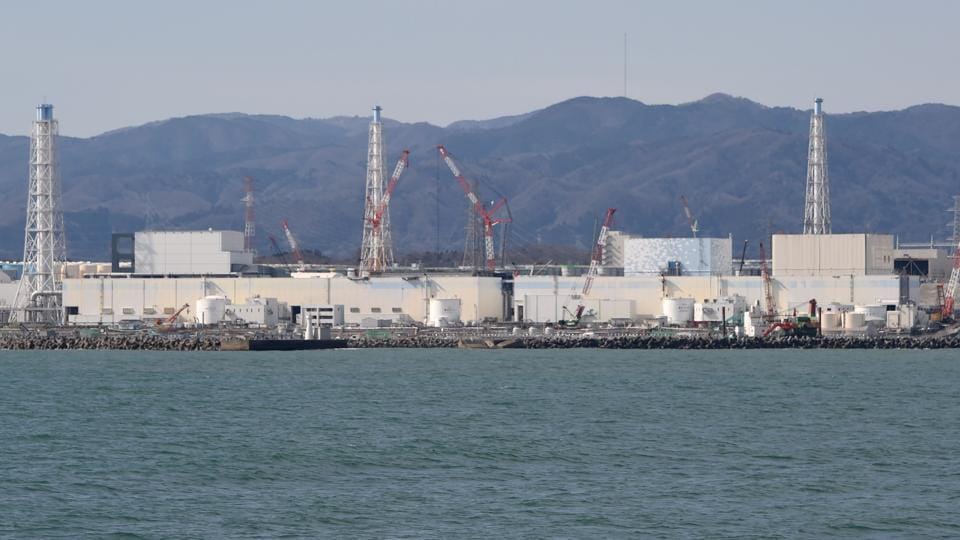
On March 11, 2011, an earthquake of magnitude 9.0 disabled power supply and cooling of three Fukushima Daiichi reactors, leading to the melting of the cores of the plant. The accident led to high radioactive releases over days, triggering a debate across the world over the safety of nuclear power plants.
In India, Nuclear Power Corporation of India Limited reviewed safety of nuclear reactors. Currently, 22 nuclear reactors in India generate 3% nuclear energy. With seven reactors under construction in India and 11 in China, the two countries will account for more than half of the proposed new reactors. The report projects nuclear generation capacity in India to increase more than six times – from current level of 6.2 Gigawatt electrical (GWe) to 41 (GWe) up to 2040.
The report states that Turkey, Bangladesh and Egypt are constructing new reactors for the first time, while Uzbekistan, Kazakhstan and Poland are receptive to programmes. “In France, the country’s energy policy has been modified, delaying the planned reduction of nuclear power in the share of its electricity mix,” reads the report. “In the USA, the process of granting a second licence extension for nuclear reactors has begun.”


