The first time I went to Goa was on a bus. For some reason, the tickets I’d booked on Vayudoot (remember that dodgy airline?) for the handsome sum of Rs 250 got cancelled and I couldn’t re-book them. All the other flights to Goa were full by then, and I had to get to Goa for a wedding, so I jumped on a bus that took off from Dadar in the evening. It was a terrible bus. The seats were musty and cramped and the windows were dirty and the curtains smelly. The rattling promised to rearrange my insides, and so I thought the only way I could survive this ride was to get smashed and fall asleep.
We reached Mahad, on the Bombay-Goa road, at about 10 pm for a dinner and evacuation stop. I headed straight to the bar to find some booze. Dark rum was the only strong alcohol they had. And although I don’t really drink rum, I bought a quarter because the rum was available only in quarts and not millilitres. By the time I had decided, paid and settled down with some rum and cola, the bus revved up as if to start and my fellow passengers started clambering back in.
I looked at the bus, and then at the bottle. It didn’t seem right to carry the bottle on board, so I just knocked the whole quarter down in one go and jumped on. I was knocked out. Nearly 12 hours later I woke up in Mapusa, Goa. I had missed the whole ride, including a couple of stops and the breakfast halt in Kudal. I was hot, hungover and hungry.
Looking out of the window, I realised the bus terminated at Mapusa and would not go on to Panaji. Too disoriented to find out more, I went off to try and deal with my hunger. Destiny led me to Café St Francis Xavier. It’s one of the oldest eateries in Mapusa. Here I had my first tryst with real sorpotel, sausage and curry rice. The sorpotel was mature and fiery, the vindaloo sour and spicy and the sausage, an acquired taste that took me a minute to acquire, all eaten with hot poi (Goan bread) a side of beef patties, croquettes and potato-and-egg chops.
{{/usCountry}}Looking out of the window, I realised the bus terminated at Mapusa and would not go on to Panaji. Too disoriented to find out more, I went off to try and deal with my hunger. Destiny led me to Café St Francis Xavier. It’s one of the oldest eateries in Mapusa. Here I had my first tryst with real sorpotel, sausage and curry rice. The sorpotel was mature and fiery, the vindaloo sour and spicy and the sausage, an acquired taste that took me a minute to acquire, all eaten with hot poi (Goan bread) a side of beef patties, croquettes and potato-and-egg chops.
{{/usCountry}}My life thereafter became one merry ride of vindaloos, sorpotels and chorizo. Occasionally, caldine, cafreal and xacuti. Without even looking back to see whether this small state with a vast Hindu population had another cuisine.
It was at the Mandovi Hotel in Panaji, some time later, that I discovered the vast world of Hindu Goan cuisine. With dishes like Hooman, a mild and sour mackerel curry made with grated coconut paste and spices; muddoshya (lady fish), slightly different from the Christian Goan fish curry because of the spice mix; khatkhate, a mixed-vegetable and lentil stew cooked by the state’s Goud Saraswat Brahmins, spiced with curry leaves, ginger, black pepper, chillies and turmeric. It’s a must on days of fasting when the community eats just vegetarian food.
Udid Methi is another kind of curry typical of the Saraswats of Goa and Karwar. Its unusual taste comes from a combination of black gram and dried fenugreek seeds that combust excitedly with mackerel. And finally, the kaju biyaam tondak, made with fresh raw cashew nuts, coconut and no onion or garlic; you can add to it almost anything — vegetables, lentils, pulses — because the raw cashew or bibya in this dish is used as a pulse.
Unless you’re visiting a Saraswat Goan home, though, the Hindu cuisine is hard to find. I just discovered a whole lot of it at Goa Portuguesa in Dadar. My early advertising and theatre days in the ’80s and ’90s were spent guzzling alcohol, feasting on prawn-stuffed papads and gorging on choriz pav while a merry crooner with a guitar serenaded us with old nostalgic songs and merry Konkani numbers at this fun-filled restaurant. Chef Deepa Awchat’s menu of Goan Hindu food for me went quite unnoticed amid the haze of vinegar, pork and bread. But then I was invited to a feast last week. A feast to celebrate 31 years of Goa Portuguesa. A feat not many restaurants in Mumbai can boast of.
I decide to go, for old times’ sake, this time determined to concentrate on the food. And I’m so glad I did. Of course there was the inevitable pork sorpotel, nearly pickled and the finest I’d eaten in a long time; caldine prawn curry with ukade tandool (red Goan rice), artfully flavoured with kismur (dried shrimp roasted crisp, garnished with chopped onion, coriander and spices).
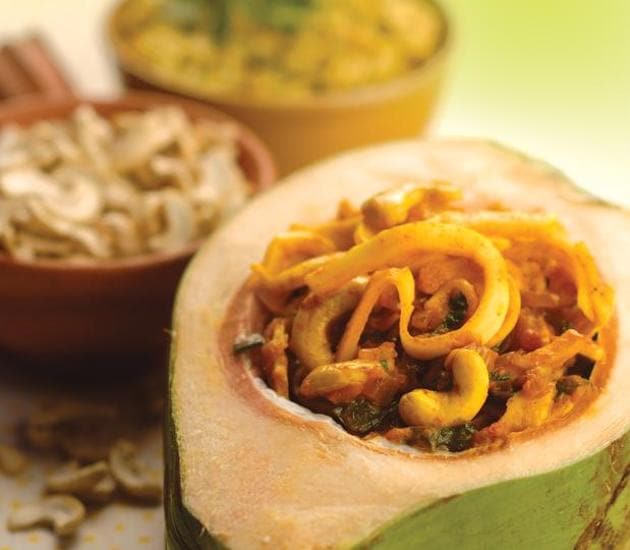
But it was the Goan Hindu food that stood out. Tender coconut and cashew nut sukke (juliennes of the two sauteed with tomatoes and spring onion); rajma tondak (rajma and French beans seasoned with Goan spices and simmered in coconut milk); moongacho ghati (sprouted green gram with dry coconut and cashew nut, tempered and cooked in coconut milk); green pea xacuti (cooked in a dark coconut gravy); and tisreo sukke (clams sautéed in onion and freshly ground spices, garnished with grated coconut).
The meal ended with ‘Amore’ being belted out in the background and a serving of serradura, a simple dessert which is a combination of sweetened whipped cream, powdered tea biscuits and a chilled bowl of trifle pudding. The evening transported me back to Goa, and did it without a single drop of alcohol. Now that’s a feat.
Stay updated with all the Breaking News and Latest News from Mumbai. Click here for comprehensive coverage of top Cities including Bengaluru, Delhi, Hyderabad, and more across India along with Stay informed on the latest happenings in World News.
Stay updated with all the Breaking News and Latest News from Mumbai. Click here for comprehensive coverage of top Cities including Bengaluru, Delhi, Hyderabad, and more across India along with Stay informed on the latest happenings in World News.