Cities have but a few chances to reimagine and redevelop. Every wave of technological and commercial development or changes in their economic architecture offer such a chance. How cities or specific areas are reimagined by those in charge of their administration determine how vibrant and meaningful they remain for residents, whether they offer a decent standard of living for all, how their landscapes weave into people’s lives, and much more.
Mumbai lost its best chance in decades in the 1990s when the powers-that-be parcelled out portions of nearly 600 acres of textile mill land, not contiguous but largely in one section of the city, to private bidders who then built grandiose commercial and residential towers abutting congested old roads and creaking infrastructure. If only the one-third formula — a third each to mill owners, Mumbai’s municipal corporation for amenities, and public housing agency — was brought into effect, the story of central Mumbai would be different.
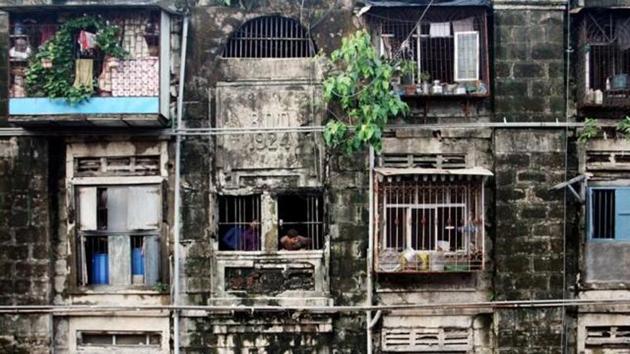
The proposal to redevelop the Bombay Development Directorate (BDD) chawls, spread across 93 acres in all but located in four sections of central Mumbai, is yet another chance to meaningfully transform large parts of central Mumbai. The 207 chawls housing thousands of lower-middle and middle class mostly Maharashtrian families in Worli, Naigaon, Lower Parel and Sewri are a hundred years old, in dilapidated condition and unfit to live in.
The BDD chawls were the public chawls as opposed to the private ones built by landlords and mill owners. The public agency then ensured that there was a master plan for these chawls, there were wide open spaces between chawls which became community spaces, they were provided with basic amenities, and the density remained low with ground plus four storey structures.
{{/usCountry}}The BDD chawls were the public chawls as opposed to the private ones built by landlords and mill owners. The public agency then ensured that there was a master plan for these chawls, there were wide open spaces between chawls which became community spaces, they were provided with basic amenities, and the density remained low with ground plus four storey structures.
{{/usCountry}}The chawls are a feature of the industrial Bombay; the city is now a knowledge and innovation economy. The idea to redevelop these chawls was first mooted in the mid-1990s. For one reason or another, it did not take off. Indeed, the chawls sit on prime real estate in the city but to redevelop them with an emphasis only on this aspect will mean that Mumbai would lose out again.
Chief minister Devendra Fadnavis decided last year that not private developers but MHADA – Maharashtra Housing and Area Development Authority – would oversee the process. The agency recently wrapped up a protracted bidding process and appointed two of Mumbai’s leading private construction companies to revamp the chawls in Naigaon and Lower Parel.
With a floor space index of 4, it is anybody’s guess how the areas will shape up. The easiest and most profitable option would be to maximise the commercial portion, or flats which can be sold in the open market, while clustering existing residents into less fancy, poorly equipped, and lower quality buildings which have barely 12 feet between them. This is the lived experience of redeveloped slums across Mumbai. Neither the residents nor the city benefit as much as the private builders do.
The alternatives exist. Well-known urban planners and architects in the city have suggested ideas in the past. It should be a no-brainer that the reconstructed chawl areas must have open grounds, community spaces, wide roads, primary school and healthcare facilities and upgraded infrastructure.
Besides this, the city can benefit. A powerful argument in making MHADA the nodal agency was that the redevelopment will yield thousands of affordable homes which the agency can invite applications for. Affordable housing, if honestly and properly pursued, can potentially transform the city. But governments have not gone beyond lip-service yet.
If MHADA allows private developers’ writ to run, the affordable housing segment as well the facilities offered to residents could suffer. Can we trust MHADA to bat for the city? If it does, the chawl areas can be reimagined differently. And the recent history of central Mumbai and the experience with slum redevelopment may not be repeated.
L&T, Shapoorji Pallonji set to rebuild Mumbai’s century-old BDD chawls
Stay updated with all the Breaking News and Latest News from Mumbai. Click here for comprehensive coverage of top Cities including Bengaluru, Delhi, Hyderabad, and more across India along with Stay informed on the latest happenings in World News.
Stay updated with all the Breaking News and Latest News from Mumbai. Click here for comprehensive coverage of top Cities including Bengaluru, Delhi, Hyderabad, and more across India along with Stay informed on the latest happenings in World News.