A fungal pathogen, which wiped out Monteverde harlequin frog and golden toad in South America, has been detected for the first time in two amphibians in the Western Ghats.
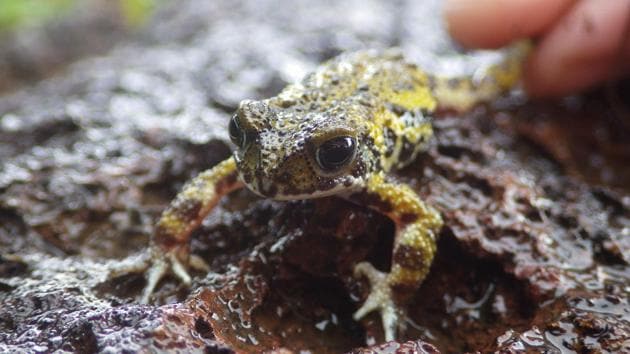
New research by University of Plymouth, UK, with a co-author from Tata Institute of Social Sciences, found Batrachochytrium dendrobatidis (Bd) in caecilians (limbless serpentine amphibians), critically endangered Amboli toad (Xanthophryne tigerina) and endangered white-lipped cricket frog (Fejervarya cf. sahyadris).
The fungal pathogen in large concentration can cause chytridiomycosis, a skin disease that can turn lethal as it affects important functions of the amphibians since these vertebrates absorb water and important salts through their skin. One infected, the disease gets transmitted from one amphibian to another and can lead to high rates of mortality or even extinction.
The presence of Bd in Western Ghats was first discovered in 2011 in Indirana frogs (common name is Indian frogs), and chytridiomycosis was reported from the northern part of the Ghats in 2013 when it was also identified as an endemic Asian strain.
For the new study, researchers visited 13 rocky plateaus in the northern section of the Ghats and studied 118 individual of 21 species of frogs and caecilians. Of these, 79% species and 27% individuals tested positive for Bd.
“The level and intensity of the infection was low as compared to the level that will be needed to kill the amphibians. But the big unknown is what could trigger it from a background infection to one that will turn lethal,” said Christopher Thorpe, principal investigator, and postgraduate research student at the School of Biological and Marine Sciences, University of Plymouth.
{{/usCountry}}“The level and intensity of the infection was low as compared to the level that will be needed to kill the amphibians. But the big unknown is what could trigger it from a background infection to one that will turn lethal,” said Christopher Thorpe, principal investigator, and postgraduate research student at the School of Biological and Marine Sciences, University of Plymouth.
{{/usCountry}}Researchers said though Bd concentration was not sufficient to develop into chytridiomycosis, the findings are important to conserve Western Ghats, which is among eight global biodiversity hotspots. The Ghats, which pass through six states, are home to 325 globally threatened species — 145 endangered and 51 critically endangered species mentioned in the International Union for Conservation of Nature (IUCN) Red Data List.
Another important finding was low rates of Bd infection among amphibians in the coastal plateaus of the Western Ghats because of higher temperatures (above 28 degrees Celsius) that kills the pathogen as compared to hilltops that are cooler where they breed and thrive. Researchers, however, said the rare species are predominant in cooler regions.
“These findings are very important since the pathogen is deadly and their infection is known to have led to the extinction of some amphibian species,” said Varad Giri who works with the Indian Herpetological Society, Pune. “We will now need to continuously monitor the strain of the pathogen and its spread to conserve these three species.”
The study, which also included researchers from the department of infectious disease epidemiology at Imperial College London, and George Washington University, was published in Royal Society Open Science on Wednesday.
Stay updated with all the Breaking News and Latest News from Mumbai. Click here for comprehensive coverage of top Cities including Bengaluru, Delhi, Hyderabad, and more across India along with Stay informed on the latest happenings in World News.
Stay updated with all the Breaking News and Latest News from Mumbai. Click here for comprehensive coverage of top Cities including Bengaluru, Delhi, Hyderabad, and more across India along with Stay informed on the latest happenings in World News.