A marine biodiversity report has found the coastal road project presents a direct threat to 36 intertidal marine species that thrive on the Worli shoreline.
“This reclamation is unsustainable and will end up destroying a bio reserve,” said Sarita Fernandes, from SagarShakti who led the study.
Even though work began last month, the Brihanmumbai Municipal Corporation (BMC) is yet to develop the marine biodiversity plan that it was supposed to have submitted to the Union environment ministry before starting reclamation for the coastal road project.
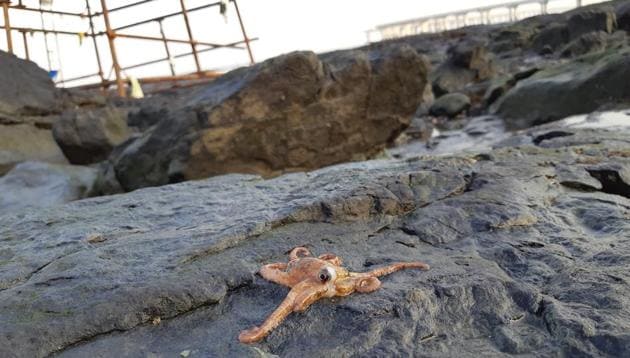
Conducted by SagarShakti, the marine research division of the environmental group Vanashakti, with two independent marine experts, the marine biodiversity report identifies sea snails, crabs, oysters, corals, sponges, octopus, sea fans, snappers, mussels, shrimps and rays – some of which are schedule 1 species under the Wildlife Protection Act, 1972 – in the stretch between Worli Dairy and the start of the Bandra-Worli sea link (889.24m).
Dumping non-oceanic red mud during reclamation could potentially suffocate fragile species known to live in this intertidal area.
“This is one of the most biodiverse shores in Mumbai. The scale of loss is unimaginable,” said marine enthusiast Shaunak Modi, who participated in the study.
{{/usCountry}}“This is one of the most biodiverse shores in Mumbai. The scale of loss is unimaginable,” said marine enthusiast Shaunak Modi, who participated in the study.
{{/usCountry}}Work on the first phase of the coastal road project, which costs ₹12,721 crore, is underway with land reclamation in parts of south Mumbai.
Reclamation towards Worli Dairy (seaward side) has been completed, and is presently ongoing in other parts of the 900m stretch.
In March 2017, the Union environment ministry had directed the BMC to develop a marine biodiversity conservation plan within 24 months of the environment clearance at a budget of ₹10 crore.
HT had reported in February that BMC failed to prepare it within the stipulated time frame.
A senior BMC official told HT that the National Institute of Oceanography (NIO) would be asked to develop the plan and that ₹55 lakh had been allocated for it. However, the standing committee is yet to clear the proposal.
Dr Baban Ingole, head of marine biology department at NIO, said they had not been intimated about the study.
The BMC has also failed to deposit the ₹254 crore, or 2% of the total cost of the project, to the Mangrove Foundation, following its violation of the environment clearance (EC) which was issued by the Ministry of Environment, Forests and Climate Change (MoEFCC) in May 2017.
Stay updated with all the Breaking News and Latest News from Mumbai. Click here for comprehensive coverage of top Cities including Bengaluru, Delhi, Hyderabad, and more across India along with Stay informed on the latest happenings in World News.
Stay updated with all the Breaking News and Latest News from Mumbai. Click here for comprehensive coverage of top Cities including Bengaluru, Delhi, Hyderabad, and more across India along with Stay informed on the latest happenings in World News.