
 E-Paper



Tales of tradition: Yakshagana folk artistes stage stories of love, loss and bravery
Bright hues and high drama will define the performances by theatre troupes from coastal Karnataka at the NCPA this weekend.


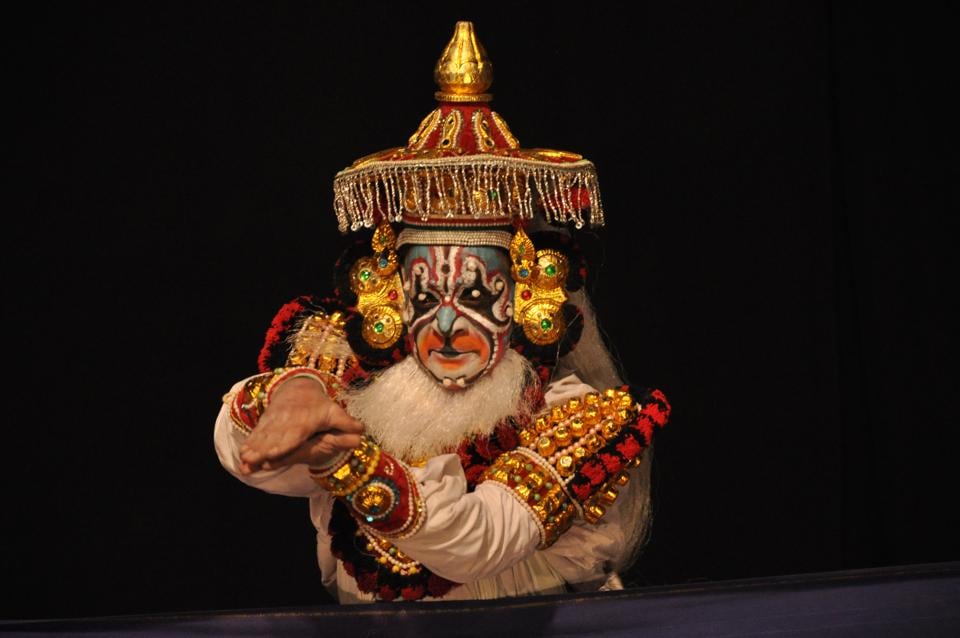
Rama is loud, has a thick moustache and a heavily painted face so expressive, it makes up for anything you’ll miss because you don’t understand Kannada.
At a Yakshagana performance, he, like all other characters, is dressed in bright hues, wears heavy ornaments and has a larger-than-life aura. The folk theatre form that originated in coastal Karnataka almost 400 years ago takes the stage at the National Centre for the Performing Arts, as a part of the event, Living Traditions: The Song of the Yakshas.
There are two traditions within the Yakshagana genre. Tenkutittu, from southern Karnataka’s Udupi and Kasaragod districts, and Badagutittu, which originated in northern regions. Both differ in presentation.
“The troupe Theatre Yaksha will be performing Chakravyuha in the Tenkutittu style, which is fast paced, loud, has traces of humour, is more colloquial and usually relies on Carnatic music,” says Suvarnalata Rao, who heads NCPA’s programming for Indian music. “Jatayu Moksha will be performed by the troupe Yaksharanga, in Badagutittu style, which is considered more refined, subdued, has traditional costumes, elaborate dance steps and is influenced by Hindustani music.”
Yakshagana is not a dying art form, contrary to popular belief, says Shubha Choudhari, ethnomusicologist with Archives and Research Centre for Ethnomusicology, Delhi.
“It’s remarkable how its basic traditions have stuck on, and moulded to accept changes in society,” she says. “The artiste playing Jatayu in Jatayu Moksha is a journalist and it’s not uncommon to find software engineers and people from other professions, participating in it because they are passionate about it.”


