Twenty-five years can be a long time – or not – in the life of a city. The year 1992 was an unremarkable one with the usual civic problems and political shenanigans till almost the end. In December, it turned out to be the city’s watershed year, one that scarred Bombay deeply and viscerally. The city has never been the same since.
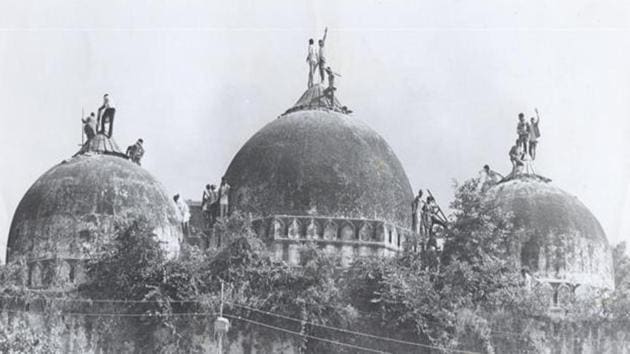
Ayodhya, the epicentre of the Ram Janmabhoomi movement, lies nearly 1,570 kilometres away but the demolition of the disputed Babri Masjid there on December 6, 1992, reverberated in Bombay. A cycle of fierce protests and riots, competitive communalism, violence and retributive violence, collapse of the state machinery of law and order, large-scale vigilante carnage by the Shiv Sena, and the dastardly serial bomb blasts on March 12, 1993.
That December day, the skeins of commerce and common interests that held Bombay’s many communities and religions together ripped apart. Bombay began to burn. In a number of Muslim-dominated areas, incensed mobs took to the streets to protest the demolition and vent their anger at BEST buses and policemen – two visible symbols of the State. The BJP and Shiv Sena’s victory rallies during which provocative slogans were repeated made matters worse, as did the shenanigans of a shady group of Muslim fundamentalists and businessmen.
“The immediate causes of the communal riots on 6th December 1992 were (a) the demolition of Babri Masjid, (b) the aggravation of Muslim sentiments by the Hindus with their celebration rallies and (c) the insensitive and harsh approach of the police while handling the protesting mobs which initially were not violent…This situation was misdiagnosed, mishandled and turned messier,” observed Justice (retd) BN Srikrishna in his report on the Bombay riots.
{{/usCountry}}“The immediate causes of the communal riots on 6th December 1992 were (a) the demolition of Babri Masjid, (b) the aggravation of Muslim sentiments by the Hindus with their celebration rallies and (c) the insensitive and harsh approach of the police while handling the protesting mobs which initially were not violent…This situation was misdiagnosed, mishandled and turned messier,” observed Justice (retd) BN Srikrishna in his report on the Bombay riots.
{{/usCountry}}The situation worsened quickly. A Ganesha idol in a Bandra East temple was vandalised, temples in Dadar were attacked, stones were thrown at a BJP leader’s house in Deonar. Police teams resorted to large-scale firing which resulted in counter-attacks on them.
“From 7th December, 1992, onwards there was a qualitative transformation in the situation. This time the Muslim mobs appear to have come out with the intention of mounting violent attacks as noticed from their preparedness with weapons of offence… misguided and irresponsible Hindu youths aggravated the situation by engaging the rioting Muslims, leading to a situation where the police found it difficult to restrain both sections…the protest had degenerated into a full-scale communal riot between Hindus and Muslims,” the Srikrishna report stated.
The Supreme Court, on Wednesday, restored the charge of criminal conspiracy against BJP leaders LK Advani, Murli Manohar Joshi, Uma Bharati and other leaders on an appeal by the CBI in the demolition case. Advani shares an old and fond relationship with Bombay. This was where his family migrated to during the Partition, he once spoke of the similarities between his original home Karachi and Bombay, he got his degree in law here, and he frequently winged by to meet the late Bal Thackeray and drive by the sea front.
That Bombay had burned is in no small measure due to his and his colleagues’ actions compounded by the inaction of the then Congress governments at the Centre and state. In 2011, at a Face-The-Press meet, all Advani said was: “After the demolition in Ayodhya, there were disturbances in Bombay and I felt so unhappy that day.” Disturbances? The ground shook that day.
Bombay, now Mumbai, has since been a communally ghettoised city whose police are still seen as anti-Muslim and whose glitzy commerce and swanky metros barely mask the social divisions of the 1990s. And those whose lives were torn asunder in those dark December days still await justice.
READ MORE
They sweat, toil, even die for Swachh Mumbai
Can BDD chawl redevelopment script new history?
Stay updated with all the Breaking News and Latest News from Mumbai. Click here for comprehensive coverage of top Cities including Bengaluru, Delhi, Hyderabad, and more across India along with Stay informed on the latest happenings in World News.
Stay updated with all the Breaking News and Latest News from Mumbai. Click here for comprehensive coverage of top Cities including Bengaluru, Delhi, Hyderabad, and more across India along with Stay informed on the latest happenings in World News.