“It’s a photograph that doesn’t rest,” Horst Faas said famously of the unforgettable image — shot by Nick Ut for the Associated Press (AP) — of a little girl running naked, surrounded by her brother and cousins, fleeing a napalm attack in the Trang Bang district of Vietnam, during the war in 1972.
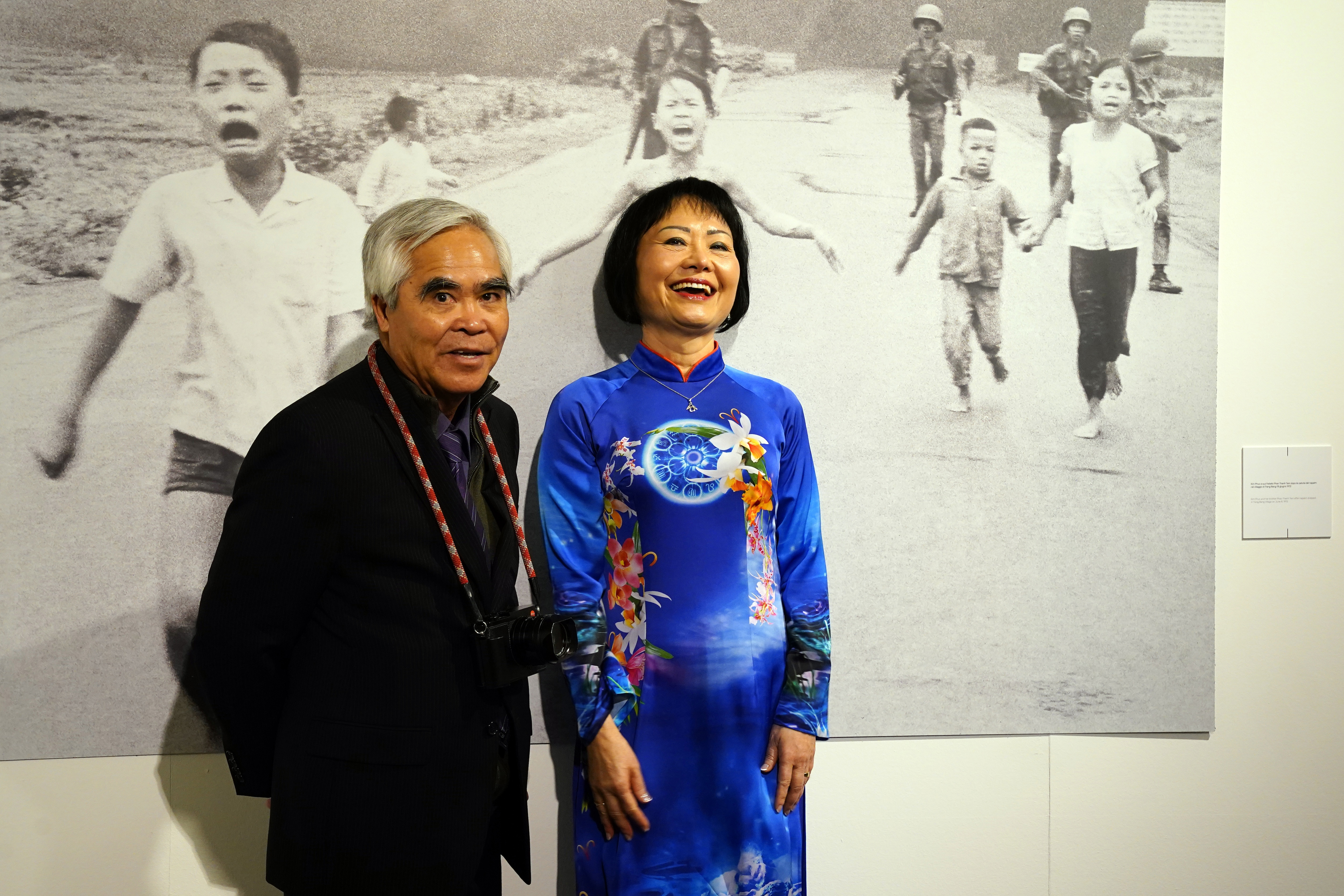
Even at that time, there was a furious debate in the media around the ethics of printing the image of a little girl, who is
“It’s a photograph that doesn’t rest,” Horst Faas said famously of the unforgettable image — shot by Nick Ut for the Associated Press (AP) — of a little girl running naked, surrounded by her brother and cousins, fleeing a napalm attack in the Trang Bang district of Vietnam, during the war in 1972.
Even at that time, there was a furious debate in the media around the ethics of printing the image of a little girl, who is not only terrified and in pain, but also stark naked. Faas, the then chief of photo operations at AP in Vietnam, was among those who fought with editors to have the image — referred to as the "Napalm Girl" in later years — published.
Eventually, the photo ran on the front pages of many newspapers in the United States (US) at the time, and internationally in the later years; its brutal imagery becoming fodder for discourse on anti-war movements globally.
It was the image that won Ut the Pulitzer Prize for Spot News Photography and the World Press Photo of the Year in 1973. But over the years, the photograph has been discussed widely for issues of consent, ethics and agency, especially in the mainstream media, and more so when it comes to reporting on people of colour in situations of distress.
As the photograph marked its 50th anniversary on June 8, the girl from the image wrote for The New York Times about how she felt about the photo and its aftermath.
“I grew up detesting that photo,” wrote Kim Phuc Phan Thi, now nearly 60.
“I thought to myself, ‘I am a little girl. I am naked. Why did he take that picture?’” she wrote, even though she was grateful that Ut helped her after he made the image, taking her to a hospital, and ensuring she underwent the treatment she needed to survive. They have kept in touch since.
In the latest issue of The Journal of The Royal Photographic Society, Hal Buell, the New York photo editor for AP at that time, defended his decision to release the image to the world.
“The nudity... exaggerates the heart of the picture. If Kim had had all her clothes on, it still would have been a great picture, but the nudity of it? It just draws you to it,” writes Buell.
Another similar example is the 1985 cover of National Geographic which featured a young Afghan girl with piercing green eyes, photographed by Steve McCurry in Pakistan. She was a refugee, who had fled from Afghanistan to Pakistan. There was no informed consent in the making of that portrait. She wasn’t even afforded a name in print because McCurry didn’t have one to give to the magazine.
Sharbat Gula’s side of the story wasn't printed because McCurry only saw her within the frame of a photo; she wasn’t given a chance to present her narrative. The image put a spotlight on Gula and, in 2016, she was arrested in Pakistan on charges of fraudulent identity and eventually deported back to Afghanistan.
In an interview with the BBC in 2017, Gula said, “The photo created more problems than benefits. It made me famous, but also led to my imprisonment.”
McCurry, on the other hand, shot to fame after that and has been a contributor to the prestigious Magnum Photos since 1986. Gula’s nameless photograph is still up for sale on the Magnum Photos website with the caption, “Afghan Girl. Peshawar, Pakistan, 1984.”
Another image that falls under this category in more recent times, but is not far from the same dilemma, is the image of a woman crew member of Jet Airways from the 2016 blast at Zaventem airport in Brussels. The image, shared by millions on social media, showed Nidhi Chaphekar sitting in shock; partly exposed after her uniform ripped in the explosion, covered in dust and with blood on her face.
It is a gripping image, but its publication is not without valid ethical concerns, demonstrating a complete invasion of privacy and disregard for Chaphekar’s dignity. She was photographed by Ketevan Kardava, a Georgian journalist who was at the scene herself, recovering from the shock of the blast.
“I didn’t even know someone had taken my picture. I was worried only about my bleeding,” said Chaphekar in an interview with The Guardian in September 2016. She expressed her unhappiness with news editors choosing to carry that image prominently without any cropping or blurring.
“When I saw that, I felt a little low. It doesn’t look nice. It’s not just adults reading the newspaper, it’s children too.”
In photography’s complicated history of portraying victims of conflict, the lens has been more often than not biased against people of colour. This has also been demonstrated by the discussion and outrage on social media over the past two years when time and again the main victims of Covid-19 were people of colour; their bodies photographed in a manner that robbed them of the dignity that should be afforded to the dead.
The sanitisation of visual aesthetic appears only to be reserved for white people by white photographers. Women of colour, in particular, end up being depicted as exotic objects, whose bodies draw more attention than men. Even though the visual language has expanded, and the critique is stronger now, on the ground, photographers still work with little concern about agency or consent when it comes to people of colour, especially in images that go viral and do more damage than good.
One would assume that in the present day, organisations as well-meaning and diverse as the Médecins Sans Frontières (MSF) would act more responsibly on this front. But in 2021, celebrated Iranian conflict photographer Newsha Tavakolian stirred up controversy after she published a series of images taken on assignment for the MSF in the war-torn Ituri province of the Democratic Republic of the Congo.
She had photographed female victims of sexual violence, in which she included several fully identifiable photographs of a 16-year-old teenage rape survivor. MSF published the photo essay with a first-person article co-written by Tavakolian, and Magnum Photos then shared the series on their website in April 2022. Both received heavy criticism from photographers and activists.
After initially defending the photo essay, MSF published a statement that pledged to “review our audio-visual guidelines and their implementation, in order to avoid misjudgments in the future”.
Tavakolian, a victim of sexual abuse herself, defended the work, stating how no single rule must be applied to cases of rape.
“Perhaps 99% of the time, the image of the underage victim should not be shared publicly. There is always a small percentage of cases where you have to be there to make a judgment call,” she said in an interview with Art Newspaper.com.
Fifty years since Ut first photographed Kim, things seem hardly different for people of colour facing the camera. Terms like the "Napalm Girl" or the "Afghan Girl" have high recall value for audiences, but are reductive in their reading of the subject's identity and situation. It renders them nameless in the harshest possible manner — especially people of colour. The victims in these images have suffered infinitely more than what the photographs show, and often they have no option but to make peace with the aftermath of the viral image, even if it helps them a little somewhere on the way to their process of healing. The pulling of the trigger, as violent a term as it is in photographic discourse, exists as evidence as much as it does as in real practice.
paroma.mukherjee@htlive.com
The views expressed are personal
One Subscription.
Get 360° coverage—from daily headlines
to 100 year archives.
Archives
HT App & Website