The Indian Ocean is currently going through a marine heatwave. This will likely lead to a decrease in fish catch, increased stress for fisherfolk, and potential storm surges. We are also in the throes of a heatwave on land and have suffered Cyclone Remal. Going forward, it is increasingly becoming clear that how we plan challenges linked to the environment will be key to the well-being of citizens. From May 21-29, several countries (also called Parties) came together in Nairobi,
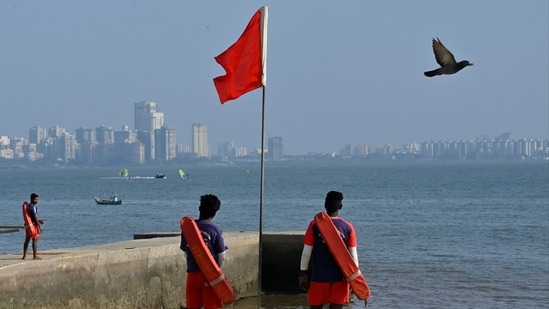
The Indian Ocean is currently going through a marine heatwave. This will likely lead to a decrease in fish catch, increased stress for fisherfolk, and potential storm surges. We are also in the throes of a heatwave on land and have suffered Cyclone Remal. Going forward, it is increasingly becoming clear that how we plan challenges linked to the environment will be key to the well-being of citizens. From May 21-29, several countries (also called Parties) came together in Nairobi, for a meeting on the Subsidiary Body of Implementation under the aegis of the Convention on Biological Diversity (CBD).
In 2022, the world made the biggest decision to mainstream and conserve biodiversity. This was the adoption of the Global Biodiversity Framework (GBF), which sets 23 targets for saving nature by integrating it into the rest of life: Economy, well-being, production and climate action. Placed under the CBD, these targets need to be met by 2030 to ensure we reverse nature loss and be nature-positive for people and the planet. This means we only have five years to take urgent measures.
And India has the opportunity to lead the way. Currently, the chair of the Subsidiary Body of Implementation (SBI) of the CBD is from India – C Achalender Reddy, the chairperson of the National Biodiversity Authority, Government of India, has been appointed the chairperson for SBI. This is an important position, which gives India at least two roles. One is to set an example by fulfilling the commitments towards nature by implementing the GBF, and the second is to urge other parties to do so. In the just-concluded SBI meeting, mechanisms for monitoring the GBF were discussed. In some ways, India’s own experience in implementing the GBF can provide a template for navigating the complexities of developing, biodiverse nations with various interest groups and demographics.
Given their wide scope, implementation will be about taking a whole-of-society and whole-of-government approach. This is akin to taking a position that invests in nature, paying back to the economy and society. In a study published in 2023 (in Proceedings of the National Academy of Sciences), researchers from the University of Minnesota and Purdue University found that investments in nature, through augmenting ecosystem services including pollination, timber provision, marine fisheries and carbon sequestration, accrue annual gains of $100-350 billion each year.
The problem of marine heatwaves needs a set of integrated and nature-positive solutions. First, we can attempt to solve existing problems in the fish production scenes to destress livelihoods — such as improving the cold supply chain of fish to reduce the wastage of catch. We can invest in better, solar-powered fish chilling units as a means of climate adaptation. Second, we can look at nature-based solutions that help provide refuge to fish and marine wildlife, ultimately strengthening the ecosystem. This could be done by creating artificial reefs to provide additional habitat and cover for important fishery species and restoring native mangroves. Third, we need to re-consider how coastal infrastructure is sited — structures should not cause more ecological damage and need to consider that coastal storms and cyclones will increase, thereby increasing maintenance costs.
We have an opportunity to cross-pollinate the approaches taken on federal and state levels. As an example, the Government of India has a soil health card scheme under the National Mission for Sustainable Agriculture. Karnataka has the Bhoochetna scheme, which focuses on improving the livelihoods of dry-land farmers in the state. The challenge for policymaking is to ensure these approaches work in tandem.
The larger ecosystem of our environmental commitments also needs greater synthesis. For instance, India has pledged to restore 26 million hectares of land by 2030 (under the United Nations Convention to Combat Desertification). We have our climate targets under the United Nations Framework Convention on Climate Change of reducing emission intensity by 45% by 2030 from 2005 levels and creating an additional carbon sink of 2.5 to 3 billion tonnes of CO2 equivalent through additional forest and tree cover by 2030 (with 2005 as the base year). These need to be integrated in ways that cross-cut and benefit each other. For example, restoration should be science-based and privilege native ecosystems. Rivers are being restored in India through coalitions of NGOs and State action – an example is the Karula river, a tributary of the Ramganga, in Bijnor district, Uttar Pradesh. This is the right time to take a birds-eye view of the landscapes, and create restored landscapes that combine rivers and riverine habitats (such as grasslands and forests) and green and blue areas in cities (the latter is a GBF target). The GBF calls for the involvement of women, youth groups, tribals and other under-represented communities in implementation: This will require two-way capacity-building and participation. Efforts also need to be made to broaden and develop synergies among various rural and agrarian schemes like the Garib Kalyan Rozgar Abhiyaan, the Jal Jeevan Mission and Rashtriya Gram Swaraj Abhiyan for implementation.
What will work in India may well provide the roadmap for the rest of the world.
Neha Sinha is head, policy and communications, WWF-India. The views expressed are personal
One Subscription.
Get 360° coverage—from daily headlines
to 100 year archives.
Archives
HT App & Website