
 E-Paper



Ecostani: Arrowhead, a tigress who lit up the forests of Ranthambore
Normally, a tigress trains her cubs to hunt before releasing them in the wild. Arrowhead was unable to do so because of illness

 Prefer HTon Google


Rarely does the death of a tiger or tigress mourned in India where animals are perceived to be enemies because of rising man-animal conflict cases.
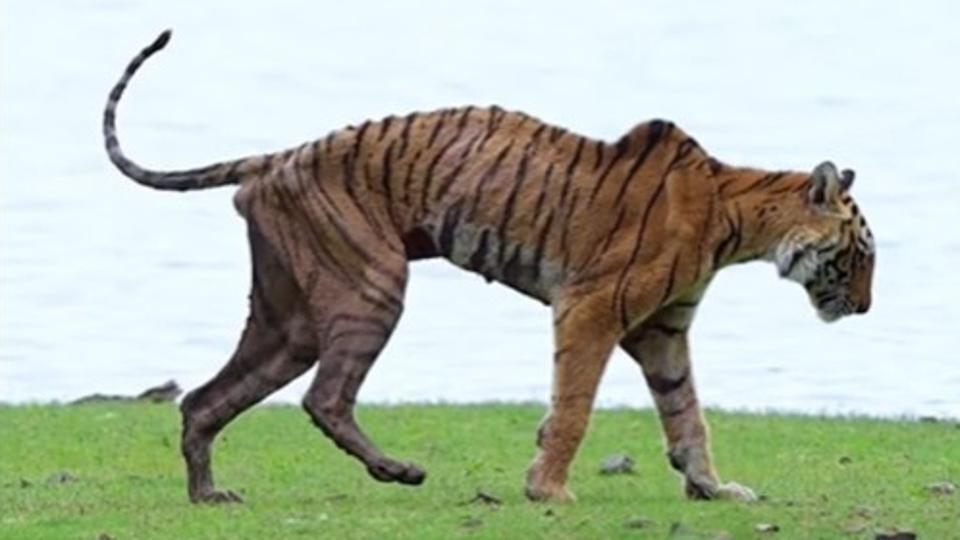
That was not the case with Arrowhead, the legendary Ranthambore tigress, who died on June 19 at an age of 11-years. She died after suffering from bone cancer and died hours after her cub, Kankati, was translocated to the Mukundra Hills Tiger Reserve. Her death was widely covered in the media.
Born in February 2014 to Krishna, daughter of the iconic tigress, Machli, Arrowhead (T-84) gave four litters through the years. Her two siblings, Lightning and Pacman, were also popular in Ranthambore but it was Arrowhead, who inherited the fame of her grandmother Machli, the most photographed tigress in the world. She got her name because of the arrow-like mark on her forehead, her sharp attack on the prey and calmness in her walk. The mark on her forehead helped tourists to identify her easily.
Her last litter, born in January 2025, became a reason for her emotional distress, experts said. Arrowhead with her three cubs was sighted for the first time on July 25, 2023 in zone 2 of Ranthambore. She appeared ill, and her illness hampered her hunting capabilities. Forest rangers and guards feared that she and her cubs could starve.
Ranthambore forest officials then decided to feed her meat nearly every day, bringing her close to the human population in Ranthambore’s zone 2. The goodwill gesture did not help her cubs though, who also fed on the meat provided by the forest department, and then started looking for easy prey.
Normally, a tigress trains her cubs to hunt before releasing them in the wild. Arrowhead was not able to perform this duty, which caused her distress. As the cubs got habituated to easy prey, Kankati allegedly killed a seven-year-old boy near the temple within the tiger reserve on April 17, and clamour grew to kill them. On May 11, she was accused of killing a forest ranger in the same area. Forest officials claimed that their preliminary investigation indicated that Kankati may have killed the two. However, there was no conclusive evidence. A desperate forest department decided to relocate her cubs to safer locations and Arrowhead to a new location away from humans.
Arrowhead’s male cub was shifted to Karauli’s Kaila Devi Sanctuary on June 16. The female cub was shifted to Bundi’s Ramgarh Vishdhari Tiger Reserve on June 17. On June 19, 2025, Kankati was sent to Mukundra Tiger Hills, which currently has 3 tigers. With her cubs not with her anymore, Arrowhead died in zone 2 and hours later her body was found in the shade of a tree.
Three days before her death, Arrowhead killed a crocodile resting in Padam Talab (pond) in zone 2. She pounced on the prey and killed it instantly, showing her once fierce demeanour, which made her the most popular tigress in Ranthambore, like Machli. That was her last kill, according to the forest department officials. A video of her last walk recorded by wildlife photographer Sachin Rai showed a bony Arrowhead walking slowly and grinding in pain towards the crocodile.
Arrowhead, like her grandmother, was known for killing crocodiles and was often spotted near water bodies, a reason for her being one of the most clicked tigresses in Ranthambore in recent times. Arrowhead dominated the territory in zone two, three and four, where once her mother and grandmother reigned and contributed significantly in turning Ranthambore into one of the most densely populated tiger reserves in the country.
Ranthambore now has about 80 tigers with a healthy male and female mix and Arrowhead is responsible for about 50 of them that live in the family tree of Machli in Ranthambore. Known for her tenacity and courage, Arrowhead’s death signifies the end of a magnificent era in the famed Ranthambore landscape, from where the Vindhya rises close to the Aravalli mountain range.
More than that, her life and that of her grandmother Machli tells us that tourism and conservation can continue simultaneously, provided the former does not hamper the latter. A popular tigress like Arrowhead can ensure that thousands of people associated with tourism in Ranthambore continue to earn a livelihood, apart from maintaining the region’s ecological balance.
The contribution of the wild towards humanity’s well-being is rarely appreciated. On the other hand, animals like Arrowhead are blamed when they try to protect their own space from human encroachments. Arrowhead’s death should be a reminder of the importance of conserving wildlife habitats, which are being destroyed in the name of development.


