
 E-Paper



Banijay Asia's Group CDO Mrinalini Jain on choosing Kunal Kemmu as Alliance host, bringing Sohail Khan as contestant
Mrinalini Jain emphasised the need for gameplay and strategy in India's reality TV, moving away from drama-centric formats.

 Prefer HTon Google


Reality television in India has long been associated with drama, conflict and larger-than-life personalities. But Banijay Asia is increasingly experimenting with formats that put gameplay, strategy and scale at the heart of the viewing experience. From The 50 and Alliance to Rise & Fall, the production house has been exploring newer ways of engaging audiences while retaining the core ingredients that make reality television work.
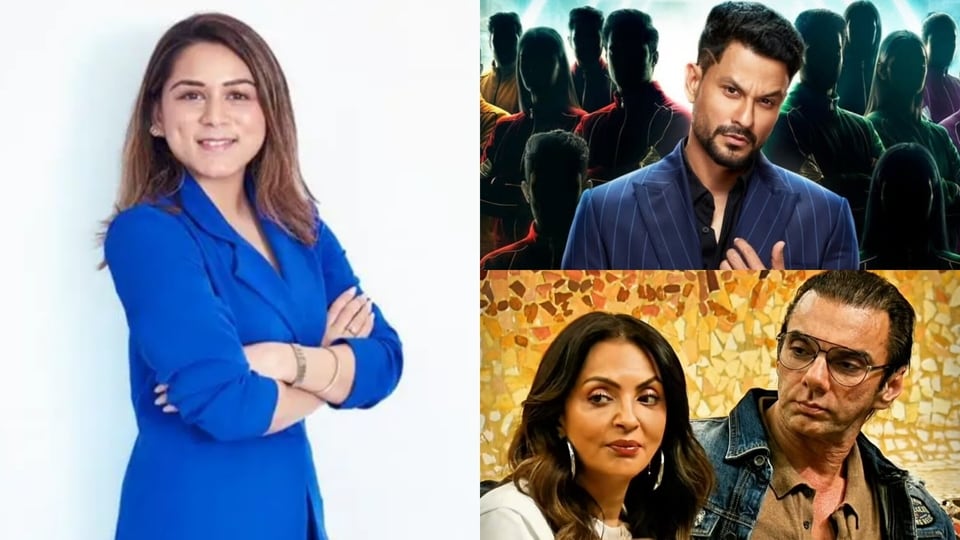
As Group Chief Development Officer (CDO) at Banijay Asia, Mrinalini Jain has been closely involved in developing some of these formats. In an exclusive conversation with Hindustan Times, she opened up about the thinking behind Alliance, choosing Kunal Kemmu over a conventional reality-show host, the ambition to create an Indian reality IP that can travel globally, and why the company believes quality must come before volume.
‘We wanted gameplay to be at the centre’
Talking about Alliance, Mrinalini said there was no internal scepticism about whether a strategy-driven reality show would work among audiences accustomed to high-drama formats such as Lock Upp and Bigg Boss. She explained that Banijay remains confident about the IPs it brings to the market, while recognising that every show has its own fate. According to her, the key is to remain committed to the format and language of a show before launching it.
She explains that the creative approach behind Alliance was deliberately different. “In a daily beast, the language almost evolves. So when we brought Alliance, the way we imagined it, you had never seen vertically integrated sets; we did that for the first time. The set was very different. You have never seen contestants working in teams in a reality show; it was the first time we introduced that.”
For Mrinalini, the show was never intended to be a captive reality show that depended solely on interpersonal drama. “It was also a show which had the right balance of gameplay, strategy and drama. It was not just a captive show where people were only thriving on drama. We were very clear that we wanted gameplay to be at the centre.”
She believes Indian audiences are more open to different kinds of reality formats than they are often given credit for. “Also, there has to be a way that positive reality also works in the country, right? I mean, we have done some of the biggest reality shows in the country and it all worked. But I feel that we need to find the right ingredient for the audience to be engaged.”
“I don't think the audience wakes up saying we need a scripted or unscripted show. They wake up wanting to be engaged,” she adds.
Jain says the team remained confident about its vision while continuing to fine-tune the show. “So we were pretty bullish with the kind of show we wanted to make, and we kept improving it day by day. The social chatter really helped, but we were pretty clear that it was not just a captive show but a game show that was also captive, and that was very important.”
Choosing Kunal Kemmu over Salman Khan for Alliance
Considering Banijay Asia's long-standing association with Salman Khan as the host of Bigg Boss, choosing Kunal Kemmu as the face of Alliance was an unexpected move. Mrinalini says that was precisely the point. “I think we were on the lookout for a format that could disrupt the market, that could feel different and where people could appreciate the fact that all shows don't have to be similar. There's space for a smart format,” she says.
She also believes that audiences today are more discerning than the industry sometimes assumes. “I also think the audience today is very smart, and we underestimate them. We were very clear when we brought that format to the market. As far as Kunal is concerned, we really wanted somebody very hatke. We wanted people to be able to be like, wow, what just happened. We worked with several big hosts, and we love all of them, but in this show the gameplay had to be at the front and centre of it.”
She feels Kunal's personality made him a natural fit. “Kunal is so secure as an artist that he was like, I don't want to play a character which is not me. This is who he is; he's a very fair person who is known to choose roles which other people may not. He has a freshness and a relatability with the audience that we love. So we were very keen that he hosts the show, and he was also gracious enough to accept it very quickly. But we were really trying to do something different. Everybody was like, ‘Oh wow, this is so different’ when they saw Kunal, and that was the motive,” she adds.
‘We want to create an Indian IP that can go global’
India has adapted several successful international reality formats, but Mrinalini believes the next big ambition is to reverse that flow and create a homegrown format that travels worldwide. “That's our next aim. We want to create an Indian IP that can go global. Having said that, I want to say that even if these are international adaptations, if you watch the original versions, you would see that we culturally really adapt them to the nuances of the market and the language that we are working in. Beyond a point, people forget that it's an adaptation of an international format. So I don't think it gets stuck in those realms,” she adds.
The company, she says, is actively looking for that one idea that can travel beyond India. “We are aggressively looking to make an Indian show that can go viral. Because we feel that great ideas really travel and our main job is to make it inevitable.”
On ensuring every season gets better
For reality franchises with multiple seasons, one of the biggest challenges is ensuring that the format does not become predictable. Mrinalini says Banijay has teams dedicated to finding ways to evolve each season without compromising the show's core identity. She cites Rise & Fall and Bigg Boss as examples of strong franchises with clearly defined identities. “Both Rise & Fall and Bigg Boss are very, very strong IPs that have a very distinct core DNA. While as an audience it may feel like it's in the same realm, we treat them as two separate shows, and they both have a very strong gameplay and distinctive element that they use for their creative. So I feel every season we work hard to make it bigger than the previous season, adding new audience and hearing the audience chatter. We have heard a lot about what is happening on digital platforms, heard from a lot of people, and we take those learnings and we keep trying to make the show bigger and better.”
Mrinalini points to Khatron Ke Khiladi as an example of why Banijay is willing to pause rather than simply produce another season for the sake of it. “I think Khatron Ke Khiladi is a great example of that. We took a step back from the show and delayed it because we felt we needed to recalibrate and come back with something better. We didn't want to just churn out another season. The audience has rewarded that decision by making it one of the biggest non-fiction shows of 2026. For us, that reinforces something we strongly believe in: quality has to come before volume,” she says.
‘Sohail bhai loved the Alliance format so much’
Alliance also made headlines when Sohail Khan joined the show as a contestant. Mrinalini says the actor's decision came from his own enthusiasm for the format. “We are very bullish and very ambitious. We aim for the highest stakes and try our best to make that happen. Sohail bhai loved the Alliance format so much and loved the game so much that he agreed to come on the show. I think it's the strength of the IPs and also our persistence,” she says.
For Mrinalini, however, the show's scale was not simply about creating a spectacle. Every visual and production choice was intended to serve the format. “Our ambition was to make Alliance look very different, which is why we went for the vertically integrated sets and thought what would it feel like to be in an undisclosed location. So those were all creative calls. Also, I feel scale only matters if the audiences care. Once they see a visual that is new, I think we have hooked them in. I think we underestimate the audiences. They are very smart and ready for all sorts of things that you throw at them.”

Get more updates from Bollywood, Taylor Swift, Hollywood, Music and Web Series along with Latest Entertainment News at Hindustan Times.


