Independent India’s first tryst with atmanirbharta (self-reliance) — the earliest and most consequential demonstration — was anchored by its farmers and orchestrated by agricultural scientist and technocrat MS Swaminathan, better known as the Father of India’s Green Revolution. The Green Revolution did more than increase agricultural productivity: It was the hinge on which both India’s agricultural and political fortunes turned, resulting from the convergence of scientific innovation, political will, institutional capacity and farmer enterprise. As India, just like the rest of the world, prepares to avert a potential food crisis, many of Swaminathan’s ideas, including the recommendations of the National Commission on Farmers (NCF), popularly known as the Swaminathan Commission, need to be recalled. NCF was constituted on November 18, 2004 under Swaminathan’s chairmanship to address the issue of farmer suicides.
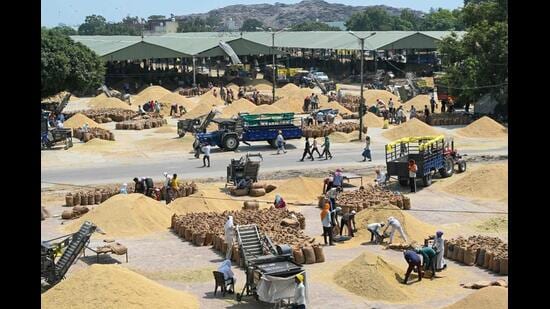
Swaminathan was led by a simple conviction: A nation that couldn’t feed its own people couldn’t truly be free. Following two successive droughts in 1965-66 and 1966-67, India faced an acute food crisis. In 1966 alone, it imported around 10 million tonnes of wheat under the American Public Law 480 programme, living what has been called a ship-to-mouth existence. More troublingly, the US administration placed food shipments on a “short tether”, releasing supplies in small, short-term instalments and using food aid as leverage to press India on its foreign policy and its criticism of American policy in Vietnam.
Food dependence became a question of India’s sovereignty. Yet, to remember Swaminathan solely as the architect of the Green Revolution would be to diminish his contribution to national life in India. He believed that agricultural progress should be measured not just in terms of production but also livelihood security of farmers, nutritional gains for the population, empowerment of women and sustainability.
Through NCF and his wider work on biodiversity, agroecology, rural development, and agricultural research, he consistently championed the dignity and economic security of the farmer. Two decades after the NCF submitted its five reports between 2004 and 2006, its recommendations remain highly relevant, yet not fully implemented. The Commission approached agricultural distress not simply as a productivity problem but as an issue of incomes, livelihoods, and access to productive resources.
{{/usCountry}}Through NCF and his wider work on biodiversity, agroecology, rural development, and agricultural research, he consistently championed the dignity and economic security of the farmer. Two decades after the NCF submitted its five reports between 2004 and 2006, its recommendations remain highly relevant, yet not fully implemented. The Commission approached agricultural distress not simply as a productivity problem but as an issue of incomes, livelihoods, and access to productive resources.
{{/usCountry}}The central proposition was that the farmer’s economic viability must be the fulcrum of agricultural policy. Today, India’s food security faces a different but potentially formidable set of challenges: The climate crisis, geopolitical conflicts, and disruptions in global supply chains are converging to expose vulnerabilities in our agricultural system. Monsoonal rainfall this year was only 87% of its long-period average. Water storage in the country’s 178 major monitored reservoirs stood at just 68.6% of capacity on October 15, 2026. A strengthening El Niño adds another layer of uncertainty to India’s farm outlook.
The geopolitical situation is equally concerning, with respect to India’s dependence on international fertiliser supply chains and energy markets. The government’s decision to approve a 64% higher nutrient-based fertiliser subsidy allocation for the winter cropping season is indicative of the pressure from rising international input costs. These developments underline how quickly a combination of climatic and geopolitical shocks can translate into higher cultivation costs, pressure on farm incomes, lower productivity, and food inflation. Several parts of key farm states such as Maharashtra, Gujarat, Karnataka, Andhra Pradesh, Telangana, Rajasthan, Punjab, and Haryana are facing extreme drought conditions.
This is precisely where Swaminathan’s ideas deserve renewed attention. India must move beyond the singular objective of maximising agricultural output and build a food system that is resilient to external shocks and ecological stress. It should focus not merely on the quantity of food output but also on the nutrition of its citizens. The Centre must work with states to identify and promote locally suitable seed varieties that require less water, tolerate heat and drought, and have shorter maturity periods. Programmes such as Pradhan Mantri Krishi Sinchayee Yojana, particularly its ‘Per Drop More Crop’ component, need substantially greater coverage through microirrigation. Soil health, groundwater recharge, crop diversification, and climate-resilient agricultural research must become central to agricultural planning.
Swaminathan demonstrated how effectively science, public policy, political leadership, and the enterprise of ordinary citizens could come together to change a nation’s destiny. The greatest tribute to the man who helped feed India would be to ensure that the next generation of Indians inherit an agricultural system that is equally productive, remunerative, climate-resilient, and sustainable — essentially moving from a Green Revolution to an Evergreen Revolution.
Priyambada Jayakumar is a historian and author of the book MS Swaminathan: The Man Who Fed India. The views expressed are personal