It’s that time of the year again. The kanwariyas are visible all over the city. This is the annual pilgrimage where Shiva devotees walk to the river Ganga at different places such as Haridwar, Gaumukh and Gangotri. From here they carry holy water to the local Shiva shrines in their areas. You can see them walking through the streets balancing two pots on either side of a bamboo stick, slung across one shoulder. It is estimated that more than 15 lakh people participate in the pilgrimage annually. While it is largely a men-only affair, there are women who also participate in this journey, which can be quite arduous. As the kanwariyas have to walk through many urban areas these days, we see an interesting mix of the sacred and the secular. City authorities have to be well-prepared, both in terms of security and for providing Kanwars a place to rest. Many people also provide food and temporary shelter to these devotees.
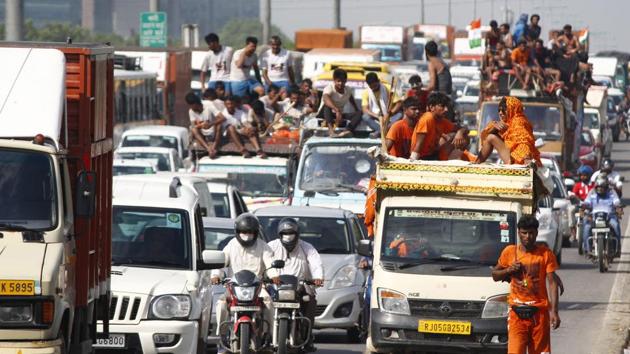
Unfortunately, in the past few years, the pilgrimage has deteriorated into acts of aggression, harassment of women and, in some cases, a public disturbance.
While this particular event takes place during a certain period of the year (monsoon), there are many moments in the life of our cities when people gather and celebrate in public places. Cultural gatherings and festivals are very often all about engaging energetically in public spaces and providing people a reason to be out and mingle.
In Gujarat, during the Navratras, even women are seen out till the early hours of the morning. Similarly, during Durga Puja in Bengal, men and women move around the city visiting pandals through the day and in the wee hours of the night. There are similar occasions in cities around the country. There is a carnival-like atmosphere and people spill out onto the streets.
Public spaces have traditionally been spaces of gathering, of interaction and festivity. In Gurgaon, we see people getting together in public spaces to celebrate Holi, Dussera, Eid and Christmas, among other festivals. These are significant moments of community cohesion and cultural bonding. Cities light up and the public space is claimed as a shared space. These are crucial in the cultural landscape of any society. It is also important to note that these spaces are not segregated, and everyone can be a participant. There is no entrance fee and we see diverse sets of people mingling across ages, class and communities.
{{/usCountry}}Public spaces have traditionally been spaces of gathering, of interaction and festivity. In Gurgaon, we see people getting together in public spaces to celebrate Holi, Dussera, Eid and Christmas, among other festivals. These are significant moments of community cohesion and cultural bonding. Cities light up and the public space is claimed as a shared space. These are crucial in the cultural landscape of any society. It is also important to note that these spaces are not segregated, and everyone can be a participant. There is no entrance fee and we see diverse sets of people mingling across ages, class and communities.
{{/usCountry}}We have seen that some of these public celebrations have resulted in increased aggressive occupation of public space and specifically sexual harassment of women.
Holi, for example, has become one celebration which women and girls have come to fear. The challenge is to maintain the spirit of the celebration while ensuring that people can equally enjoy these cultural moments without fear or discomfort. It would be unfortunate if the aggression changes the response to the public nature of these events. It is the celebration of these festivals/events in public that give each participant a sense of belonging.
(The writer works on issues of women’s safety and rights in cities)