It is not often that Indian residents want to on-board a scheme for Bharat. If the Rs 5 lakh sum insured under Modicare for 500 million Indian poor reaches its potential, middle India will clamour to be allowed entry and will be willing to pay for the scheme. What costs India an average of 2% of sum insured for individual covers is costing an average of 1.3% to the government currently, and has the potential to drop down further under Modicare.
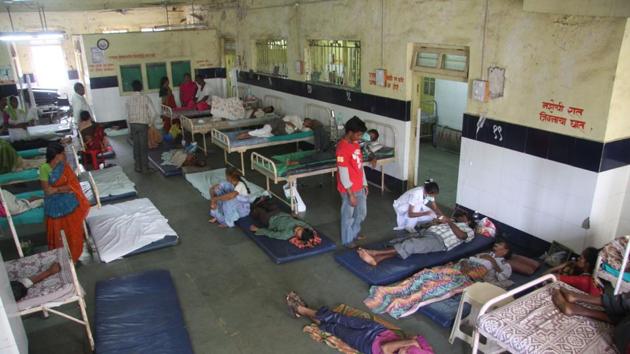
In announcing Modicare or the National Health Protection Scheme as a government funded secondary and tertiary care (health services that usually require hospitalisation) plan, India has signalled its healthcare direction where the State does not provide free or subsidised medical care but funds insurance companies to reimburse empanelled hospitals (both private and public) that do. We can argue that the State has abdicated its responsibility. We would be technically right but practically wrong. The current public health system is largely dysfunctional not because money is not being spent but because of the structure that has a hub and spoke model. The bottleneck is not the availability of money, but that of doctors and nursing staff. Available doctors are a fraction of the sanctioned doctors, which are a fraction of the required doctors. Throwing more money at the same system is not likely to yield results, hence this approach that builds on the Rashtriya Swasthya Bima Yojana (RSBY) experience.
Insurance is based on the law of large numbers and probabilities. When a large pool of people is insured against an event, like a heart attack, the cost per head is much lower each year in premium than funding that event. What will it cost the government? If the Rs 30,000 cover under the RSBY costs an average of Rs 379 per family (I looked at premium data across 15 states and 278 districts that are disclosed on the RSBY site to get this average), then a Rs 5 lakh cover should cost Rs 6,316 per family. Take an estimated centre share at 60% and the cost to the Centre is Rs 37,900 crore a year assuming the same average price.
{{/usCountry}}Insurance is based on the law of large numbers and probabilities. When a large pool of people is insured against an event, like a heart attack, the cost per head is much lower each year in premium than funding that event. What will it cost the government? If the Rs 30,000 cover under the RSBY costs an average of Rs 379 per family (I looked at premium data across 15 states and 278 districts that are disclosed on the RSBY site to get this average), then a Rs 5 lakh cover should cost Rs 6,316 per family. Take an estimated centre share at 60% and the cost to the Centre is Rs 37,900 crore a year assuming the same average price.
{{/usCountry}}The scheme, if implemented well, is transformative not just for the poor, but has the potential to transform two difficult-to-regulate industries – insurance and hospitals. If you have ever bought your own medical insurance policy you would understand the one-sided nature of the contract. Worse, insurance experts say that the costs are higher and claims worse for individual plans than group plans — sometimes the same surgery in the same hospital by the same doctor will cost more in an individual plan as compared to a group plan. It takes a large buyer to beat down costs and improve claims in insurance. With a 500 tonne elephant in the market brining down costs in medical insurance, the basic, no frills cover of Rs 5 lakh can become a paid reality for the rest of India. Once the Modicare grid for the 500 million poor is built, nothing prevents the government from opening a window for a paid option. Add fair claims and the face of medical insurance in India changes.
With Modicare, the government will also have the muscle to bring regulation into the medical industry that currently is resisting attempts to modernise processes and practices. A flavour of what is possible can be seen from the example of the General Insurers’ (Public Sector) Association (GIPSA) which saw PSU general insurers coming together to bid down hospital rates and fixing price ceilings for surgical procedures.
The government is trying to curb medical malpractice and price gouging by private hospitals by controlling the prices on stents and medicine mark up. These are doomed to fail because hospitals find other ways to pad costs. But the presence of the 500 tonne Modicare elephant will open the door for pushing for reform using the might of the market, but, used by the government.
But there is a big if. If the government gets this right, Modicare is transformative not just for the poor, but for better behaviour in both insurance and medicine. The power of a large buyer or monopsony could see the scheme for Bharat that has India lining up to buy.
monika.h@livemint.com