If Deng Xiaoping’s reforms made China the factory of the world, the 1991 reforms propelled India as a services superpower. At least three generations of Indians, both companies and people, have used migration to unleash value creation for the world and unlock upward mobility for themselves and their country. As the global economic leader, the US naturally emerged as the largest destination of this migration. The H-1B visa programme that was started at almost the same time as the reforms
If Deng Xiaoping’s reforms made China the factory of the world, the 1991 reforms propelled India as a services superpower. At least three generations of Indians, both companies and people, have used migration to unleash value creation for the world and unlock upward mobility for themselves and their country. As the global economic leader, the US naturally emerged as the largest destination of this migration. The H-1B visa programme that was started at almost the same time as the reforms in India was the principal vehicle of this mutually beneficial migration. India’s dominance in the H1-B visa programme is even greater than Chinese dominance in merchandise exports.
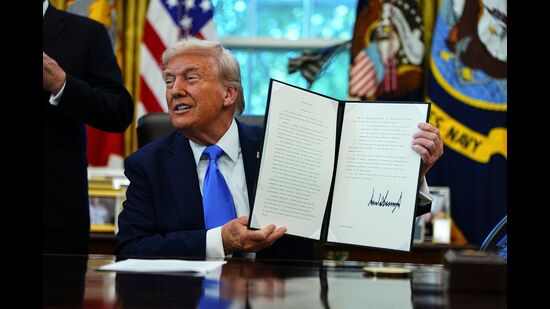
Barring the proverbial TACO — Trump always chickens out — the US has virtually killed the H-1B visa programme. This is because the new application fees of $100,000 for the visa is more than the median wage for employees working in the US under this programme. It is extremely unlikely that employers — companies, universities, hospitals — will pay a year’s worth or more of salary in visa fees to get foreign (overwhelmingly Indian) employees.
With Trump’s fatal blow to the H-1B visa, India is perhaps the worst-off among countries in terms of commercial engagement with the US. It faces a 50% tariff on its merchandise exports. It will now face the prospect of the highly paid, and more importantly growth enhancing migrant worker route being virtually shut for its citizens in the US. Anybody who believes that the Indo-US strategic partnership rhetoric can be carried on ignoring hostility the US has injected in the relationship in the past few months needs a reality check.
The Trump administration and its political outlook is clearly invested in things which are significantly anti-Indian in implications. The government of India ought to work, urgently and with a cool head on how many of these onslaughts by the Trump administration can be reversed. There should be a willingness for pragmatic trade-offs to get the best possible deal. Even the Indian companies who have benefitted the most from the H-1B visa programme should honestly introspect and engage whether their over-use of this visa programme have added to the hostility against it.
One Subscription.
Get 360° coverage—from daily headlines
to 100 year archives.
Archives
HT App & Website