In the last week of September, the Supreme Court (SC) took a significant decision. For the first time, proceedings before Constitution Benches (i.e., benches of five judges or more) were live-streamed on YouTube. The SC’s registry later reported that 800,000 people logged in to witness the arguments.
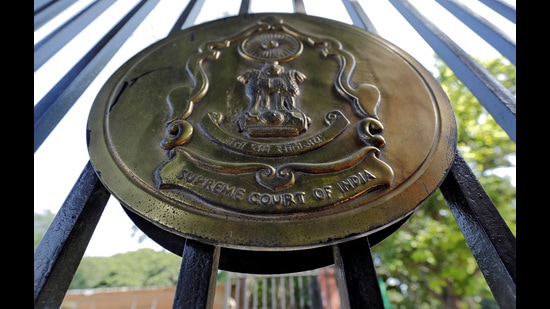
The SC is not the first Indian court to live-stream its proceedings. During the pandemic, the Gujarat high court (HC) made its proceedings available to watch online. More recently, the hijab case before the Karnataka HC was live-streamed. However, the SC decision is particularly significant: Being the country’s apex court, its actions set a particular example, and have the potential to percolate through the judicial system. It is also important to remember that the SC is not the first apex court to do this. Proceedings before the Supreme Court of Kenya are live-streamed, broadcast by major TV channels, and watched by observers from all over the world. Of late, the South African Constitutional Court’s proceedings are also available to watch online.
The SC’s decision is significant for many reasons. Given the geographical size of India, a court located in Delhi is invariably difficult to access. Even when in Delhi, the small size of the courtrooms and onerous entry procedures (for example, an ordinary member of the public needs a signed pass from an advocate-on-record to enter the court complex) have long made the SC inaccessible. Live-streaming will benefit members of the public (who can now see how judicial institutions function), journalists, students and scholars of law and of the judiciary. It will also mean that, for historical purposes, an accurate, permanent, and public record of proceedings before the court will now be available. This is very important for the purposes of transparency, and what is more broadly known as a “culture of justification”. It is crucial for citizens to be able to see high constitutional functionaries at work, and to access the decision-making processes which culminate in choices that can affect the lives of millions. This has the effect of bringing the State closer to the people, breaking the undemocratic aura of mystique that surrounds certain institutions, and generally increasing public accountability and public responsibility.
{{/usCountry}}The SC’s decision is significant for many reasons. Given the geographical size of India, a court located in Delhi is invariably difficult to access. Even when in Delhi, the small size of the courtrooms and onerous entry procedures (for example, an ordinary member of the public needs a signed pass from an advocate-on-record to enter the court complex) have long made the SC inaccessible. Live-streaming will benefit members of the public (who can now see how judicial institutions function), journalists, students and scholars of law and of the judiciary. It will also mean that, for historical purposes, an accurate, permanent, and public record of proceedings before the court will now be available. This is very important for the purposes of transparency, and what is more broadly known as a “culture of justification”. It is crucial for citizens to be able to see high constitutional functionaries at work, and to access the decision-making processes which culminate in choices that can affect the lives of millions. This has the effect of bringing the State closer to the people, breaking the undemocratic aura of mystique that surrounds certain institutions, and generally increasing public accountability and public responsibility.
{{/usCountry}}Of course, live-streaming is not a complete panacea. Inconsistent internet penetration throughout the country, as well as the language barrier, means that it cannot solve everything; it is, however, an important start.
Access, however, is a multifaceted issue, and it is, therefore, also important to acknowledge the work that remains. Oral arguments before the court are only one portion of a case: The bulk of a party’s case is to be found in their written pleadings. These documents constitute an invaluable source for understanding the true nature and character of a dispute, in all its detail. At present, while websites such as the Supreme Court Observer make available digital copies of pleadings in important constitutional cases, this work necessarily remains subject to individual initiative, and, therefore, piecemeal. Another significant step forward, therefore, would be for the SC — and other courts as well — to make available written pleadings (with appropriate redactions to protect privacy) on their websites, once these documents have been filed. As a lot of filing is now online (e-filing), this will not be a significantly difficult or expensive enterprise.
We must also remember that challenges to access can take different forms. The practice of law is oral in character, with a significant part of the action taking place through oral exchanges between lawyers and judges. Where does this leave — for instance — citizens who have hearing impairments? Some of the broadcasts of Kenyan Court proceedings — have, for example — been accompanied by sign language interpreters. It would be an excellent move if — as a next step — the SC would engage a sign language interpreter to ensure that its proceedings are more universally accessible.
Thus, in sum, while there is much that remains in the task of democratising access to the judiciary, the SC step is welcome, and deserves appreciation. It is important to note that while some courts across the world do live-stream proceedings, a great many don’t: In taking this decision, therefore, the SC is one of the judiciaries that has provided global leadership on this significant issue.
Gautam Bhatia is a Delhi-based lawyerThe views expressed are personal