Driving through the Appalachians, I often wonder how my American neighbours would react to the wondrous might that is the Hindu Kush Himalaya (HKH). English poet William Wordsworth discovered the sublime looking at the Alps, a puny mountain range compared to the HKH. And this might is not just about height. The HKH region is one of the world’s most important mountain water systems, acting as Asia’s water tower. This colloquial phrase in the hydrological parlance underscores the region’s critical role in sustaining the continent’s freshwater supply. Its glaciers, seasonal snowpack, groundwater-fed springs, and monsoon precipitation sustain the Indus, Ganges, and Brahmaputra River systems and support hundreds of millions of people in China, India, Pakistan, Nepal, Bhutan, and Bangladesh. The HKH contains more than 63,700 glaciers and approximately 5,736 cubic kilometres of estimated ice reserves, making it one of Asia’s most important natural water-storage systems.
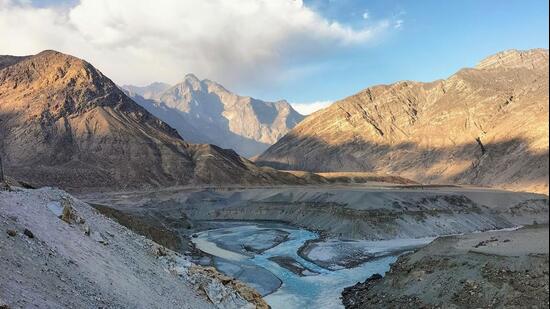
Now for the worrying part. Recent assessments indicate that glacier wastage has accelerated substantially since 2000, increasing concerns about both future water availability and cryosphere-related hazards. From a hydrogeological perspective, Himalayan rivers are components of interconnected surface-water and groundwater systems. Snowmelt, glacier melt, rainfall, groundwater discharge, and monsoon runoff contribute to streamflow at different times of the year. The climate crisis is altering this balance. While accelerated glacier melting can initially increase runoff and cause floods, continued retreat ultimately reduces the volume of stored ice available to sustain downstream flows, causing droughts. At the same time, glacier retreat can produce and enlarge glacial lakes, increasing the potential for glacial lake outburst floods (GLOFs). A 2026 review documented more than 388 GLOF events across the Himalaya-Karakoram region and identified ice avalanches and extreme precipitation among important triggers. The October 2023 South Lhonak GLOF in Sikkim and the recent tragedy along the Tibet-Nepal border, resulting in the death of at least 1,300 people as thousands still stay missing, illustrate this vulnerability. Himalayan seismicity is compounding the tribulations of the already marginalised communities in the entire HKH region.
The increasing frequency and magnitude of cryospheric hazards have important implications for dams in the region. India, China, and Pakistan have invested heavily in hydropower and water-storage infrastructure because Himalayan rivers provide enormous elevation gradients and seasonal water supplies. However, dams designed around historical hydrologic conditions may face new risks from changing precipitation, glacier retreat, landslides, extreme floods, and GLOFs. Tragic as these cryospheric vulnerabilities in the region are, they have serious geopolitical implications as well.
{{/usCountry}}The increasing frequency and magnitude of cryospheric hazards have important implications for dams in the region. India, China, and Pakistan have invested heavily in hydropower and water-storage infrastructure because Himalayan rivers provide enormous elevation gradients and seasonal water supplies. However, dams designed around historical hydrologic conditions may face new risks from changing precipitation, glacier retreat, landslides, extreme floods, and GLOFs. Tragic as these cryospheric vulnerabilities in the region are, they have serious geopolitical implications as well.
{{/usCountry}}The China-India relationship illustrates the complexity of upper- and lower-riparian water management. China is the upstream riparian State for the Brahmaputra, known as the Yarlung Zangbo in Tibet. The river flows eastward across the Tibetan Plateau before turning south toward India and Bangladesh. China has developed hydropower infrastructure on the river and has announced major additional hydropower development in its lower reaches. India, as a downstream riparian State, has expressed concerns about the potential effects of upstream projects on downstream flows and water security. China has stated that its Yarlung Zangbo hydropower development is intended to generate clean energy, respond to the climate crisis, and improve disaster prevention, and that the project will not adversely affect downstream countries. From a hydrological standpoint, the controversy extends beyond the question of whether a dam physically “uses” water. Reservoir operations can influence the timing of flows, sediment transport, flood attenuation, ecological conditions, and downstream risk. India is right in getting worried. Moreover, China has not been sharing critical hydrological data on the Brahmaputra since 2022–2023. The climate crisis and GLOFs make timely access to such information particularly important because an extreme event generated upstream can cross an international boundary rapidly. India and China have established an Expert Level Mechanism and arrangements for exchanging hydrological information during flood seasons. India must keep insisting on data sharing.
The India-Pakistan Indus Basin, currently a bilateral flashpoint, presents a different institutional arrangement. The Indus Waters Treaty (IWT) of 1960, negotiated with World Bank assistance, allocated the western rivers (Indus, Jhelum, and Chenab) to Pakistan and the eastern rivers (Ravi, Beas, and Sutlej) to India, while permitting specified uses by each country. The treaty also established mechanisms for information exchange and dispute resolution. Nevertheless, hydropower development in the region remains highly contentious. India and Pakistan have disagreed over the technical design of projects, including Kishenganga and Ratle. Pakistan and India pursue different dispute-resolution mechanisms. As such, the World Bank has facilitated separate processes involving a Neutral Expert as wellas a Court of Arbitration. The stakes are high for Pakistan: At a time when it is grappling with serious economic troubles, it has already spent close to $6 million pursuing the case at the Court of Arbitration.
As if this wasn’t enough, the climate crisis has introduced another complication. Because the treaty was developed using hydrologic conditions that may not represent future glacier melt, precipitation, extreme floods, or seasonal river flows, India’s actions to factor these changes in are seen as hostile by Pakistan.
As a hydrogeologist, I see the above as lamentable, if not preventable. Truly heartbreaking, however, is another dimension of the Himalayan water crisis I witnessed during my visit to India: severe surface-water pollution. In several South Asian locations, I have observed substantial accumulations of trash in rivers, including what appeared to be a “trash island” formed by floating and deposited waste. Most disturbing was seeing children scavenging around the accumulated waste for materials of value. This experience transformed an abstract idea of water security into a deeply human observation. These rivers are simultaneously water resources, ecosystems, cultural landscapes, and sources of livelihood for vulnerable communities. World Bank has identified plastic pollution as a significant concern in South Asian rivers, including the Indus Basin. Pakistan’s Ravi is the most polluted river in the world, owing to severe pharmaceutical contamination of its water. China, despite its technological strides, is also grappling with severe pollution in smaller tributaries and ponds, even though it has been successful in improving the quality of big rivers.
The Himalayan water crisis, therefore, has three interconnected dimensions: water quantity and natural hazards, water quality, and geopolitical challenges. Glacier retreat and GLOFs are changing hydrologic risk; dams are modifying flow and sediment regimes; and pollution is degrading rivers within populated areas. Sustainable management requires climate-resilient dam design, GLOF early-warning systems, real-time hydrologic monitoring, sediment management, water-quality protection, groundwater monitoring, and transparent transboundary data exchange. China, India, and Pakistan must realise that Himalayan rivers cannot be managed solely as geopolitical resources. They are interconnected hydrogeological systems. Protecting the region’s water future requires cooperation among upper and lower riparian States while also addressing the environmental degradation occurring within national boundaries. The children I observed scavenging from a trash island in an Indian river are a reminder that water security is ultimately about people — not simply water stored behind dams or negotiated across international borders.
Asim Yousafzai is a Washington-based geoscientist. The views expressed are personal