On the night of August 4, a 16-year-old from Mainpuri was allegedly raped inside a moving bus and thenabandoned. An auto-rickshaw driver found her crying and took her to the police. Six weeks later, on September 19, two Class 10 students in Jamui, a girl and a boy were both assaulted — a video of the assault circulated on social media.
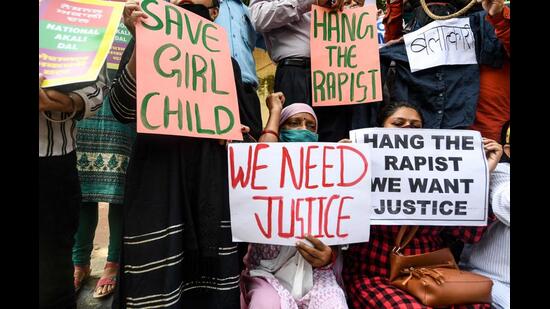
Both cases were absorbed into the familiar argument about “women’s safety”. Nirbhaya was ceremoniously invoked. Bihar’s women’s commission took cognisance. But the victims were children. This distinction matters because it determines what the State owed them. A woman deserves a safe bus on road and a police force that responds when she is in danger. A child and minor deserve an active guardian in the State.
However, the ministry meant to own much of this work, the ministry of women and child development, combines two jobs built on fundamentally different premises. A child’s vulnerability comes from legal incapacity. Therefore, the State must act as guardian. An adult woman has full legal capacity but equality in law does not fix her unequal access to work, property, credit, safety and power.
The government has already acknowledged this distinction in its programmes. Mission Vatsalya deals with child protection, Mission Shakti with women and POSHAN 2.0 with nutrition and early childhood development. But the separation stops at programme level. At the top there remains one ministry and one Cabinet voice.
{{/usCountry}}The government has already acknowledged this distinction in its programmes. Mission Vatsalya deals with child protection, Mission Shakti with women and POSHAN 2.0 with nutrition and early childhood development. But the separation stops at programme level. At the top there remains one ministry and one Cabinet voice.
{{/usCountry}}Child protection is a chain. A missing child must be traced, brought before a Child Welfare Committee, sheltered where necessary and safely reunited. If a crime has occurred, it must be investigated and prosecuted. The child may need counselling and rehabilitation. A ministry of children could make that chain somebody’s principal responsibility, with its own budget, parliamentary accountability and real levers like conditions on Mission Vatsalya funding to states, oversight of Child Welfare Committees and District Child Protection Units, published figures on missing children traced, POCSO cases concluded and institutions inspected etc. The point is to make responsibility visible.
It should not, however, become merely a ministry of protection of children. Protection and development are intertwined. It needs child protection for abuse, trafficking, missing children, child labour and juvenile justice cases, and child development for anganwadis and nutrition, including services for pregnant and breastfeeding mothers. A sexual-abuse investigation and a growth chart may concern the same child but demand different expertise.
A ministry of women and equality could begin by treating the adult woman as a citizen and not merely as a beneficiary. Its mandate could encompass employment, property and inheritance, access to credit, workplace discrimination, care infrastructure and political representation. The State has often been more comfortable protecting women than sharing power with them. The shift, therefore, is from protection to equality and from designing schemes for women to ensuring that women have an equal voice in shaping the institutions that govern them.
Not every failure belongs to either ministry. The Mainpuri bus episode points to a deeper failure of regulation and public safety. Gender should shape transport and policing but it cannot substitute for fixing broken systems.
The girl in Mainpuri needed a State capable of noticing a lost child before a bus crew did. The children in Jamui needed protection from the roadside to the classroom, including the digital space in between. And the adult woman boarding a bus at night needs the rights and reality of an equal citizen with the freedom to move freely.
That is the distinction our institutional architecture has yet to make. Children need a guardian. Women need equal citizenship. Protect the child. Empower the woman. And build a State that knows the difference.
Shubhrastha is a political consultant and writer. The views expressed are personal